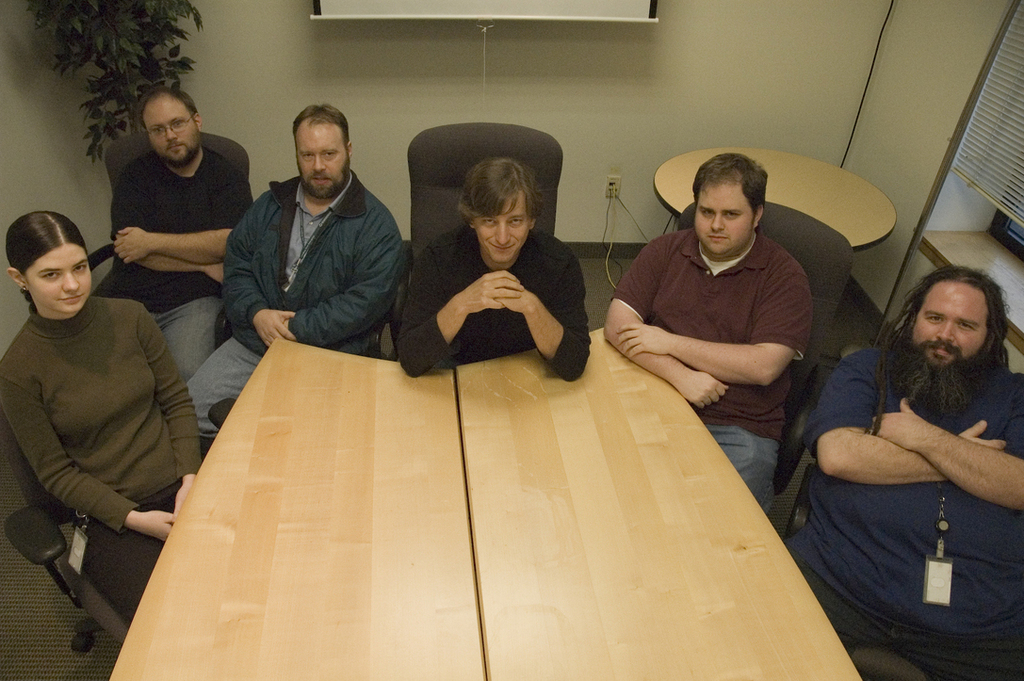
In their day jobs, John Duksta and Joe Pepin are defenders of cyberspace, battling high-tech pirates seeking to crack the computer codes that protect the Social Security numbers and bank accounts of unsuspecting victims.
When the workday is done, Duksta and Pepin amuse themselves by doing some harmless hacking of their own.
For Leaders Who Don't Have Time to Get Sick
Top performers guard their calendars, delegate relentlessly and optimize every hour of the day. Health,…
Learn More
Duskta and Pepin are hackers, the real deal – computer programmers whose idea of fun is reprogramming a toaster to be powered remotely via the Internet.
There are two distinct camps in the hacking subculture. Some hackers, mostly in places such as Russia, China and Eastern Europe, work their magic to break the law. Others, including Duksta and Pepin, are “white hat” hackers who use their skills to protect the innocent.
Both men work in the Providence office of a leading managed security services provider – Pepin leads the firm’s security intelligence team, and Duksta is a security engineer.
“In the security community, there are people who are considered ‘black hats’ – those are people who do bad things for money – and then there are people who are ‘white hats’ that basically are the defenders,” Duksta said. “But, you know, like yin and yang, you can’t have one without the other. You have to have people trying to do bad things in order to defend from. Otherwise the world would be a warm, fuzzy, happy place.”
Regardless of which side of the law their team plays for, all hackers operate in a world inaccessible to 99 percent of the population. Now, Duksta, Pepin and a group of their colleagues are bringing their mysterious subculture into the light of day with DC 401, a public group that meets monthly at AS220 in Providence to discuss computer security and alternate applications of modern technology.
The group is a local, informal offshoot of DEFCON, the oldest underground hacking organization in the country, which hosts the largest annual hacking and computer security convention in the country.
The conference, held each August in Las Vegas, offers a mix of fun and very serious discussion. This August, DEFCON participants could join a contest that pit two autonomous robotic guns against each other in a challenge to see which could shoot down the most targets in a shooting gallery, and then attend a lecture about the specific vulnerabilities of new online banking security measures.
At the most recent DC 401 meeting, held Oct. 8, Duksta gave a slide presentation of his award-winning hacking project at a separate convention, in which he reprogrammed a 1980s-vintage Simon electronic game into an arcade game that dispensed electronic tickets to winners in the form of cryptographically signed files on a USB flash drive.
The group’s November meeting will feature a talk from Paul Asadoorian – a security expert who used to work for Brown University and now protects the computers of OSHEAN and runs a security consulting firm called defensive intuition. Asadoorian will discuss common attacks on embedded network devices such as routers and wireless access points.
Duksta, who grew up in South County and went to the University of Rhode Island, earning an undergraduate degree in physics, worked in Boston for eight years beginning in mid-1990s, then moved back to Rhode Island in 2002 after being laid off during the bursting of the tech bubble.
Despite the reputation of hackers being pasty-complexioned young men dressed in black, Duksta said he and his friends are a diverse mix of people. Asked if they were bound by any common personality traits, Duksta conceded that there are more male hackers than female, and said that many are musicians or music lovers, and that many share a cynicism gained with too much knowledge about all that goes on in cyberspace.
“Being in the security business, you end up being a pretty severe privacy nut. You end up being just a little bit paranoid,” he said.
DC 401’s most recent meeting drew only about a dozen people, but Duksta said he hopes to grow the group’s membership. The meetings should appeal to anyone with an interest in technology and a playful streak, he said. Among a handful of non-hackers who have attended the group’s meetings is a high school senior who saw the meeting listed on the calendar of AS220’s Web site.
Eventually, the group hopes to attract grant funding that would enable it to rent a space to house long-term hacking projects and where it could hold classes and workshops for the public, he said.
“We’re about sharing information and getting people interested and excited about technology, and specifically where it relates to security,” Duksta said. ?