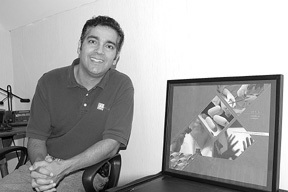
Company: Health Data Services Inc.
President: Joseph M. George
Location: North Providence
For Leaders Who Don't Have Time to Get Sick
Top performers guard their calendars, delegate relentlessly and optimize every hour of the day. Health,…
Learn More
Type of Business: Offers compliance and validation services to health care manufacturers
Year Founded: 1993
Employees: 10
Annual Sales: More than $1 million
There’s a small company based in North Providence that works with multibillion drug companies, as well as other health care manufacturers from around the world, to help the firms become and remain compliant with ever-emerging government regulations.
Yet, despite the company’s noble work, not many people know about Health Data Services Inc., says company President Joseph M. George. And this lack of the limelight is just fine with George.
“I’m excited about this company,” he said, “because we don’t have a billboard, we don’t have an ad on the television, but we work for the world’s largest drug companies. … Nobody really needs to know our name because we’re intensely proud of the fact that we help people make good products that extend lives – and that’s really what’s funny about the whole thing.”
HDS, a privately held company, provides compliance and validation services to three main sectors of the health care industry: pharmaceuticals, biotechnology products and medical devices. The company focuses on “computer validation” – or making sure that companies’ computers used in the manufacturing of drugs and other health care products are compliant with government guidelines, like Food and Drug Administration regulations.
HDS focuses on such things as computer hardware, software and documentation.
When companies develop their drugs, said George, they have to make sure that certain procedures and conditions are followed such as ensuring that the environment in which a drug is manufactured is kept at a certain temperature and humidity for a certain amount of time so the drug can grow properly.
“We help customers comply with computers that are used to control that environment,” said George. “What the FDA wants (companies) to show them is that the product can be made repeatedly and reliably at the same specifications over and over again.”
George added that since the FDA is constantly responding to emerging discoveries in biotechnology, medical electronics and chemistry, his company always needs to keep up to date on continuous FDA regulations.
“Yes, the regs do change,” said George. “The FDA responds and we also educate ourselves by going to seminars and studying the regs. The FDA is very diligent about not only addressing technology but making sure technology doesn’t affect products in a negative way. It’s a difficult balance.”
Presently, the FDA is concerned with Canadian import drugs and some fake drugs that may have filtered into the market, said George.
“We’re really responding now to where the FDA is putting the focus,” he said.
HDS has worked with the Health Protection Branch, Canada’s equivalent to the FDA, as well as the Medicine Control Agency in England. HDS has also done work for companies in Brazil, Europe, Japan, Canada and Mexico.
The 10-employee company, presently headquartered in George’s North Providence home, boasts the largest drug company in the world, Pfizer, as one of its clients. HDS does such computer-systems work as document management, drawing control and product complaints for Groton, Conn.-based Pfizer, which makes the cholesterol-lowering medication Lipitor.
HDS also does work for Kenilworth, N.J.-based Schering-Plough, which makes Clarinex, a popular antihistamine. Other customers include U.S. Surgical in Norwalk, Conn., and Kendall Company in Mansfield. George recently put in a proposal for work with Mary Kay cosmetics and topicals.
HDS used to operate from an East Providence office, but moved out in February and has been operating from George’s home since. George said he anticipates finding office space within the next few months.
The company has three employees in Rhode Island and seven in a field office in New Jersey with such roles as engineers, project managers, consultants and directors. According to George, New Jersey is one of the largest and densest pharmaceutical manufacturing bases in the country.
“So it’s very important that we’re represented in New Jersey,” he said. In Rhode Island, the company supports such markets as Massachusetts, Connecticut and a customer in St. Louis.
One health care issue that’s growing more important is the Health Insurance Portability and Accountability Act (HIPAA), which involves patient privacy and electronic health care transactions. However, HDS does not currently have any active HIPAA contracts, but the company has talked to companies about HIPAA.
“We’re really not chasing HIPAA because the pharmaceutical and device industries are so busy that we could double or triple our sales in that area right now,” said George. “We know the (HIPAA) regs, but we’ve chosen not to focus on the market because of the delay in government pressuring the hospitals to implement it.”
Additionally, earlier this year, HDS launched an innovative software quality assurance program, 3GV, in response to the FDA’s new initiative of risk management, which has firms focus on areas of their business that pose the most amount of risk to their products.
3GV, third generation validation, puts compliance solutions more in the hands of the manufacturers. Basically, said George, the FDA told companies that it wants them to take a close look at what they are doing with computers, manufacturing and product quality and identify where the risks are and focus on mitigating risk to the product and patient.
Although the nature of HDS’ business is high-tech – like working with some of the world’s most powerful computers – the company maintains an old, reliable business approach.
“We must listen to our customers every day,” said George. “The basic tenets of customer service, quality, commitment and hard work are really what keeps us in business and makes us grow. We’re 21st-century technology with 18th-century business philosophies and we beat up on the competition all the time. …The future of the company is unlimited, it’s where health care goes.”