Arelis Valerio burst into tears of frustration often after clocking out of her old job as a certified nursing assistant at a local nursing home.
A native of the Dominican Republic and a single mother of three, she spoke little English at the time and struggled to communicate with co-workers and patients.
“They treated me like a stupid person,” she recalled of the nursing job she took shortly after arriving in Rhode Island in 1997. “I cried all the time, but I needed to work.”
It was all the more frustrating because – far from stupid – she had been a doctor in the Dominican Republic for more than 20 years before moving to Rhode Island.
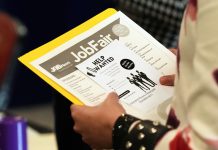
Valerio was one of countless immigrants who arrive here with professional degrees and loads of experience who, because of a language barrier and a lack of understanding of the system, find themselves toiling in factories, cleaning houses or working as a CNA when they’re qualified to do much more.
More than 12 years later, however, Valerio has not only helped herself, she has managed to guide hundreds of others through similar situations.
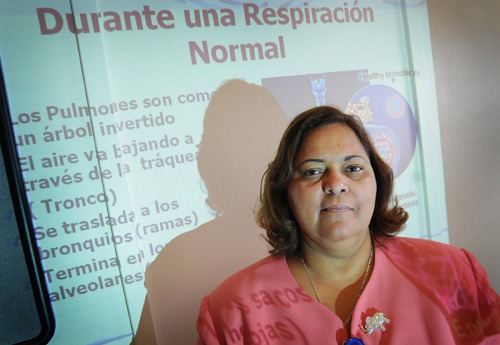
With the help of her medical background, Valerio has become a certified asthma educator – the first Latina to do so in Rhode Island – and helps coordinate part of the community asthma program at Hasbro Children’s Hospital.
She’s also one of the founders of the Rhode Island Professional Latinos Association, a group whose mission is to provide information to professionals from other countries who lack the certification, but not the skill, to work in their field in the United States.
“There are so many professionals out there who have excellent backgrounds,” Valerio said recently. “They just need the opportunity.”
With a membership of about 350, the Latino association holds monthly meetings to promote everything from English classes to certification classes for tax preparers.
In 2008, the association also partnered with Dorcas Place Adult & Family Learning Center Inc. in Providence to launch the Rhode Island Welcome Back Center, aimed at helping those health care professionals who hold credentials from outside the United States to get certified and licensed in Rhode Island.
Valerio said she was motivated by her own experiences after moving with her three children to Rhode Island, where her brother lived, after the breakup of her marriage.
Years earlier, she had become a U.S. citizen when she lived for a few years in Puerto Rico and New York, and she had hoped to obtain her medical license and establish a general medical practice soon after her Rhode Island arrival.
But she didn’t speak English and she had no one to help guide her through the process.
“It was very hard,” Valerio recalled. “I don’t have any person to ask what I need to do, to ask what the next step is. I don’t have anybody I can ask those questions.”
She turned to Latino community groups for assistance in finding appropriate positions, but she said they were not prepared to handle someone with her medical skills.
Out of desperation to pay rent, Valerio took a low-paying job with the U.S. Postal Service. Sometime afterward, it was suggested that she take classes to become a CNA. She passed the course even though the lectures were in English.
While earning a paycheck, she also volunteered at various places, hoping it would open doors for her. It did.
When she was invited to Draw A Breath, an asthma-education program, because her son has the ailment, Valerio offered in broken English to volunteer for the program.
“It was an opportunity,” she said.
Valerio took English classes at Dorcas Place, and eventually got partial recognition for her medical credentials. She then became part of the paid staff.
She still does not practice medicine, but she doesn’t care.
“I love what I’m doing now more than anything,” Valerio said. “When I worked in my country, I gave a prescription to the patient and they went home. In this country, [patients] learn about prevention.
“Now I work with the patients, using a combination of my [medical] knowledge and what I’ve learned here,” she continued. “I feel like I’m changing many, many lives. It’s not only one patient, it is many patients.”
And she has changed other lives, too, beyond Hasbro Children’s Hospital.
Following her success landing the job in the asthma program, Valerio fielded inquiries from other immigrant professionals looking for advice, including nurses, lawyers, teachers and engineers.
She and others assembled the association in 2006.
The group is intended to raise awareness of the professional arriving from other countries. Valerio also encourages its members to volunteer, particularly in their fields, as she did, to ready them to enter the work force.
She said more than 130 R.I. Professionals Latino Association members have volunteered in various jobs at Rhode Island Hospital alone, since the association started.
And the number of association members is climbing. “Every month we have a meeting more professionals come,” she said. “This is wonderful not only for the professionals but for the state. They know the culture and they know the language” of a Latino community that’s growing.
Valerio said she can hardly believe now that she almost returned to the Dominican Republic after struggling through those early days living in Rhode Island.
“It was very difficult,” she said. “But not only have I grown as a person, but I’m growing as a mother. My children have opportunities here.”
Valerio said officials at Hasbro Children’s Hospital offered to allow her to attend classes so she could obtain her license and practice medicine again. Her response: “I said no. I enjoy what I do now.” •