Mahoud “Mark” Najib doesn’t particularly care for the use of the words “hookah bar” to describe his new venture in South Kingstown.
“We prefer water pipe,” Najib said last week. “When you say hookah, right away what comes to mind is drugs. People think weed or grass. Here, it’s tobacco only.”
Selling Luxury Real Estate Requires More Than Exposure
By Emilio DiSpirito IV License Partner | Private Office Advisor Engel & Völkers Oceanside www.DiSpiritoteam.com…
Learn More
Whatever you call it, the Cranston businessman opened Sedra Café earlier this month in the Kingston Emporium across from the University of Rhode Island, capitalizing on what has grown into a popular pastime among college students.
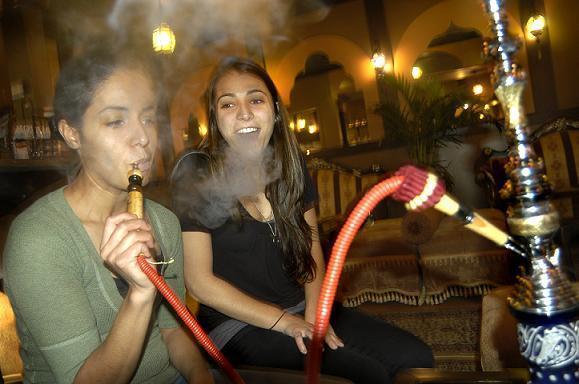
Hookah lounges such as Najib’s, where students can gather to smoke water pipes and socialize, have opened near campuses nationwide. Sedra Café is one of at least two hookah lounges in the state. The other, Providence Byblos, is located on Meeting Street on Providence’s East Side, near the Brown University campus.
“This is a whole culture thing,” Najib said.
A hookah has a small bowl that holds tobacco at the top of a long stem. The bowl is wrapped in foil, and a burning charcoal placed on the bowl heats the tobacco. As a smoker inhales through a hose, the smoke passes through a water-filled jar before it is inhaled. Najib sells tobacco in numerous flavors, including mango, apple, grape, margarita, mint and cappuccino.
“It gives you a really good feeling when you smoke it,” Najib said. “It won’t drug you, but it will relax you.”
The tobacco-filled bowls sell for about $14 each and can last up to an hour, Najib said. Typically, the hookah is shared among several smokers. Sedra Café provides individual plastic mouthpieces to keep things sanitary.
The origins of the hookah can be traced back more than 500 years to India, and its use eventually spread through the Arab world, including in Syria, where Najib said people traditionally gather in coffee shops and smoke the water pipes. In the United States, its popularity has skyrocketed in recent years.
Najib said he arrived in Rhode Island 12 years ago from Damascus, Syria. “Like everybody else, I was looking for more opportunity,” he said.
He has found it. And with it, the chance to follow the hookah trend by opening his own lounge. At first, he wanted to open it in Providence, but he didn’t want to compete with the existing one. So, looking for a college area to take advantage of the trend, he settled on the village of Kingston, just outside the URI campus.
The café’s décor has a Middle Eastern feel, with Syrian-imported couches, ottomans and low, dark wood tables. The windows and mirrors feature decorative arches. The cafe also sells coffee, sandwiches and desserts, but Najib said most of his earnings are derived from tobacco sales.
Sedra Café’s opening caused a minor stir among town officials earlier this month. Although Najib obtained a victualling license with Town Council approval, some council members said they were unaware smoking would take place there. Najib said he was upfront with the town, telling officials he would be selling flavored tobacco.
South Kingstown Town Manager Stephen Alfred confirmed last week that Najib has received a smoking bar designation from the R.I. Division of Taxation and the R.I. Department of Administration. That designation gives Sedra Café an exemption from the state’s ban on smoking in restaurant and bars.
Najib contends that smoking a hookah is less dangerous than cigarettes because the tobacco does not contain the chemicals that exist in cigarettes. “I wouldn’t call it healthy,” said Najib, acknowledging that there is nicotine in the hookah tobacco. “I can’t say healthy because smoking is smoking.”
Najib said he believes that smoking one cigarette is the equivalent to smoking two hookahs. “And it takes 45 minutes to an hour to smoke one,” he added.
But health organizations such as the American Cancer Society and the Centers for Disease Control and Prevention have warned that hookah smoke is just as hazardous as cigarette smoke.
Nevetheless, Sedra Café has been a success so far.
Najib doesn’t open until the early evening, because that’s when his customers start arriving. The café features free wireless Internet access and a wide-screen TV. “Most of them, after they’re done studying, they get together and come over here,” he said. “I get new kids sometimes. They want to try it. But all the kids, they like it.”
Although most URI students are 18 or older, Najib is vigilant about underage smoking. “We always check ID,” he said. •