It’s not an easy time to run a community hospital in Rhode Island. The CEO of Landmark Medical Center in Woonsocket resigned after a special master was appointed to try and save the facility from receivership. (READ MORE) Both St. Joseph Health Services of Rhode Island and The Westerly Hospital recently saw their bond ratings downgraded. (READ MORE) And executives are warily eying the proposed merger of Lifespan and Care New England, which together would control about 70 percent of the health care market in Rhode Island.
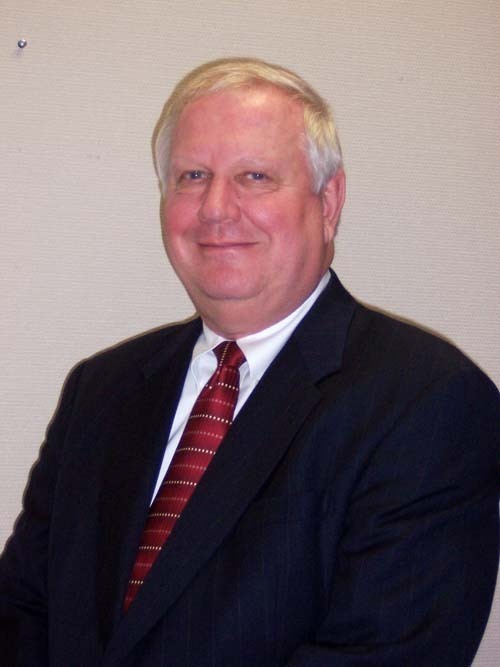
Charles S. Kinney has been president and CEO of The Westerly Hospital since April 2004. Although the 125-bed Washington County facility had a $5.9 million operating loss in 2007, Kinney remains optimistic about the hospital’s future.
PBN: Two months ago, the hospital’s chief financial officer, Jeanne LaChance, reported that the current fiscal year was shaping up to be better than the last one. Is that trend continuing?
KINNEY: Yes. We’re still running significantly ahead of the last few years. Inpatient admissions are running about 1 to 2 percent ahead of last year, the operating loss through the month of June is about $600,000, and the bottom line – we call it the bottom line because it takes into account contributions, realized gains on the endowment and interest on the endowment – shows we are showing a profit of around $600,000. For operating results, last year at this time we had lost $4.2 million.
ISO 9001:2026: A Practical Opportunity to Build for What’s Next
For Rhode Island manufacturers, ISO 9001 has been much more than a certificate on the…
Learn More
PBN: Last September, you said you were considering a merger with South County Hospital. (READ MORE) Has anything come of those discussions?
KINNEY: We’re not moving very quickly on those. I think we all looked at what would be the advantage to that, and we could find very few initially. We’re both very low-cost hospitals. Our market areas really overlap very little, and our medical staffs don’t overlap a lot, so there would be some synergies. When I’ve looked at mergers in other parts of the country, usually you create an infrastructure that costs you more money.
But I think there could be more synergies, and right now, with the issues of Lifespan and Care New England, it’s something we should talk about, because we’re concerned about that merger taking place without any systemic changes in the industry, because that could have a profound impact on the hospitals.
PBN: Long term, do you think Westerly and other small community hospitals can survive on their own, or are mergers inevitable?
KINNEY: If you go back to the governor’s [community hospital] task force, the primary conclusion said that unless there are systemic changes, most community hospitals will face continued financial trouble in the coming years. …
The whole reimbursement system needs to change. It is a system based upon competing and inconsistent incentives. We want to talk about a system whereby we can deliver care management. We want to talk about a system whereby hospitals and providers will be reimbursed on episodes of care – nationally, they are looking for the hospital industry to take a leading role in this. [Yet] while this is happening, we’re still disaggregating the hospitals. We’re providing incentives to take business out of the hospitals.
PBN: Do you think a competitive marketplace can work?
KINNEY: I’ve changed my mind about this as I’ve gotten older. When I was younger I thought it would work, but I haven’t seen it work. Employers are rebelling – they’re creating things so they can afford it, higher deductibles, higher copays – because this is dragging them down, and I have a lot of sympathy for the employers. We can’t afford to have this health care inflation right now. No other country has a silver bullet, but it’s something we have to look at. We need to look at more global reimbursement for chronic-care management. That’s going to be one of the major savings.
In the State of Rhode Island, when you look at the reimbursement rates between the teaching hospitals and the community hospitals, it’s huge. There’s a difference for the costs associated with the teaching programs, but then the governor’s task force shows among the community hospitals, between Blue Cross and United, there could be 30 – 60 percent difference between one community hospital and the second, and we don’t know why that is.
PBN: What’s your take on the proposed Lifespan-Care New England merger?
KINNEY: I think that this is something that has some very laudable goals, to try and keep patients in Rhode Island. But with that said, the way the current reimbursement system is I have some significant concerns. … Because, again, if they’re going to be 70 percent of the marketplace they will have a significant economic clout when it comes to dealing with the payers, when you start negotiating with Blue Cross Blue Shield. Right now we have seen that size has been the major determinant upon your reimbursement – it’s not quality, it’s size. … If that merger is to go through, there needs to be something done to ensure an equitable reimbursement in this state.
PBN: In the end, do you think it will go through?
KINNEY: It depends on who you talk to. I don’t know the geopolitics of the state that well; I’ve only been here four years now, so I’m still sorting that out. But I think that there’s a lot of reasons why one would like to see it. It’s important for a … medical school to have the flagship hospitals, similar to what Harvard does. … You can develop a biotech corridor. … I would support it as long as there was some mechanism in place to ensure the continuation of the community hospitals, especially in Washington County. •
INTERVIEW
Charles S. Kinney
POSITION: President and CEO of The Westerly Hospital.
BACKGROUND: Before coming to Westerly in 2004, Kinney spent five years at the helm of the 126-bed United Memorial Medical Center in Batavia, N.Y. Prior to that he was president and CEO of Martha’s Vineyard Hospital.
FIRST JOB: Paperboy and caddie at age 10.
EDUCATION: B.S., M.Ed., Boston State College; MHA, University of Massachusetts Amherst.
RESIDENCE: Westerly
AGE: 61