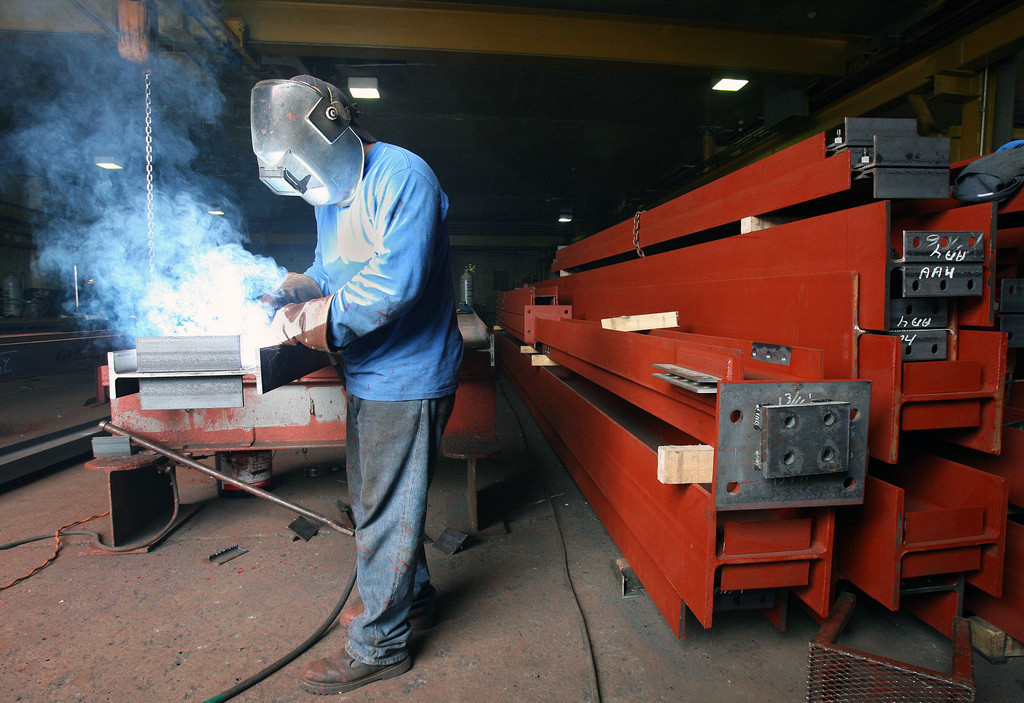
WASHINGTON – Industrial production in the U.S. was (unexpectedly) little changed in March for a second month as a slowdown at factories was offset by a pickup in utility use.
The output last month at factories, mines and utilities compared with a median projection for a 0.3 percent increase in a Bloomberg News survey of economists, data from the Federal Reserve showed Tuesday in Washington.
Selling Luxury Real Estate Requires More Than Exposure
By Emilio DiSpirito IV License Partner | Private Office Advisor Engel & Völkers Oceanside www.DiSpiritoteam.com…
Learn More
Manufacturing, which makes up about 75 percent of total production, dropped 0.2 percent in March, the most since April 2011.
Weaker economies in Europe and parts of Asia may temper overseas orders at the same time companies in the U.S. reduce the rate of inventory building, limiting the pace of factory output.
Business purchases of new equipment are helping sustain gains in manufacturing, which grew in the first quarter at the fastest pace since the second quarter of 2010.
“We should see fairly tepid growth for manufacturing,” Millan Mulraine, a senior U.S. strategist at TD Securities in New York, said before the report. “Motor vehicle production was fairly strong the last two months. That continues to be the main driver, but we expect that to moderate.”
A report from the Commerce Department showed housing starts fell 5.8 percent in March to a 654,000 annual rate, less than the lowest estimate of economists surveyed by Bloomberg and the slowest since October.
Industrial production estimates of the 82 economists surveyed by Bloomberg ranged from a decline of 0.6 percent to a gain of 0.7 percent.
Consumer Durables
The drop in manufacturing output, which accounts for about 12 percent of the U.S. economy, in March was the first since November. The figure was restrained by a decrease in consumer durable goods such as furniture and appliances. Construction supply production slumped 1.3 percent in March after a 1.9 percent jump.
Still, first-quarter factory output climbed at a 10.4 percent annual rate, the most in almost two years, the Fed said.
Auto production rose in March at a slower pace, climbing 0.6 percent after a 0.8 percent rise. Factory output minus production of vehicles and parts fell 0.3 percent in March.
Production of business equipment climbed 0.2 percent after a 1.3 percent jump.
Utility production climbed 1.5 percent in March after increasing 0.1 percent the previous month, today’s report showed. A 0.2 percent rise in mining, which includes drilling for oil and natural gas, also helped total industrial output.
Capacity Utilization Capacity utilization, which measures the amount of a plant in use, was little changed at 78.6 percent last month after 78.7 percent in February. Auto manufacturing has been contributing to factory growth. Cars last quarter sold at the fastest pace in four years, according to industry data. A regional manufacturing report yesterday showed factories are slowing in April. The Federal Reserve Bank of New York’s general economic index unexpectedly decreased to 6.6 this month, the slowest pace of expansion since November. Readings greater than zero signal expansion. The Fed last week said the economy grew in all 12 of its regions from mid-February through late March as manufacturing, hiring and retail sales showed signs of strength in the face of higher fuel prices. Manufacturers mentioned gains in automotive and high- technology industries, the Fed said on April 11 in its Beige Book business survey, published two weeks before the Federal Open Market Committee meets to set monetary policy. The firms “expressed optimism about near-term growth prospects, but they are somewhat concerned about rising petroleum prices,” the Fed said in the report. Companies like Reliance Steel & Aluminum Co., North America’s largest metals service center, are benefiting from increased demand and rising commodity prices. “Demand was somewhat stronger than we had anticipated and a stronger pricing environment allowed us to modestly improve our gross profit margins,” David Hannah, chief executive officer of the Los Angeles-based firm, said yesterday in a statement.