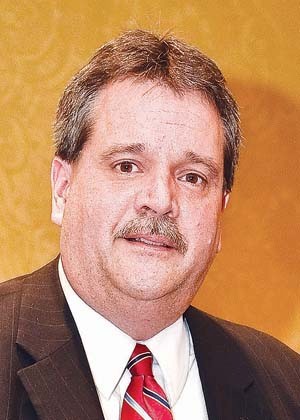
Robert E. Johnson was recently named regional vice president of the year by ASIS International, a worldwide organization for security professionals. Johnson serves as executive director of operations for RIBI Security, a division of R.I. Bureau of Investigation & Protection Ltd. He has been a member of ASIS since 1999 and a volunteer leader since 2000. Johnson is the regional vice president for ASIS Region 18.
PBN: What are your responsibilities as a regional vice president for ASIS?
JOHNSON: I cover chapters from Connecticut to Maine. My role is to support the volunteer board members, keep them up to date on policies and procedures. Each year all regional vice presidents are appointed to international committees at our annual training in Washington, D.C., we work on goals and objectives to help our chapters run better. This provides me the opportunity to work with ASIS members from all over the world. As regional vice president, I also attend state and local meetings with law enforcement and emergency-management partners to represent our private security members.
Rhode Island's Market Has Changed. Developers, Builders, Investors and Sellers Must Change With It.
By Emilio DiSpirito IV License Partner | Engel & Völkers Oceanside Leader | The DiSpirito…
Learn More
PBN: You are currently an exam candidate for the certified-protection-professional designation. What does this designation mean?
JOHNSON: The designation identifies a security professional who remains current within our profession. Trends and security concerns have changed over the years, we must stay up to date on a number of aspects of security. There are eight areas that are covered: physical security, IT security, investigations, legal aspects, crisis management, security principles and practices, business practices and principles and personnel security.
PBN: Are there any specific trends or changes in the industry that you’ve noticed over the course of your career?
JOHNSON: When I started my career in private security in 1979 we were seen as just the overnight watchman or that officer sitting at the door when you left work. However, as time moved forward and terrorism threats increased, we became the eyes and ears of law enforcement. Currently private security outnumbers law enforcement four-to-one in the United States; 80 percent of the infrastructure of the U.S. is protected by private-security officers, so the partnership between law enforcement and private security has reached a level never seen before. I don’t see us ever going back to the midnight-watchmen days in our profession. •