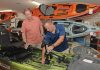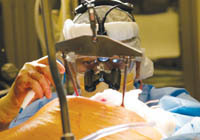
It’s done hundreds of thousands of times each year in the United States, and yet it’s so fraught with danger, with the potential for serious injury or death, that most hospitals won’t try it. Until last spring, only two of Rhode Island’s 11 chronic care hospitals did open-heart surgery.
Then, on May 17, a team at Landmark Medical Center operated on a 68-year-old woman and successfully replaced her aortic valve. It was the culmination of five years of work and a $6-million investment, and the beginning of a new era for the Woonsocket community hospital.
Selling Luxury Real Estate Requires More Than Exposure
By Emilio DiSpirito IV License Partner | Private Office Advisor Engel & Völkers Oceanside www.DiSpiritoteam.com…
Learn More
In a partnership with Harvard Medical Faculty Physicians and Beth Israel Deaconess Medical Center, Landmark has set out to become the best place for open-heart surgery in the Ocean State.
“We’re the new kids on the block, but I’ll tell you, Landmark is going to gain recognition,” said Dr. Michael A. Coady, who left a job as director of heart transplantation at Yale University School of Medicine last summer to become Landmark’s chief of surgery.
“I think 10 years from now, we’ll be the best heart center in the state, no question,” Coady added.
That’s not a small goal to set, especially for a hospital that, until recently, was hemorrhaging money and that still lags behind the state’s two other heart centers, Brown University-affiliated Rhode Island Hospital and The Miriam Hospital, when it comes to resources.
But Beth Israel, which promotes the Landmark heart program as “bringing the world’s best medicine closer to home,” is a formidable partner, with internationally renowned experts and a brand name that gives the Woonsocket hospital instant credibility.
Landmark is footing the whole bill, but Dr. Frank Sellke, a Harvard Medical School professor and surgeon at Beth Israel, helped to build the cardiac program and continues to oversee it and perform some operations. And both Coady and cardiovascular surgery chief Dr. Divakar Mandapati were hired in collaboration with Harvard.
Trends in medicine and demographics also favor Landmark, President and CEO Gary J. Gaube said.
“Cardiac care, cardiac surgery, around the United States has proven to work best in a community setting,” Gaube said, adding that patients feel more comfortable going to their community hospital, so they’re likelier to get follow-up care.
Years ago, Gaube said, only major medical centers had the equipment and expertise to support cardiac surgery, but “now advancements in medicine have allowed it to be done very successfully in community hospitals.”
In fact, Landmark isn’t the first in the region to try it: Working with Tufts-New England Medical Center, Southcoast Health System has opened heart centers at Charlton Memorial Hospital in Fall River and St. Luke’s Hospital in New Bedford.
Like Southcoast, Landmark has a natural market for cardiac services, with above-average rates of heart disease, a large elderly population and many residents who don’t drive.
“The need is in the market,” Gaube said. “The whole demographics here are such that it provides a good base for cardiac care.”
But can the hospital really pull it off?
Gaube first decided to develop a cardiac center seven years ago. Knowing Landmark didn’t have the resources to do it alone, he shopped for a partner, and found Harvard’s Beth Israel.
“They’ve started branching out into the community,” explained Coady, “so you’re able to improve health care on a more global basis.”
The next step was getting approval from the R.I. Department of Health. Landmark had to demonstrate that there was a need for its facility, and that it could deliver quality care.
Lifespan, the parent of Rhode Island and Miriam hospitals, opposed the plan.
Nicole Gustin, spokeswoman for Lifespan, said a key part of the hospitals’ objection was that they didn’t believe the market could support another program. Pharmaceutical and diagnostic advances have reduced the need for open-heart surgery, she said, and Rhode Island and Miriam, which last year conducted 520 and 551 operations, respectively, can fully meet the remaining need. There’s also a consensus in medicine, she noted, that a higher volume of surgeries produces better outcomes; the Health Department has set the target at 500 per year.
After a review, however, in August 2000, then-Health Director Dr. Patricia Nolan approved the Landmark plan, but with multiple conditions. Landmark was required to first prove itself with not one, but two cardiac cath labs, and demonstrate the quality of its diagnostic cath services before going into angioplasty and cardiac surgery. Beth Israel would have to supervise the program and provide expert backup coverage.
The first cath lab opened in 2001, at a cost of $1.8 million. The second lab opened last year; it and the two new operating rooms cost another $4.2 million, which Landmark borrowed. The hospital also had to improve its labs and other key services.
“I think that cardiac surgery has been one of the driving forces of the turnaround at Landmark,” Gaube said.
Lawrence B. Sadwin, former chairman of Landmark’s board of trustees and now president and CEO of the Landmark HealthCare Foundation, the hospital’s new fund-raising arm, said the cardiac program is making it possible for Landmark to aim higher in every way.
Having “world-class” physicians and “some super partners” makes it possible to attract even more of them, he said, and it allows Landmark to raise funds in a way it could only dream of before. In fact, since October, when the foundation was established, it has already raised more than Landmark raised in the previous year.
One of these days, Landmark may even make money on heart surgery.
“It starts slow, and once you gradually build, the program will become profitable,” Gaube said.