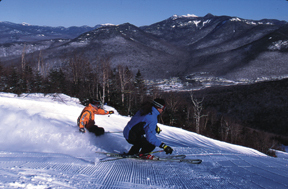
are two clearly skilled skiers.
Corporations reject resorts for outings
Ski resorts historically have been popular destinations for human resource managers and corporate outing planners booking winter retreats, holiday bonus gifts and meetings or conferences that combine business and pleasure.
But in recent years, when a string of several mild winters battered the skiing industry, ski resorts reported a drop-off on their corporate books. This season, as New England has been blanketed with white snow, ski areas are again seeing the green of returning revenue.
Cybersecurity Awareness Month: What to Do When Your Identity Is Stolen
In recognition of Cybersecurity Awareness Month, it is important to remember that identity theft affects…
Learn More
But not in corporate sales, say ski area managers throughout New England. The prospect of a record-breaking season and the profits being generated thus far are a needed reprieve for resort operators. But the large corporate groups have yet to return, they say.
“We very rarely have people calling to book a corporate ski outing. That may have to do with the weather over the past four or five years – people who plan the corporate outings have forgotten about us or have been lulled into a sense that there’s no winter anymore,” said Pati deWardener, general manager at Yawgoo Valley in Exeter. “We do a lot of corporate outings in summer – we have a water park and a golf course, pitch and putt. But in the wintertime, I think employees, or the HR people, I don’t think they do a whole lot with their employees in the winter. Of course, the way we’re going, it’s hard economic times for a lot of corporations. That could be a reason too.”
The downturn in the economy is the reason that several managers at ski resorts said their corporate group business has yet to rebound along with individual ticket sales. Many businesses are forgoing lavish ski packages for their employees, they said.
At Loon Mountain Resort in Lincoln, N.H., nine of the resort’s approximately 45 businesses that had ongoing accounts with the resort canceled their accounts this skiing season, said Mike Pouer, marketing manager for Loon Mountain. Corporate business currently is about 5 percent of Loon’s total business this season, down from years past, said Pouer.
“We have seen a few of our groups drop out that we had on the books, as a result of downsizing,” he said.
The skiing industry has always recognized the importance that leisure time activity plays in workers’ productivity, and has traditionally sold skiing to corporate outing planners as a great way to say thank you and boost morale, said Kim Jackson, a spokeswoman for Killington Resort in Vermont. Many companies have used skiing areas as a way to augment incentive programs, fitness programs, holiday bonuses, or just as an added benefit for their employees.
“We do have businesses that bring their folks skiing, in a variety of ways. Sometimes it’s in a conference and they actually pick Killington to let their employees mix business and pleasure. We also do special ‘Chamber’ days here with our local Chamber of Commerce,” said Jackson.
To lure corporate outings back to the slopes, many resorts are now offering low-cost packages and incentive deals to business groups. As an example, Loon Mountain, Waterville Valley and Cranmore Mountain Resorts are offering corporate employee savings ticket programs this season. Under the program, companies with a work force of at least 50 employees will be provided vouchers valid at a discounted rate at any of the three commonly owned ski mountains, with no up-front costs to the companies. The companies order vouchers and pay only for those vouchers that are sold to its employees on a monthly basis.
The program saves skiers $13 on a ticket at Loon Mountain, and up to $17 at Cranmore Resort.
“Corporation group business is very important for us. We see the opportunity for them to come up during off-peak times, and so we’ve created an incentive to bring them up midweek,” said Pouer.
The reason that ski areas are not in panic mode regarding their abandonment by corporate groups is that the industry is doing better this season than in almost a decade. Skier visits at southern New Hampshire’s Gunstock Ski Area are up 97 percent from last year, 98 percent at Mount Sunapee, and a whopping 250 percent at Ragged Mountain, according to industry data.
Even better than the simple fact that these numbers are up from last year, they’re also up from the 2000-2001 ski season, which was itself a healthy year in the industry
“You have (resorts) that had record numbers then,” said Alice Pearce of Ski New Hampshire in a recent industry journal report “And they’re up from that.”
Things are looking bright for Vermont’s Mad River Glen as well. “We’re having our best revenue season in the history of the mountain,” said Eric Friedman, marketing director for the resort. So far, Mad River Glen is 13 percent above its projected budget and 30 percent ahead of last year.
At Yawgoo Valley also, despite corporate indifference, individual skiers also have returned in greater numbers this year, said deWardener.
“We’ve had a substantial amount of natural snow, more than we’ve had in a
while, and it did start early this year. It tended to put people more in a winter
mode than in years past,” she said. “As far as the corporate business, I’m not
sure that a lot of Rhode Islanders are really winter oriented. Sometimes I really
and truly wonder what the travel and activity level of the average Rhode Islander
is in the wintertime.”
For the complete current issue, visit our subscription Web site, or call (401) 273-2201, ext. 227 or 234.