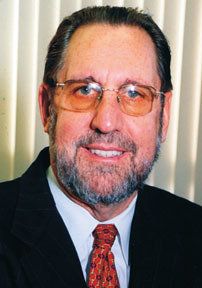
Island Public Utilities Commission.
A bill in Congress is seeking to delay or scrap a federal agency’s sweeping plan to standardize wholesale power markets nationwide, a move public utilities regulators in New England say would be a step backward for the region.
“New England states have been at the forefront of … competitive and open wholesale energy markets,” said Elia Germani, chairman of the Rhode Island Public Utilities Commission. “We want to ensure that the federal regulatory agency move forward in our direction.”
At issue is the Federal Energy Regulatory Commission’s plan for a “Standard Market Design.” Over time, the plan would create a single market for wholesale electricity nationwide in an effort to lower costs for consumers. It also is aimed at preventing the sort of manipulation that occurred in California’s electricity market in 2000.
Selling Luxury Real Estate Requires More Than Exposure
By Emilio DiSpirito IV License Partner | Private Office Advisor Engel & Völkers Oceanside www.DiSpiritoteam.com…
Learn More
The FERC proposal is scheduled to take effect on July 1, but the Senate energy bill now under consideration would delay its implementation until July 1, 2005.
Germani is helping lead an intense lobbying campaign to keep the plan for open energy markets intact, in his role as president of the New England Conference of Public Utilities Commissioners. He and other state regulators from the Northeast and Midwest voiced their concerns at a FERC technical conference last month in Boston.
Energy regulators from those regions say the FERC proposal would foster competition in the nation’s wholesale power market, which would spur investment in new power plants and transmission lines and ultimately result in cost savings to consumers.
But other parts of the country don’t see it that way. States in the Southeast and Northwest long have enjoyed far cheaper power than New England, thanks in part to federally subsidized hydropower. Lawmakers from those states are loath to allow their local power markets to merge with other regions in fear of seeing their energy costs creep higher.
“Those states are able to use their low energy costs to attract businesses that are high energy users,” Germani said. “They’ve got a good deal and they don’t want to lose it.”
Sen. Jack Reed (D-R.I.) is in favor of FERC’s Standard Market Design moving forward, said Greg McCarthy, Reed’s press secretary. Sen. Lincoln Chafee (R-R.I.) is still looking at the issue and has not taken a position, according to press secretary Steve Hourahan.
While the debate over FERC’s plan for market standardization is complex, it largely boils down to economic development, proponents say. A delay in achieving an open wholesale power would “perpetuate the disadvantage we have in competing for new business in Rhode Island,” Germani said.
Germani cites the state of Rhode Island’s ongoing effort to build its biotechnology industry. He said the state rightly is targeting the biotech sector for its high-paying jobs and its need for sophisticated infrastructure, which also creates construction jobs.
“Imagine how we could be more attractive to biotech companies if we could offer them power at the same rates as the Northwest or the Southeast,” he said.
In anticipation of FERC’s plan, New England has undertaken a major revamping of its wholesale electricity market in recent years.
The centerpiece of that effort was launched in March, when ISO-New England, the region’s grid operator, implemented a new pricing structure that calculates wholesale electricity prices based on location, rather than using a blended price for all of New England.
For example, it is more expensive to deliver power to “congestion” areas such as Greater Boston and southwest Connecticut. But before the new pricing system, wholesale electricity buyers in those spots paid the same price for wholesale power as buyers elsewhere in New England.
The final outcome of the FERC’s plan won’t erase those regional changes, according to Erin O’Brien, a spokeswoman for ISO-New England. Germani agreed that the pricing structure that went into effect in New England this spring should not be affected by what happens with the FERC plan.
But other states that have been working to open their power markets are worried.
Michigan Public Service Commission Chairwoman Laura Chappelle, in an issue of Electric Utility Week last month, said the delay would have “a dramatic impact on the states that are well-advanced on wholesale and retail market development.”
For the complete current issue, visit our subscription Web site, or call (401) 273-2201, ext. 227 or 234.