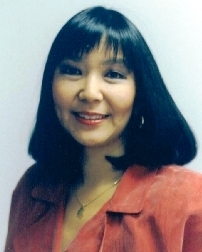
Dr. Charlotte Yeh says that despite initial problems, Medicare Part D is working well.
Dr. Charlotte S. Yeh
POSITION: Boston regional administrator, Centers for Medicare & Medicaid Services, in charge of administering the Medicare, Medicaid and SCHIP programs in New England.
A modernized health plan: Supporting cost management and the employee experience.
The Surest health plan came from a group of innovators wondering: What if health care…
Learn More
BACKGROUND: An emergency physician for more than 20 years, Dr. Charlotte S. Yeh was physician in chief of the emergency department at Tufts-New England Medical Center in Boston from 1990 to 1998, and a faculty member at Tufts University School of Medicine for 21 years. In 1998, she became medical director for Medicare policy for the National Heritage Insurance Company in Hingham, Mass. She’s been in her current job since January 2003.
EDUCATION: B.S., 1971, and M.D., 1975, Northwestern University; internship in general surgery, University of Washington at Seattle; residency in emergency medicine, University of California at Los Angeles.
RESIDENCE: Dedham, Mass.
AGE: 54
Depending on whom you ask, the Medicare prescription drug benefit (Part D) has been a huge help – even a lifesaver – for seniors, or a bureaucratic mess that has lined insurers’ pockets but left seniors confused and scrambling to pay for drugs halfway through the year.
With open enrollment about to begin for 2007, Dr. Charlotte S. Yeh, who oversees Medicare across New England, spoke with Providence Business News about the Part D program’s first year, problems that have arisen, and what lies ahead.
PBN: We’ve heard a lot about the “doughnut hole” and seniors struggling with it. How confident are you that the market, and Medicare Part D as currently structured, can address concerns about the coverage gap?
YEH: I think the first thing I’d do is kind of step back. The Kaiser Family Foundation routinely polls the seniors, and [found] an 80-percent satisfaction rate. It’s not 100, but 80 percent would be good by any poll. I don’t think we should lose sight of that. The second thing is … I’m an emergency physician. I can see the patients I took care of, the ones who skipped their meds, because they couldn’t afford them, and had heart attacks. The Kaiser survey said about a third of the seniors [who used to skip pills] are no longer skipping their drugs.
PBN: How is the market responding to this year’s concerns?
YEH: In a couple of ways. We’ve gone from 41 to 55 stand-alone plans [for Rhode Island] … and there are a couple of areas where they’ve really addressed some concerns. We used to have seven plans that covered during the coverage gap; now we’ve got 15, more than double. We have three additional plans that now have zero deductibles, for people who are worried about that initial outlay of $250 – next year, it will be $265. For people who get the low-income subsidy, and have to choose plans that are at the benchmark or below to avoid an additional premium, there are 15 plans to choose from this year, up from 11 last year.
PBN: There are new kinds of Medicare Advantage plans this year, too. How do those work?
YEH: You’re used to HMOS and PPOs. There is now a private fee-for-service option, and there’s also a thing called special needs plan as well. Private fee-for-service doesn’t have the open network that standard Medicare fee for service has, but any provider who’s willing to accept the fee schedule of that plan may provide the service.
PBN: Do you have a sense of how many people have fallen into the doughnut hole?
YEH: I don’t know that I can answer that on the data. They’re still collecting it. I think PricewaterhouseCoopers estimated that maybe 8 percent of the Medicare population might fall into the doughnut hole – but those were projections. … The other thing to keep in mind is that in Rhode Island, you have RIPAE, which wraps around Medicare, so you have a lot of people on relatively low incomes who are on RIPAE. If they enter the coverage gap, RIPAE kicks in. … Those who are in Medicare Advantage plans [about 30 percent of Rhode Island beneficiaries] typically won’t have a coverage gap. The dual-eligibles with low-income subsidies don’t have a gap. So there are not a lot of people left.
PBN: The other concern I’ve heard in Rhode Island is the instability of the formularies.
YEH: It is true that plans can change their formularies. They can add drugs, or they can remove drugs because the FDA says they’re not safe. If they drop a drug for something other than safety reasons, they have to provide at least a 60-day notice, and then beneficiaries can still apply for exceptions and appeals. … But it’s not in the companies’ best interest to start dropping drugs that their bennies are taking. I haven’t seen it on any kind of large scale. … Also, in 2007, the average number of drugs in the formulary actually increased by 13 percent.
PBN: Yet after the Kaiser survey of physicians and pharmacists came out, I heard from people locally that Medicare Part D had been a bureaucratic nightmare.
YEH: I guess I could expect that, because if you think about it, for your Medicare population, there didn’t use to be a formulary, so from a physician’s perspective, it didn’t matter what they wrote. So for them, it was a real learning curve. … I’m not saying there weren’t hiccups. … In the beginning, every plan had its own exception and appeals process. Now Medicare has standardized forms.
PBN: Do you expect seniors to be more sophisticated in choosing their plans this year?
YEH: We’ve learned from [concerns]. So the new plan-finder tool doesn’t just say, for example, “This is your annual cost,” because the poor bennies didn’t understand that it can vary from month to month. Now the plan-finder tool will tell you what you’ll actually pay, on a month-to-month basis. … Also, last year, we told people, “Pick your plan by the drugs that you take and the cost.” This year, you’ll also be able to pick a plan by its customer satisfaction [ratings].
PBN: You’ve spoken about the wealth of new data that will be gathered through this program.
YEH: We’re going to have phenomenal data on the Medicare population and drugs that we’ve never had before. So there is work going on now, of how we can capture and extract that data. … We always had phenomenal claims data on the Medicare beneficiaries … but we’ve never had the prescription data to match with it. … We’re going to be able to do head-to-head comparisons, for example, with different kinds of anti-cholesterols. … There’s going to be drug safety data now available. … I can see us, down the road, having a much better handle on how to manage certain conditions.