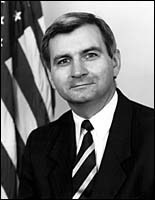
co-advocate of the Bipartisan
Patient Protection Act 2001.
After years of political wrangling, it appears Congress is on the brink of passing a patients’ bill of rights.
U.S. Sen. Jack Reed, D-RI, and Lincoln Chafee, R-RI, voiced their support for the “Bipartisan Patient Protection Act of 2001” at a press conference at Hasbro Children’s Hospital last week.
Building a Strong Data Foundation in the Age of AI
Artificial intelligence (AI) has become a key priority in the boardroom and across management —…
Learn More
The senators, who both voted in favor of a Senate bill that passed last month, are urging House members to approve a similar version.
The bill would give Americans with private health insurance better access to emergency and specialty care, prescription drugs and clinical-trial participation. It also would make it easier for patients to sue their health plans for refusing to cover necessary care.
“It’s important to get this bill through the House and get the President to sign it so patients can get the protections they deserve and pay for,” Reed said. The House could begin considering its version of the patients’rights legislation before the congressional session ends in August, Reed said.
Congress has worked on various forms of patients’ rights measures over the past five years, as dissatisfaction with HMOs and health insurers has grown.
“We spend a lot of time arguing with insurance companies because they refuse to cover necessary care,” said Carole Jenny, MD, director of the Child Protection Program at Hasbro and a pediatrics professor at Brown University.
Jenny used the example of an insurer that denied coverage for a baby in the intensive-care unit with botulism because infants with that disease are expected to survive only one day.
“The infant was still alive. What are we supposed to do, stop providing care?” Jenny said.
Reed said two important aspects of the legislation would let children have a pediatrician as their primary-care physician and would allow them to see pediatric specialists.
“To lump children in with the same types of procedures and processes used for adults is a mistake,” he said.
The bill would also cover all emergency medical care under a new “prudent layperson” standard, which says anyone who thinks they might be severely injured or sick will be covered for a visit even if a serious problem is not diagnosed.
“Now, if you go to the emergency room because you’re having chest pains and it turns out to be heartburn, your insurance company will tell you ‘If it wasn’t a heart attack, we’re not paying for it,” said Michael Migliori, MD, an American Medical Association delegate and former president of the Rhode Island Medical Society. “It forces people to make their own diagnosis.”
Critics of the bill say the legislation will lead to an onslaught of litigation against HMOs and ultimately lead to higher health premiums. But Reed and Chafee said that is unlikely.
“The argument is that small businesses will have to drop their health-care coverage because of the threat of litigation,” Chafee said. “But states that already have the right to sue have not seen an explosion in litigation. In fact, it’s just the opposite, because it makes insurers closely examine the details of a case to make better decisions.”
Chafee also said that employers who provide health insurance for their workers are protected against litigation as long as they transfer decision-making responsibility to an insurance company or HMO.
Reed said the House version of the bill stands a good chance of passing because similar legislation cleared the House by a wide margin in 1999. But, he said, a competing House bill backed by President Bush and some Republicans would water down the patient protections outlined in the Senate bill.
“If that version passes, then that will be a problem,” Reed said.
Bush has threatened to veto the Senate version of the bill and is urging the House in its legislation to limit the ability to sue health insurers.
(PBN file photo)