The decision came without much warning a week before the U.S. Conference of Mayors, and it looked like it might even threaten the four-day event.
But despite the Obama administration’s choice to stay away from Providence June 12-15 and avoid the picket lines of local firefighters, organizers of the conference and the activities outside of the mayors’ meetings nonetheless pressed on.
And last week, organizers were painting it as a success, despite the picketers, the lack of presence from the White House and the less-than-ideal weather.
The Providence Warwick Convention & Visitors Bureau (PWCVB) estimated that between 1,200 and 1,400 delegates and their family members visited the Capital City during the conference.
In fact, Mayor David N. Cicilline said conference organizers told him they couldn’t remember seeing so many children at any of the previous annual gatherings.
The local organizing committee had encouraged conference-goers to come ahead of the scheduled meeting with family members and stay late. The weekend was filled with family-oriented activities, such as a circus and a picnic.
“It was marketed that way, and it worked,” Cicilline said last week.
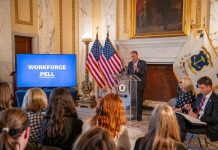
In the meeting rooms at the R.I. Convention Center, the handling of the federal stimulus package was a crucial topic of discussion, but the absence of Obama administration officials dampened things.
By last week, the mayors’ group had accepted a White House invitation to meet in Washington, D.C.
Outside the convention center and beyond the picket lines, visitors stopped into restaurants and did some window shopping.
Event organizers had directed visitors to local events such as the Providence Art Festival on June 13. David Riordan, owner of retail shop OOP! on Westminster, reported that there were people browsing in the store throughout the day, 30 to 40 people at a time.
Martha Sheridan, president and CEO of the PWCVB, said it’s estimated that the conference pumped $2 million into the local economy.
Not everyone in the city saw a boost.
Wayland Square shops on the East Side were on the route for special shopping shuttles. But the buses ran on Monday at the tail end of the conference, and they were mostly empty.
Robin Bugbee, owner of pet boutique Plaid and Stripe, said a former mayor of San Antonio, Texas, and his wife came in, and a few other people. But that was it.
While he said he appreciated the organizers’ efforts in attempting to get visitors from the conference to Wayland Square, he declared the day a “bust.”
The conference is far from the largest gathering on the visitors bureau’s schedule this summer. In fact, Sheridan said there are four others in the coming months, including an energy trade show and training workshop that is expected to draw 2,500 people.
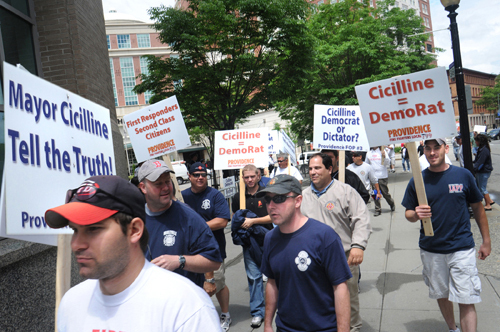
Providence had hoped to bask in the glow on a national stage, but the picket lines stole most of the spotlight as hundreds of firefighters and other protesters drew attention to the long-running labor dispute between Cicilline and Local 799 of the International Association of Fire Fighters.
The firefighters, who have been without a contract for years, are at loggerheads with Cicilline over the terms of a new bargaining agreement.
Union officials did not respond to a request for comment, but a day after the conference ended last week, Cicilline bristled at the suggestions that the protest proved to be a political victory for labor unions because of the White House’s refusal to cross the picket lines.
Among his fellow mayors, “they respected the fact that I was standing up for the resident and the taxpayers of the city,” Cicilline said.
While Tom Cochran, executive director and CEO of the U.S. Conference of Mayors, said in a podcast on the final day of the convention that the event had been successful, he acknowledged a “rocky start.”
Laurie White, president of the Greater Providence Chamber of Commerce, said the labor pickets came up in a conversation she had with a visiting mayor during a reception.
She said the dispute illustrates the importance of economic development and the growth of the business community. “I was thinking about what’s at the root of this,” she said. “And it’s because we’re not in a growth mode.”
A business-related highlight from the mayors’ conference for White was the chance for her and other local business leaders to meet with Colombian President Alvaro Uribe.
Cicilline called the discussions and work session during the conference “intense,” as mayors from across the country suffer fiscal problems similar to Providence’s. “We’re all trying to make it work with the resources we have,” he said.
In his office last week, Cicilline pointed to six books filled with the best practices of other communities in areas such as public safety, transportation, community development and education. He said his staff will review those practices in the coming weeks.
“[The conference-goers] said they loved the walkability of the city, the architecture, the restaurants and the hospitality,” Cicilline said. “A lot of the mayors said, ‘We felt like we were in the Midwest, people were so friendly.’ ” •