PBN Business Women Awards 2026
INDUSTRY LEADER | HEALTHCARE:
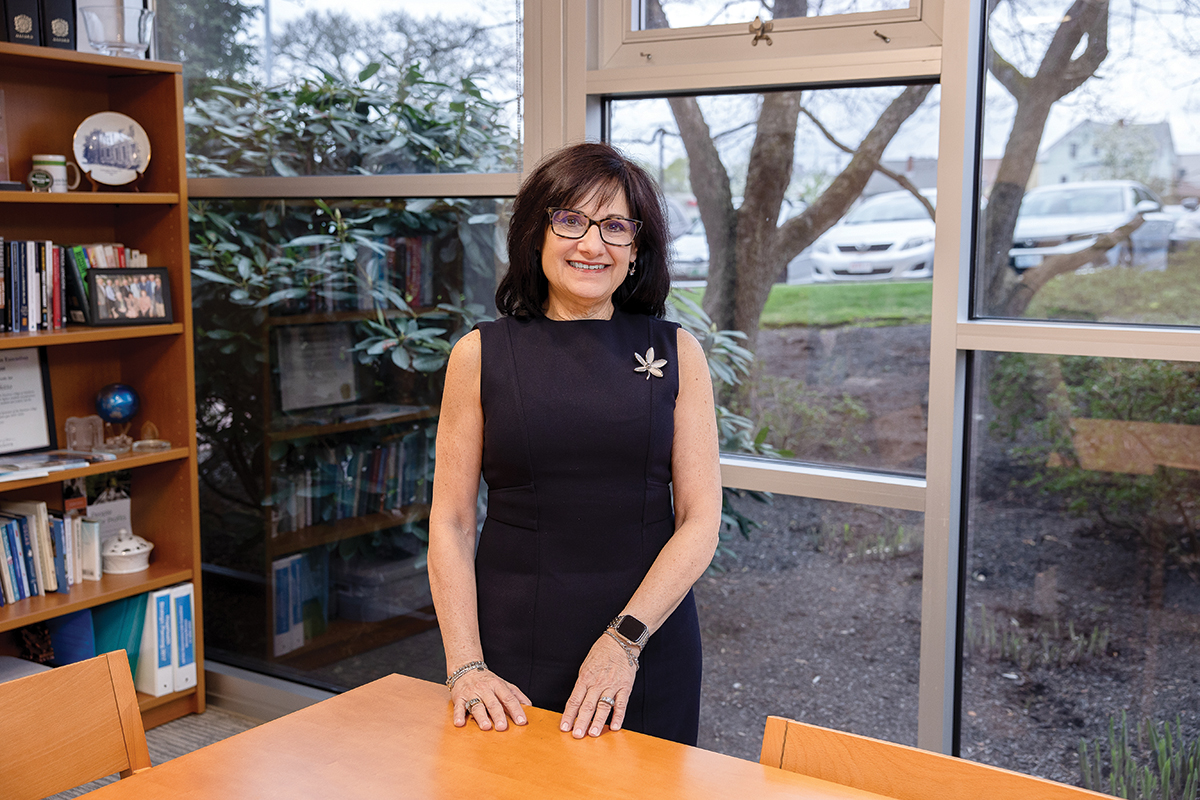
Diana Franchitto, HopeHealth CEO and president
Diana Franchitto wasn’t always interested in a career in hospice and palliative care. In fact, 20 years ago, she was working at Caritas Christi Health Care in Brighton, Mass., as interim senior vice president of public affairs, where she was part of a $1.2 billion health system with six hospitals and several subsidiaries.
ISO 9001:2026: A Practical Opportunity to Build for What’s Next
For Rhode Island manufacturers, ISO 9001 has been much more than a certificate on the…
Learn More
But one day, out of the blue, she got a call from a recruiter looking to fill a position in the hospice and palliative care field. No thanks, Franchitto said. It wasn’t for her. But as soon as she hung up, she immediately started asking herself, why not? “Just because I’m not interested in this job doesn’t mean I shouldn’t be,” she said.
After thinking it over for all of 10 minutes, Franchitto called the recruiter back and said she’d changed her mind. “Since then, I’ve come to learn so much about death and dying,” she said. “When a loved one is seriously ill, it’s a vulnerable time for a patient and their family. We focus solely on serious illness. It’s a growing field because patients and families and the medical system need it.”
Franchitto has a Master of Business Administration from Bentley University and has worked in the healthcare system since 1990. Today, she is CEO and president of HopeHealth, a 50-year organization that provides hospice and palliative care to patients and families in Rhode Island and Massachusetts. In the past, patients from southeastern Massachusetts couldn’t continue receiving hospice care once they went home. However, Franchitto, through a partnership and acquisition of a hospice provider in the Bay State, extended treatments into the southeastern corner of the state.
HopeHealth’s services range from hospice and palliative care to specialized dementia and Alzheimer’s treatments. The HopeHealth Hospice Center in Providence is the state’s only freestanding inpatient hospice center, Franchitto said. With beds for 30 patients, HopeHealth includes physicians, nurses, nurse practitioners and social workers among its staff.
In addition, HopeHealth’s affiliation with Brown University, and its focus on hospice and palliative care as an elective for critical care medical students, is an important part of its portfolio of services. “It’s one of the accomplishments I’m most proud of,” Franchitto said.
Franchitto is responsible for ensuring HopeHealth delivers high-quality care, as well as positioning and navigating the organization into the future. One of her biggest challenges, she said, is reckoning with financial reimbursement for HopeHealth’s services.
“Insurance coverage typically has a hospice benefit,” she said, “but rates aren’t enough to cover the cost of care. They’re not high enough to cover inflation.”
Another major challenge was managing the organization through the COVID-19 pandemic. During the early days of the pandemic, many hospice inpatient facilities around the country opted not to admit patients with COVID-19 due to safety concerns. Franchitto, however, made a different decision. Working closely with hospitals and the R.I. Department of Health, HopeHealth set aside an internal hospice unit specifically for COVID-19 patients. Families were able to visit loved ones in person, a decision that required careful coordination and safety precautions.
Palliative and hospice care services are becoming more widely accepted as the baby boomer generation continues to age, Franchitto said. “There’s less fear and trepidation as these services become more familiar and more comfortable for people,” she said. “I have such admiration for our clinicians.”
Franchitto says that it takes authenticity to be an effective CEO. “You have to be an honest leader. You also need to be a collaborator. Collaboration inspires people to want to work together and want to work with you,” she said.
As to why Franchitto is in this profession? Because it’s meaningful and purposeful, she said. “I can’t imagine doing anything else. Being able to support a family in a very difficult time, it’s so fulfilling,” she said.