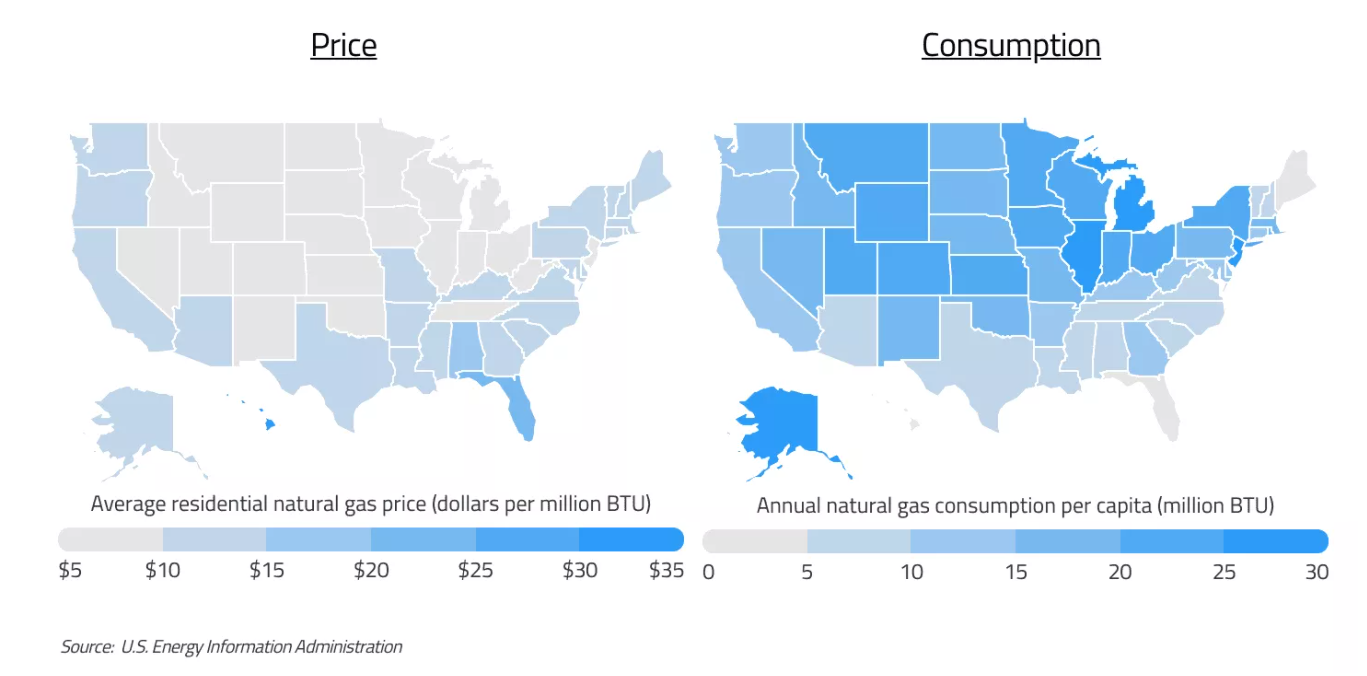
PROVIDENCE – Even before the recent wave of inflation drove up energy prices, Rhode Islanders were already paying more to heat their homes with natural gas than 90% of other states.
A new report by Commodity.com ranked Rhode Island fifth in the country for most expensive residential natural gas prices in 2020, based on data from the U.S. Census Bureau and the U.S. Energy Information Administration. On average, Rhode Islanders paid $14.52 per 1 million British thermal energy units – the common measurement of natural gas – for their homes in 2020, well above the $10.40 national average for the year.
Building a Strong Data Foundation in the Age of AI
Artificial intelligence (AI) has become a key priority in the boardroom and across management —…
Learn More
Natural gas is less widely used in Rhode Island than other parts of the country, with the 17.93 million BTUs per capita in the Ocean State ranking 31st among states in 2020. However, higher prices also mean the state also fared poorly in terms of annual natural gas costs per person, with the $260 per capita cost in 2020 the third-highest nationwide, according to the rankings.
Neighboring Massachusetts had the seventh-highest average natural gas price in 2020, followed by Connecticut, which ranked eighth, the report stated.
Adding fuel to the flame are the rising costs of energy, including natural gas, driven by inflation and volatility in supply and demand. While state-specific data for 2021 was not available, utility gas service nationwide is up more than 25% year over year as of November 2021, according to data from the U.S. Bureau of Labor Statistics included in the Commodity.com report. In the summer of 2021, average costs nationwide reached $20 per 1 million BTUs, a level not reported since 2008.
Prior to the pandemic, natural gas was seen as a more affordable energy option, with residential prices declining thanks to new technology that made extraction easier and cheaper.
The recent spike in prices, combined with increasing interest in energy efficiency, may push utility companies and consumers to consider alternatives, including from renewable sources, the report stated.
Nancy Lavin is a PBN staff writer. You may reach her at Lavin@PBN.com.