PROVIDENCE – Researchers at Rhode Island Hospital have discovered a mechanism that injured and stressed cells use to transmit protein and genetic information to other cells so they can help the body to repair itself.
In a paper published in the March edition of the journal Experimental Hematology, Dr. Jason Aliotta and colleagues described how when cells are injured, or with diseases such as cancer and infections, the cells shed tiny particles called microvesicles, and other cells absorb them.
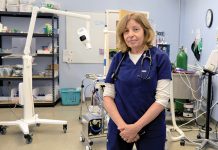
Aliotta, who is a physician researcher in pulmonology and hematology/oncology at Rhode Island Hospital, an assistant professor at Brown University’s Warren Alpert Medical School, and a physician with University Medicine Foundation, said this appears to be how bone marrow cells are able to repair organs unrelated to those cells, such as the lungs.
The lung cells shed microvesicles, and they are consumed by bone marrow cells, which then turn into lung cells, Aliotta and his colleagues found. The same process occurs with other organs, offering a valuable insight for tissue-regeneration research.
Conversely, the researchers hypothesized that microvesicles may help cancers metastasize, since in cancer, more microvesicles circulate in the body, and they could be transferring the traits of the cancerous cells to the other cells. •


No posts to display
Sign in
Welcome! Log into your account
Forgot your password? Get help
Privacy Policy
Password recovery
Recover your password
A password will be e-mailed to you.
- Featured Event -