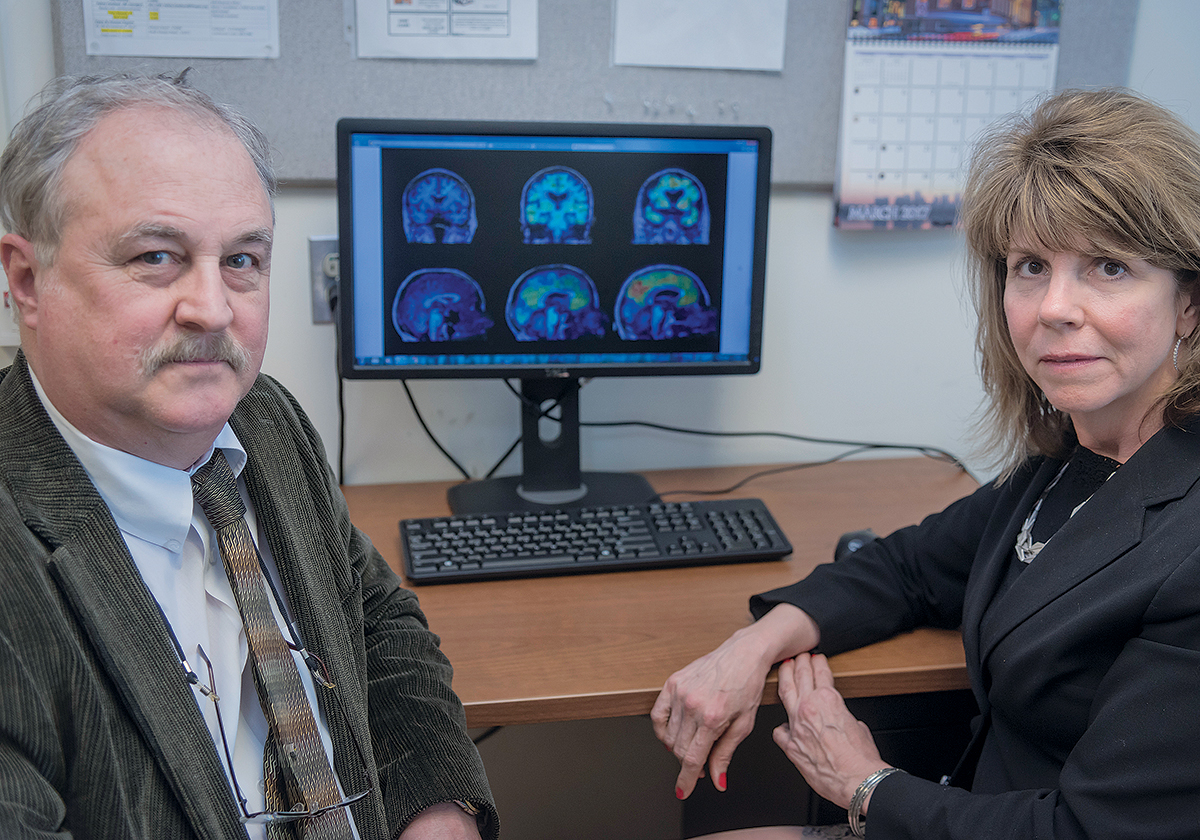
PROVIDENCE — Rhode Island Hospital has joined phase four of the $40 million Alzheimer’s Disease Neuroimaging Initiative, an international clinical trial studying the rate of brain function changes as people age past 55, which will guide Alzheimer’s treatment research.
The trial, mainly funded by the National Institutes of Health at $40 million, with up to $20 million from the private sector, will fill in crucial gaps in researcher’s knowledge about how Alzheimer’s disease progresses in aging adults and which changes factor most prominently in advancing symptoms, said Dr. Brian Ott, director of the Alzheimer’s Disease and Memory Disorders Center at Rhode Island Hospital and the principal researcher in the hospital’s part of the clinical trial.
Selling Luxury Real Estate Requires More Than Exposure
By Emilio DiSpirito IV License Partner | Private Office Advisor Engel & Völkers Oceanside www.DiSpiritoteam.com…
Learn More
“A lot of people realized we need to study older people longitudinally (several observations of the same subjects over a period of time),” said, Ott, also a professor of neurology at The Warren Alpert Medical School of Brown University.
That work began in 2004, focusing on validating the use of biomarkers to track and diagnose the disease in Alzheimer’s patients, including use of blood tests and cerebro spinal fluid tests, as well as Magnetic Resonance Imaging and Positron Emission Tomography imaging through phase three, according to Dr. Michael Weiner, principal investigator of the international study, on the ADNI website.
The study also demonstrated that about 25 percent of people in their mid-70s have a very early stage called “pre-clinical Alzheimer’s Disease,” which would have previously gone undetected, Ott said. The discovery has led to the current view that prevention and early treatment may be the most effective approach to the disease, he added.
With phase four, the focus turns to study of the progression of the disease. The current phase promises to provide a level of detail about how Alzheimer’s disease affects people that hasn’t been available before, Ott said.
Prior to the start of ADNI, Ott said, researchers relied on post-mortem studies of Alzheimers’-stricken brains. Now, with PET scans available for the last ten years, using agents that bind to the proteins associated with Alzheimer’s disease to highlight them on scans, they’ll start researching the how the disease progresses.
One of the discoveries the early diagnosis work uncovered was the possible role of tau protein inside brain cells, rather than the more popularly known amyloid proteins that form on the surface of the brain, as a likely driver of the disease.
“So, it might be a better target,” both in the diagnosis and treatment of Alzheimer’s disease, Ott said.
The study will gather information about how and when each type of protein builds up in an aging person’s brain, and the symptoms associated with each.
“That kind of information then informs people who design clinical tools,” Ott said, that can then guide research into treatments.
Rhode Island Hospital is recruiting about 20 people for the study and have 10 people signed up so far. Nation-wide, the study is being conducted at 59 sites, each of which are recruiting about 20 people. The entire group in the study is about 1,200 people, Ott said.
Subjects for the study must be 55 to 90 years old, in good health, have little to no memory concerns or a diagnosis of mild cognitive impairment, willing to take memory assessments, and have a partner who can accompany them to the clinic for all visits.
If you are interested in volunteering for ADNI or have questions about the research, contact the Rhode Island Hospital ADMDC at 1-844-5MEMORY or email memory@lifespan.org.
Rob Borkowski is a PBN staff writer. Email him at Borkowski@PBN.com.