JAMESTOWN – The R.I. Turnpike and Bridge Authority faces a possible $223 million shortfall over the next 20 years, according to a report presented yesterday by consultants from the agency’s longtime engineering firm BP Americas, whose suggestions included the return of toll collectors to the Mount Hope Bridge.
“RITBA has historically maintained its bridges in a state of good repair, and in a cost-effective and responsible manner,” Debra L. Moolin, the project’s lead structural engineer, said in a statement. “Given its facilities’ age and typical suspension-bridge maintenance and replacement cycles, the Authority is now facing additional capital needs.”
The engineering firm’s 69-page report, entitled “Maintaining the Financial and Operational Health of the Rhode Island Turnpike and Bridge Authority: A Study of Options,” lists more than a dozen revenue-enhancement or cost-reduction “opportunities,” beginning with the reinstitution of tolls on the Mount Hope Bridge, where it suggests toll collection via cash and E-ZPass only.
“Significant capital and operating costs would be required,” the report acknowledges, “including reconstruction of the toll plaza and the need for additional toll collectors.” Savings on personnel costs were cited by the authority when it eliminated the Mount Hope tolls several years ago.
Other suggestions include eliminating the free tokens now given to customers who buy in bulk; a one-time increase in toll rates on the Claiborne Pell Bridge between Jamestown and Newport; increasing tolls regularly, across the board; and charging a higher cash toll during the summer tourist season.
Non-toll revenue enhancement suggestions include charging telecommunications providers lease fees for their existing conduits; allowing cellular communications providers to place antennas on the bridges; and selling advertising space along the road, at the toll plazas and on toll receipts.
Cost-reduction suggestions include outsourcing janitorial and maintenance tasks now performed by RITBA employees; charging tolls in only one direction to save on staffing costs; considering “alternative procurement strategies”; and renegotiating contracts as often as possible “to make certain that the Authority is obtaining the most effective pricing.”
“We take our role as stewards of the Pell Newport Bridge and the Mount Hope Bridge very seriously,” David Darlington, chairman of the RITBA board, said in a statement. “We have been trying to do more with less from the past few years – but it is evident from these findings that we are now passing the point of diminishing returns.
“The board will be engaging in a series of public workshops so that we, as a community, can discuss all the options that PB Americas has put forth.”
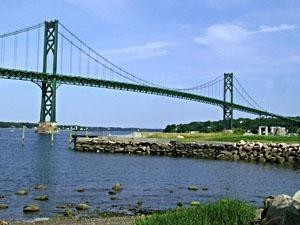
The R.I. Turnpike and Bridge Authority – established by the R.I. General Assembly in 1954 – is the agency that manages the Claiborne Pell Bridge between Jamestown and Newport, and the Mount Hope Bridge between Portsmouth and Bristol. It receives no tax money but derives all revenue from tolls and investments. Additional information, including the full report “Maintaining the Financial and Operational Health of the Rhode Island Turnpike and Bridge Authority: A Study of Options,” is available at www.ritba.org.