KINGSTON – “Like the nation’s, Rhode Island’s economy slowed during the first quarter,” University of Rhode Island economist Leonard Lardaro said today in his monthly report.
“For March, economic momentum clearly diminished, as the Current Conditions Index fell from 58 [points] in January and February to its neutral value of 50.”
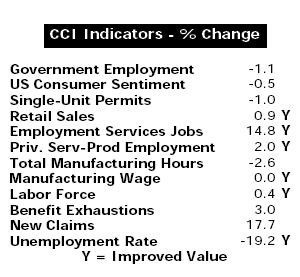
The index was mixed in March, he said, with only six of the 12 indicators improving from their levels in March 2006. The weather – seasonable, unlike that in January and February – “did not appreciably distort March’s data.”
Retail sales grew more slowly than in February, to 0.9 percent above their level in March 2006, but that was “largely as a result of a strong [comparable-period performance] one year ago,” Lardaro said.
Employment service jobs, including temporary workers, rose 14.8 percent. Though the indicator was aided by “a very weak comp last March,” he wrote, “the overall performance of this indicator has been very impressive.” The March result was the sixth consecutive double-digit increase for this leading indicator.
Also improving were private service producing employment, which grew by 2 percent in March for its third consecutive month at or above that rate;
the state’s unemployment rate, which at 4.2 percent was down a full percentage point from March 2006; and the state’s labor force, which expanded by 0.4 percent over its size a year earlier.
Government employment fell 1.1 percent, in its sixth consecutive decline; new claims for unemployment insurance rose 17.7 percent; and benefits exhaustion, a measure of long-term unemployment, rose 3.0 percent.
Also losing ground were single-unit building permits, which fell 1 percent from their elevated level in March 2006; U.S. consumer sentiment, declining 0.5 percent, and ending a six-month streak of monthly increases; and total manufacturing hours, which fell 2.6 percent.
The average manufacturing wage was essentially unchanged, at one cent per hour above last March’s rate.
“Generally, as the national economy goes, so too does Rhode Island’s economy,” Lardaro concluded. “While this was clearly true in the first quarter, it might not be the case for much longer. The sheer magnitudes
of Rhode Island’s budget deficits for FY 2008 and beyond will negatively affect our state’s growth rate, potentially causing us to lag the national economy even more than we do now.”
Selling Luxury Real Estate Requires More Than Exposure
By Emilio DiSpirito IV License Partner | Private Office Advisor Engel & Völkers Oceanside www.DiSpiritoteam.com…
Learn More
The Current Conditions Index, created by University of Rhode Island economist Leonard Lardaro, measures the strength of the state’s economic climate; values above 50 indicate the economy is expanding. Additional information, including historic data, is available at members.cox.net/lardaro/current.