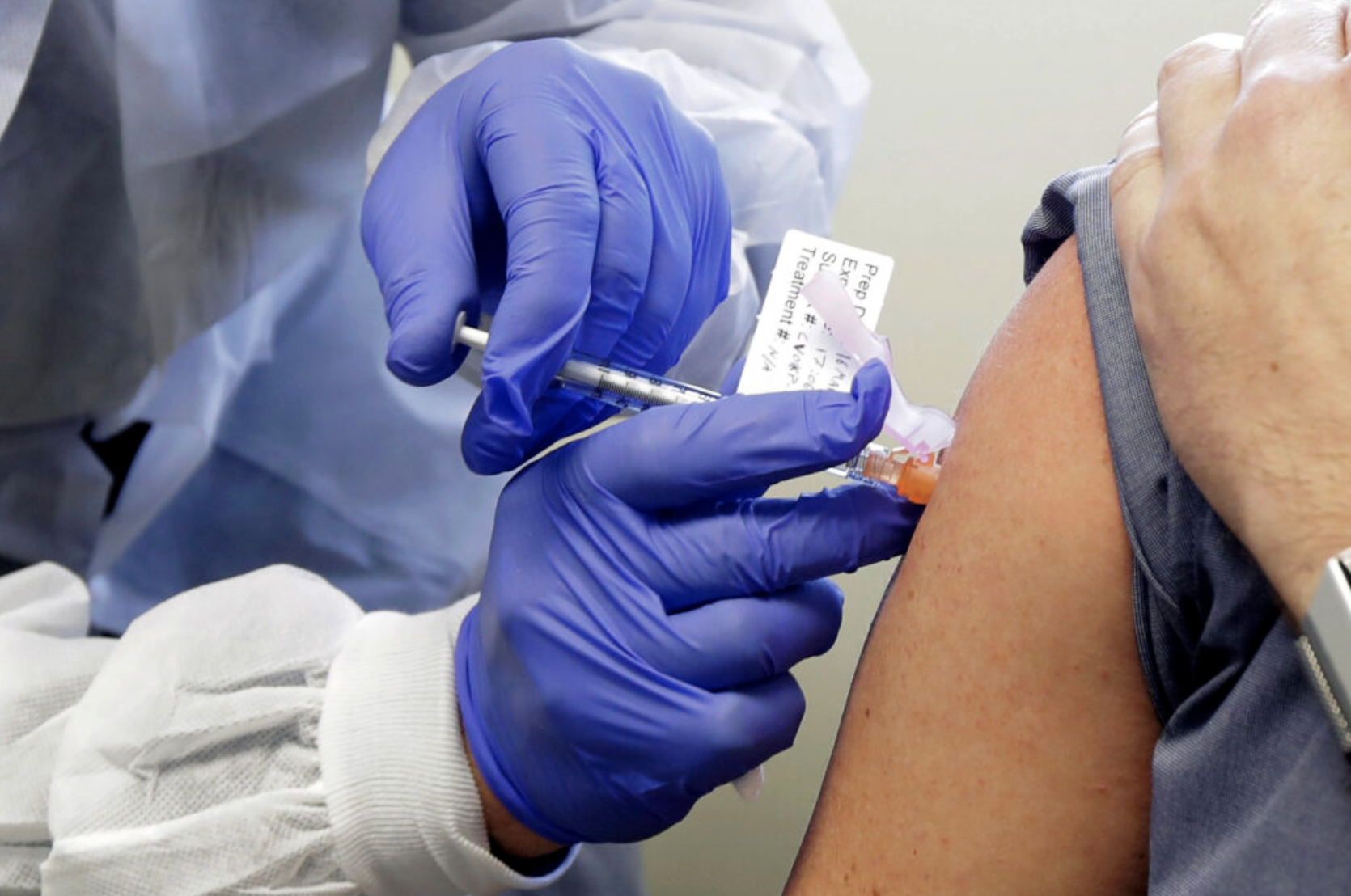
PROVIDENCE – In the coming days, staff from Woonsocket-based CVS Health Corp. and Walgreens will soon be traveling to Rhode Island’s long-term care facilities to begin vaccinating staff and residents, who include some of the hardest-hit individuals throughout the pandemic so far.
Each facility in Rhode Island has opted into a federal program with the U.S. Department of Health and Human Services to work with CVS to help distribute COVID-19 vaccines to long-term care facilities by opening on-site clinics.
Selling Luxury Real Estate Requires More Than Exposure
By Emilio DiSpirito IV License Partner | Private Office Advisor Engel & Völkers Oceanside www.DiSpiritoteam.com…
Learn More
In a Wednesday night press conference with reporters, representatives with the R.I. Department of Health said that due to the mild side effects caused by the vaccine, such as headache, soreness and fatigue, staff members of these long-term care facilities should be vaccinated in phases to prevent multiple staff members from not feeling well at once.
As previously reported, the partnership with these facilities will schedule three on-site clinics. The first is to administer the first dose, the second is to administer the second dose, and the third is to reach any patients admitted into the facility between the first and second clinic to receive their second dose, as well as any remaining staffers.
Alysia Mihalakos, chief of RIDOH’s Center for Emergency Preparedness and Response, said the state is still working on a program that will ensure that nursing home staff members will have plenty of chances to receive the first and second dose of the COVID-19 vaccine.
Both the Pfizer Inc./BioNTech vaccine, which has been distributed to some Rhode Island hospitals, and the Moderna Inc. vaccine, which is awaiting federal approval, will require two doses.
The program to start vaccinating nursing home residents and staff could begin before the end of the year, according to Mihalakos.
She said that Rhode Island is “ready to go,” as the federal Department of Health and Human Services irons out the final details of its contract with the pharmacies. The start of the program will serve as a milestone for what has been a deadly year for nursing homes.
Nearly 40% of all COVID-19-related deaths in the nation were in nursing homes, and more than 65% of COVID-19 deaths in Rhode Island were in long-term care facilities.
“It’s a great opportunity for us to slam on the brakes [of the virus],” said Mihalakos. “It’s all moving incredibly quickly.”
She added, “A lot of people are going to ring in the new year with first doses.”
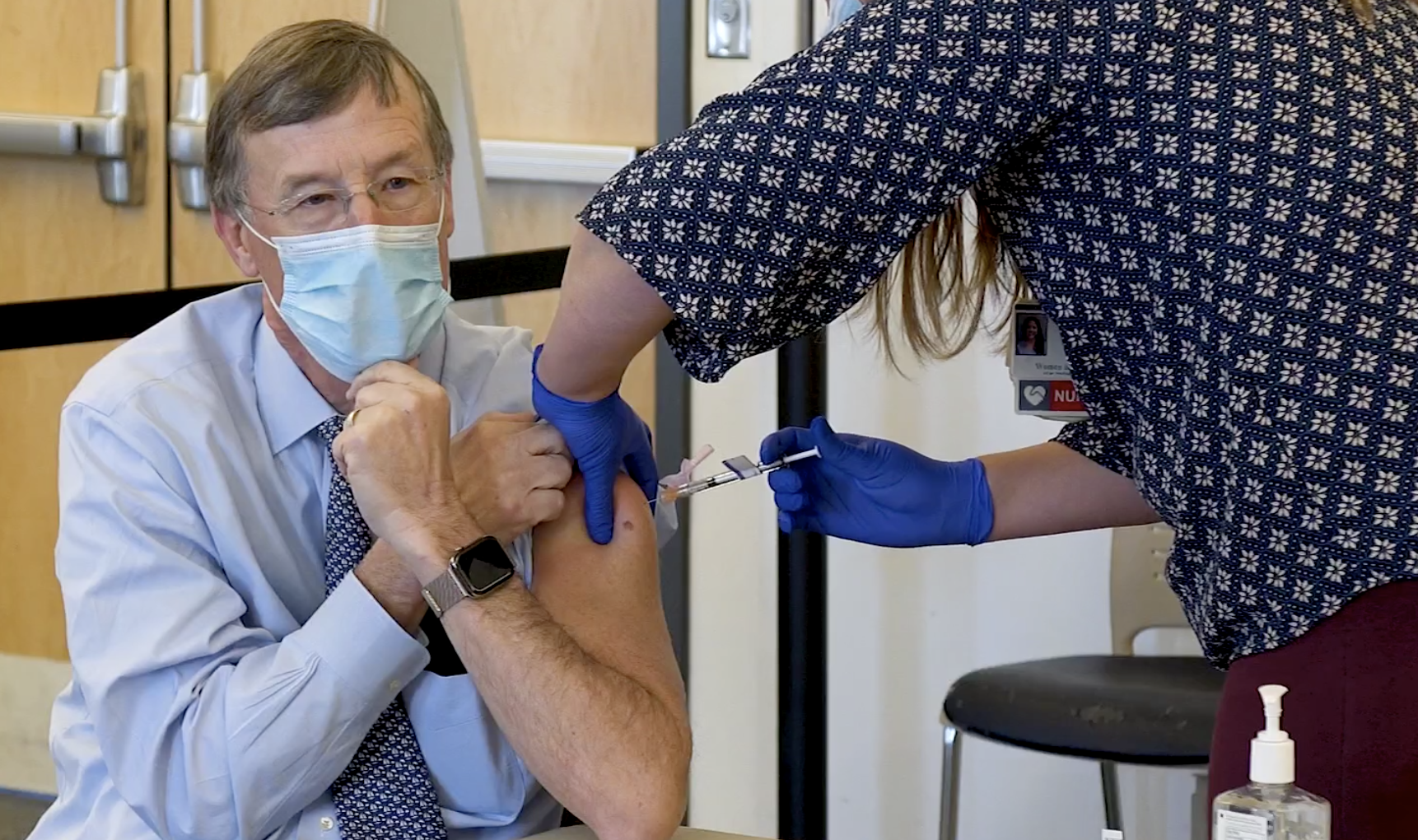
RIDOH’s press conference comes as the first several hundred Rhode Islanders have already received their first dose of the Pfizer vaccine. Those Rhode Islanders were largely at-risk health care workers at hospitals owned by Lifespan Corp. and Care New England Health System.
“Hopefully the beginning of the end is here,” said Dr. Philip Chan Wednesday during RIDOH’s press conference. Chan is the consultant medical director of RIDOH’s Division of Preparedness, Response, Infectious Disease and Emergency Medical Services. “If this was a race, we’d be right on target … [the] logistics are unbelievable.”
Tricia Washburn, the chief of RIDOH’s Center for Preventive Services, said Rhode Island is expected to receive another shipment of 4,875 Pfizer COVID-19 vaccines Thursday, if the weather permits.
Dr. Christian Arbelaez, attending physician and vice chair of academic affairs and emergency medicine at Rhode Island Hospital, was the first Rhode Islander to receive the vaccine. He was administered his first dose on Dec. 14.
Within hours of the shipments, Lifespan began inoculating its most at-risk employees, including providers and staff that have direct contact with COVID-19 positive patients or with COVID-19 infectious fluids and materials, the health system said in a Dec. 14 news release. These include doctors and nurses who deliver direct care, as well as respiratory therapists and housekeepers who provide medical and operational support in the clinical areas of Lifespan’s five hospitals.
Kathleen Hart, spokeswoman for Lifespan, said the health care system has vaccinated about 600 employees as of Wednesday afternoon.
“As a health care system, we know that the way to fight this pandemic is on two fronts,” said Lifespan CEO and President Dr. Timothy J. Babineau. “The first is to effectively and expertly treat patients with COVID-19. We are already doing that every day. The second is to prevent people from contracting this dangerous disease in the first place. With this vaccine, which studies have shown to be safe and 94% effective, our health care system and workers can help play a vital role in conquering COVID-19.”
Raina Smith, a spokeswoman for Care New England, said on Dec. 14 that the system was expecting to receive 5,000 doses of Pfizer’s vaccine, which would be delivered to Women & Infants Hospital. She said the health system, which owns two other hospitals – Kent County Memorial Hospital and Butler Hospital, would administer the vaccine to a mix of leadership personnel, to “lead by example,” and front-line health care workers.
Care New England CEO and President Dr. James E. Fanale received the first of his two doses of the Pfizer vaccine on Tuesday. He said he works with elderly patients and said recently that many of them have told him that they feel at ease knowing their direct care staff is starting to receive the vaccine.
“This is a chance in the health care system to prevent the disease, make people safe and get through this next few months,” said Fanale to reporters in a press conference. “It’s really, really important.”
The doling out of vaccines began after the Rhode Island COVID-19 Vaccine Subcommittee, a leg of the R.I. Department of Health’s established Vaccine Advisory Committee, met on Dec. 14 to give the final authorization required in the state to start administering the vaccine by Pfizer and BioNTech.
The subcommittee is prepared to review data of the Moderna COVID-19 vaccine early next week, after it goes through a review process for emergency use authorization under the U.S. Food and Drug Administration.
Alexa Gagosz is a PBN staff writer. Contact her at Gagosz@PBN.com. You may also follow her on Twitter at @AlexaGagosz.