(Editor’s note: This is the 22nd installment in a weekly series spotlighting Rhode Island FC and Centreville Bank Stadium from a business perspective throughout the 2025 United Soccer League Championship season. To read past stories in this series, click here.)
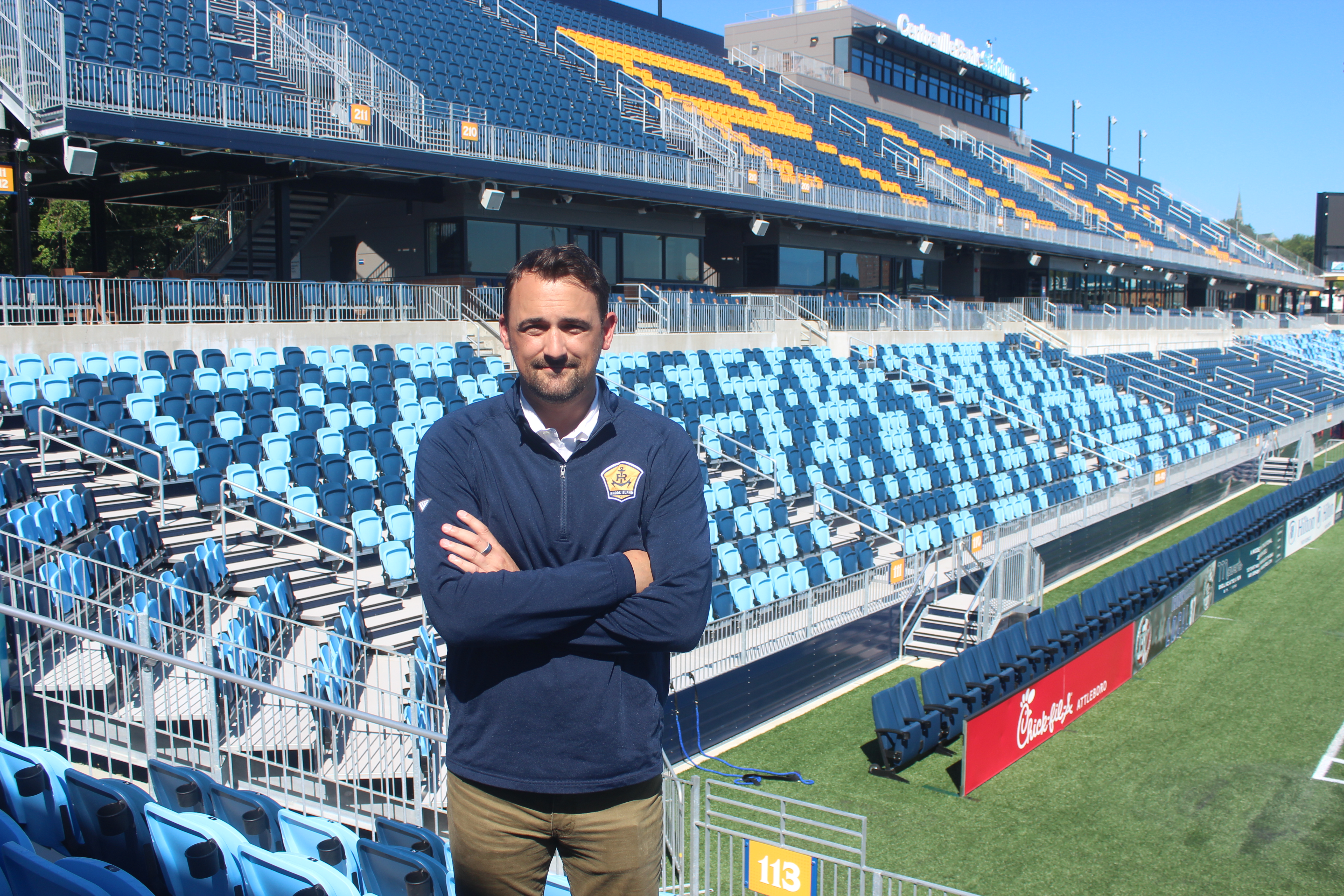
PAWTUCKET – It’s a daily numbers game for Brett Ackerman, beyond the numbers that are posted on Centreville Bank Stadium’s scoreboard.
Ackerman’s regular professional duties as the club’s director of finance include analyzing data, creating budget guidelines and forecasting projections to help make Rhode Island FC’s overall business structure succeed in a new market. That includes finding ways to grow the local fanbase to support the club and continue to consistently fill the waterfront stadium, especially with interest in soccer being at a high level with the FIFA World Cup taking place next summer.
PBN: What initially led you to working for Rhode Island FC? Have you previously worked for a sports organization before and, if so, where?
ACKERMAN: I started out working for Fortuitous Partners, the private equity and development arm of Rhode Island FC and Centreville Bank Stadium, as their financial controller. As the team and stadium continued to develop there was a greater need for a full-time director of finance in Rhode Island. Rhode Island FC has been my first experience in the sports industry.
PBN: Kindly explain what your day-to-day work life is like in overseeing all the financial aspects of the soccer club.
ACKERMAN: I oversee all aspects of accounting, payroll, human resources, insurance, investments and fundraising. I manage a team of four and work closely with all departments.
PBN: Do you also engage with investors as part of your daily duties with the team? If so, kindly explain what that entails.
ACKERMAN: As the liaison between ownership and investors I provide updates on several fronts including business analytics, budget reviews, financial projections and merchandise and club updates.
PBN: What are the challenges in making Rhode Island FC a viable business when there is no real precedent of professional soccer in this state? And how are you approaching those challenges?
ACKERMAN: Our leadership, including Team President David Peart, Stadium General Manager Paul Byrne, and Head Coach and General Manager Khano Smith, has done an exceptional job growing the business on and off the field. I have a fiduciary responsibility to our ownership and investors. I analyze data, create budget guidelines and forecast projections. This allows me to set our leadership up for continued success.
PBN: Rhode Island's other current and past professional teams - the Providence Bruins and the former Pawtucket Red Sox - are attached to major professional teams as minor-league feeder systems. Does Rhode Island FC being its own professional brand pose a unique challenge for it to stand out as a local business?
ACKERMAN: We are extremely proud to be the only homegrown professional sports team in the Ocean State. We recognize this and use it to our advantage. With greater flexibility, we can maximize outreach, partnerships and community involvement.
PBN: How do you measure the success of a professional sports team? Is it all based on on-field performance and the revenue follows suit or does it beyond team performance?
ACKERMAN: The team’s performance on the field is one of many ways we measure success. While extended playoff runs and additional in-season tournament games provide unscheduled opportunities for additional revenue, we also look at our connection to and impact on the community. Our economic impact, including job creation, tourism and neighborhood revitalization, is extremely important to our key objectives.
PBN: Realistically, what is needed for Rhode Island FC to remain viable and in front of the state's public consciousness beyond this season after Centreville Bank Stadium's inaugural year and the hype surrounding the World Cup next summer?
ACKERMAN: There are many factors, both short and long term, that contribute to our success. At the forefront, we must continue to grow the Rhode Island FC fanbase and increase the number of visitors to Centreville Bank Stadium. It is imperative that both entities serve as a symbol of regional pride and create greater awareness in the marketplace. The 2026 FIFA World Cup will have a tremendous impact on the interest of soccer, generating new fans throughout the region with an appetite for professional soccer at a best-in-class venue.
Current team record (wins-losses-draws): 9-11-7, 34 points; 8th place of 12 in USL Championship Eastern Conference
Result of previous match: Rhode Island FC 2, El Paso Locomotive 2 (from Sept. 26. Match vs. Las Vegas Lights on Oct. was cancelled)
Next match: Rhode Island FC vs. Tampa Bay Rowdies, Oct. 11, 7 p.m. at Centreville Bank Stadium
James Bessette is a contributing writer and former PBN special projects editor. You may follow him on X at @James_Bessette.