John J. Grady remains optimistic about the future of manufacturing in Rhode Island, although the executive director of the Rhode Island Manufacturers Association certainly acknowledges that current economic times present exceptional challenges. To help the public and General Assembly learn more about the industry, he worked with House Finance Committee Chairman Steven M. Costantino to organize a five-hour bus tour to five manufacturing sites for committee members on Nov. 20. It was the first time such a visit has been held for lawmakers. In the next legislative session, which begins in January, he said RIMA will be working to avoid state tax increases.
PBN: How would you describe the state of manufacturing in Rhode Island today?
GRADY: It’s challenging, particularly due to the economic realities that we have right now. Some manufacturers are doing well; others are having a tough time.
ISO 9001:2026: A Practical Opportunity to Build for What’s Next
For Rhode Island manufacturers, ISO 9001 has been much more than a certificate on the…
Learn More
PBN: How much does that reflect the national situation?
GRADY: Rhode Island and the Northeast have fixed costs that make it much harder for manufacturing. For manufacturing and business in general, we all know it’s a tough time right now. [Manufacturers in Rhode Island versus other parts of the country have to deal with] high energy costs, higher labor costs and high property taxes. And then health care costs, of course, are always a problem.
PBN: What does the Rhode Island Manufacturers Association (RIMA) do to help its 300 members?
GRADY: We are a lobbying group for strictly Rhode Island manufacturers. Our legislative committee researches and talks to our members about issues that are important to them, what’s hurting their performance here in Rhode Island and what really affects their bottom lines. So, the legislative committee will research that and do some background work to see what we can do to change or at least to facilitate a change in obstacles facing manufacturers. We’ll write legislation, shop it around, get it introduced, and organize manufacturers to testify for it to try to push it through.
[Regarding important issues for the next General Assembly session] I think taxation, obviously, is a big issue. Given the economic times, we are going to try to avoid any tax increases. I think, after bringing the House Finance Committee around [to visit five manufacturers] … we have to focus on other issues that we can achieve to help manufacturers this session, such as streamlining the permitting processes and looking at other ways we can help affect a manufacturer’s bottom line.
PBN: What will you focus on besides taxes?
GRADY: There may be a few things we can pinpoint, but I really think that this year is going to be all about trying to avoid a big tax increase.
PBN: What can state government do to help manufacturing?
GRADY: We’ve been working with the Governor’s Workforce Board, we did a skills-gap study last year. … What we did was send out surveys to our manufacturers looking for them to answer the question of when they are looking for employees, what are the skills [potential new employees] lack? Now we’re looking at those results and seeing where we can fill the skills gaps. If they have employees troubled in math and science, then we’re trying to boost schools’ performance in those areas. One of the things that state government can do is make more training dollars available, and we’re working with [the state] to try to make things more transparent where [manufacturers] know the money is available and helping them get to the money.
PBN: If you had to predict what the state of manufacturing will look like in Rhode Island in 20 years, what do you think? Will we have lean and clean manufacturing or will we have a service-based economy?
GRADY: I tend to be more optimistic than pessimistic. I think that, in the long run, manufacturing is going to come back. It’s not going to be the same manufacturing as it was before, it’s going to be very high tech, it’s going to be clean and lean. Manufacturing jobs pay on the average 25 percent more than service-industry jobs, the benefits are better, and those are high-paying jobs that we want to keep in Rhode Island.
PBN: Tell us what RIMA has been up to lately, and the benefits of joining the organization.
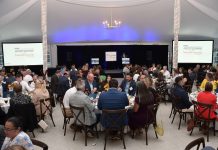
GRADY: We just had our annual gala, it was great. We had over 200 people at the Statehouse for a sit-down dinner Nov. 8. We had a great showing, we had exciting manufacturing awards we gave out. … Our membership dues are coming around, membership renewals are coming out, and it is crucial that people support us now because this is the toughest time. We really have to fight for manufacturing and we need that support. Dues are based on the number of full-time employees at a company, ranging from $250 to $2,500 for the year.
We partner with Constellation NewEnergy, we’ve got a great energy program that a lot of our members are benefiting from. [Constellation NewEnergy] is a supplier for National Grid, so you can lock into a contract for a certain amount of time and you can lock into a certain price. Another thing that is exciting is we have an energy load-response program that helps the energy grid stay stable. If you commit to lowering your energy usage during peak hours, you’ll get paid by the electric company every month.
[Manufacturing in this state] is really pretty amazing. So many things are being manufactured here in Rhode Island that a lot of people don’t know about. For instance, Tiffany & Co. has a large plant in Cumberland. ChemArt in Lincoln has been designing and making the White House Historical Association Christmas ornaments for years and Meridian Printing in East Greenwich does a great job with high-end art reproductions. It’s hard to get those stories out sometimes.
It’s a tough economic time, but there’s a lot of exciting things. •
John J. Grady
POSITION: Executive director, Rhode Island Manufacturers Association (RIMA)
BACKGROUND: Before taking charge of RIMA in 2000, Grady worked for the U.S. Chamber of Commerce as director of corporate relations for New England, based in Boston, from 1998 to 2000. He previously worked for Associated Industries of Massachusetts, a lobbying group representing thousands of companies in the Bay State.
EDUCATION: Attended the State University of New York at Brockport
FIRST JOB: In his early 20s, he worked at Burberry Limited on Newbury Street in Boston, an upscale clothing store, in the men’s department selling suits and ties.
RESIDENCE: North Smithfield
AGE: 47