
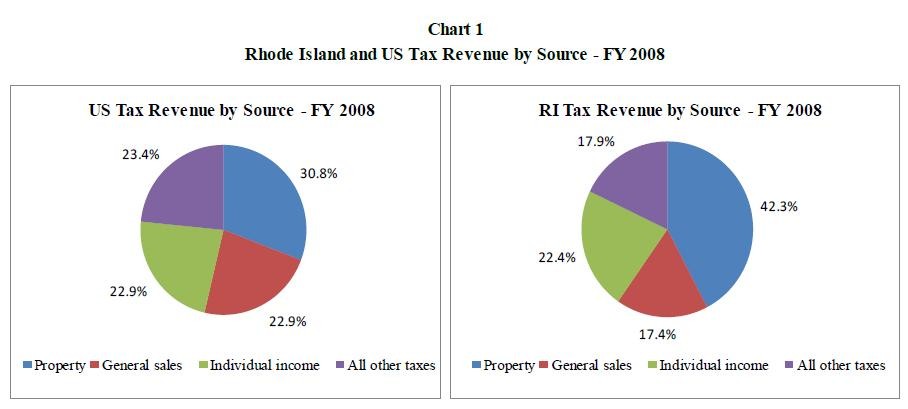
 CLICK HERE. / " title="ACCORDING TO DATA from the U.S. Census Bureau, the revenue generated from general sales tax in the U.S. made up 22.9 percent of the total tax revenue. In Rhode Island, it was 17.4 percent. For a larger version of this image, CLICK HERE. /"/>
(Updated, 2 p.m.)
PROVIDENCE – The Rhode Island Public Expenditure Council said the guiding principles behind Gov. Lincoln D. Chafee’s sales tax modernization proposal – broadening the base and lowering the rate – are sound tax policy.
A broader base with fewer exemptions reduces complexity, while taxing similar goods similarly leads to a more neutral tax system, RIPEC said. Lower rates may help the state attract more business, offset the regressivity of the sales tax and help in-state businesses be more competitive with businesses in neighboring states.
Rhode Island's Market Has Changed. Developers, Builders, Investors and Sellers Must Change With It.
By Emilio DiSpirito IV License Partner | Engel & Völkers Oceanside Leader | The DiSpirito…
Learn More
RIPEC, a nonprofit business-backed think tank, analyzed the governor’s sales tax proposal in a 12-page report released Thursday.
Chafee’s proposal calls to lower the rate to 6 percent from 7 percent, broadening the base of taxable goods and services, and adding an additional 1.0 percent rate for specific goods and services.
The number of taxable goods would increase by 20 and services – including landscaping, hairdressing and dry cleaning – would increase by 77. At the 1.0 percent rate, 37 previously exempt goods items would be taxed as well as 10 previously exempt services.
The plan is expected to raise $164.9 million in net new revenue for the state.
Rhode Island has the second-highest state general sales tax rates in the country, RIPEC said, but collections in the state are below the national average, mostly due to the lack of local-option taxes, cross-border competition, changes in personal consumption (shifting more toward service-oriented from goods-oriented), and a narrow tax as a result of exemptions and limited services taxation.
“A broader base tend to insulate the tax structure from economic fluctuations, as noted earlier, while a lower rate both minimizes economic distortion and the regressive nature of the tax,” it said.
In the report, RIPEC also urged lawmakers to consider the negative impacts of the proposal.
Levying taxes on business inputs, it said, could deter companies from hiring additional staff members, producing goods, or providing certain services due to the rising cost of doing business in Rhode Island.
“Governor Chafee is pleased by this independent validation of the desirability of sales tax modernization,” said Christian Vareika, deputy press secretary. “He believes modernizing the state’s sales tax policy is an important structural reform that will produce consistency in the state’s revenue stream.”
“As to the specific objections raised by RIPEC, Governor Chafee is willing to work with the House and Senate to minimize these concerns,” said Vareika.
RIPEC also outlined six principles a high-quality tax system should follow:
- Minimize distortion in economic decisions. Changes to the tax system should minimally affect a taxpayers’ decision to engage in, or how they engage in, a transaction.
- Be equitable and treat similarly situated taxpayers equally. Tax systems should minimize regressivity, taking into account a taxpayers’ ability to pay, while treating similarly-situated taxpayers, producers and goods equally.
- Be simple to administer and comply with in a cost-effective manner.
- Be transparent and predictable for both retailers and consumers.
- Generate sufficient revenue in a reliable manner. Changes to the sales tax code should not cause undue burden on taxpayers or businesses.
Updated with comments from Christian Vareika, spokesman for Gov. Lincoln D. Chafee.
For the full report, click here.












In general, I agree with the advantages cited by the report in the article and support the idea of expanding the base and lowering the rate. (I haven’t read the report itself.) However, the 1% rate is non-sensical, both because it increases the complexity of the sales and use tax system and because it jeopardizes Rhode Island’s participation in the Streamlined Sales Tax Project. A preferable course would be to use a uniform rate for all taxable goods and services; if some goods and services cannot bear such a high rate, they should be exempted altogether.