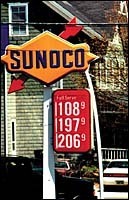
for unleaded.
(Tom Croke)
Robert Murray is perplexed.
Murray, the vice president of AAA Southern New England, can’t figure out why retail gasoline prices shot up 19 cents in Rhode Island during the month of April. The average retail price for a gallon of regular unleaded stood at $1.66 last week, according to separate surveys from AAA and the Rhode Island State Energy Office.
ISO 9001:2026: A Practical Opportunity to Build for What’s Next
For Rhode Island manufacturers, ISO 9001 has been much more than a certificate on the…
Learn More
“That’s a gigantic spike at this time of year,” Murray said. “We’re still not at the record-high of last year, but it’s getting close.” The record high of $1.69 a gallon for regular unleaded in Rhode Island was set last July.
What’s unusual about the recent price jump, Murray said, is that none of the usual suspects appear to be at fault. Prices for oil on the spot market — which usually have a trickle-down effect on prices at the pump — have held steady over the past several weeks at around $26 to $28 a barrel.
The Organization of Petroleum Exporting Countries isn’t necessarily to blame either, Murray said. OPEC voted in mid-March to curb oil production, partly to support oil prices that could begin to fall because of the slowing economy. But Murray said the OPEC cutback, which took effect April 1, shouldn’t have affected retail prices this soon.
Some analysts have blamed costs associated with the changeover from winter gas to summer-formulated gasoline, but that happens every year, Murray said.
Whatever the reason, the April price shock has grabbed consumers’ attention, and some businesses have been hit hard.
“It’s terrible,” said Bob Miller, general manager of EMAC Transport in North Kingstown. “When you’re driving in excess of five million miles a year, an increase of even a few pennies is a big hit.”
The company’s trucks burn through as many as 68,000 gallons of gas a month shipping beverages, U.S. mail and other cargo. Ultimately, the increased prices get passed along to EMAC’s customers in the form of a fuel surcharge, which EMAC implemented in 1999 when gas prices began spiraling higher.
When prices fall, EMAC credits its customers’ accounts, Miller said.
But escalating gas prices still wreak havoc on EMAC’s business. The company spends hours a day tracking gas and oil prices to make sure its fuel surcharges reflect any changes in the market.
“It’s a lot of legwork,” Miller said. “If you don’t stay on top of (the market changes), it can cut into the bottom line.”
And occasionally customers refuse to pay the fuel surcharge, which means EMAC has to refuse the business.
Unfortunately for consumers and businesses such as EMAC, there appears to be little relief in sight. Many energy analysts had been expecting the surge in gas prices – just not this soon. And most say things will get worse before they get better.
Prices still are likely to move higher in advance of the summer driving season. Murray expects prices for regular unleaded in Rhode Island this summer will top last year, going as high as $1.75.
Just one month ago, the state Department of Energy predicted gas prices would average $1.49 a gallon this summer. But that estimate might already be obsolete after the recent run up in prices. As of April 30, the national average for regular unleaded is $1.62 – up 22 cents from late March.
Both Murray and the DOE caution that forecasts for gas prices only take into consideration the supply-and-demand situation. They cannot predict disruptions in gasoline supply or distribution. If unforeseen problems surface, things could get ugly.
“Summer prices are predicated on just-in-time delivery, without any interruptions,” Murray said. “If there are problems at a refinery or in delivery, it’s entirely possible that prices could go over $2 (a gallon).”
Although prices are likely to set a record high this summer, in inflation-adjusted dollars, they remain far below record levels. In the summer of 1980, gas prices averaged an inflation-adjusted $2.56 a gallon, according to the DOE.