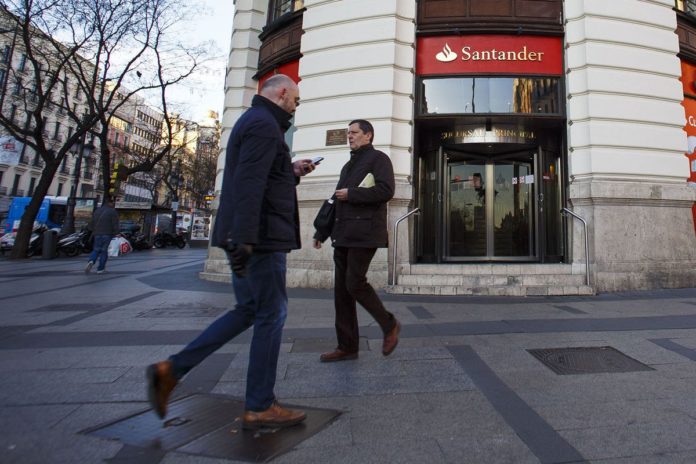
NEW YORK – Banco Santander, parent of Santander Bank, benefited from a surge in earnings in Brazil during a quarter that saw profit hit by restructuring costs, mainly to absorb Banco Popular Espanol.
Net income fell to $1.7 billion in the three months through September from $1.9 billion a year earlier, Spain’s largest lender said Thursday. That missed estimates because analysts weren’t expecting the bank to begin booking consolidation costs until next quarter. Discounting $608 million in charges, underlying profit rose 17 percent to $2.3 billion, with Brazil contributing about a third.
Seifert Systems Invests in Energy Efficiency to Strengthen Operations
For manufacturers, energy is more than just another operating expense. It plays a critical role…
Learn More
“The numbers came in better than expected in most of Santander’s divisions,” Daragh Quinn, an analyst at Keefe Bruyette & Woods, said by phone. “The contribution from Popular also was stronger than expected.”
Santander raised its profitability target this month, citing a brighter outlook in Latin America and positive trends in Europe. Chairman Ana Botin also noted a better-than-expected performance in the United Kingdom, where the economy has slowed since the 2016 vote to leave the European Union.
Profit from Brazil rose 35 percent to $778 million in the three months through September despite economic and political turmoil in the country. The U.K. business, the bank’s biggest market after Brazil, generated $445 million, up 4 percent from a year ago. In Spain, profit rose around 15 percent to $367 million.
The restructuring costs included $354 million to integrate Banco Popular, the failing lender purchased in June. Santander took over Popular for a nominal one euro after European regulators wiped out its shares and junior debt to offset losses from bad assets.
“When we bought Popular, we said there would be costs of around [$1.1 billion] after tax,” chief financial officer Jose Garcia Cantera said in Bloomberg television interview.“This [$354 million] of restructuring charges was very much in line with those charges, which will come over a two- to three-year period. ”
Santander’s non-performing loans ratio fell to 4.24 percent from 5.37 percent in the second quarter. Excluding Popular, it was 3.51 percent, the lowest since the end of 2010, the bank said. Net interest income, the difference between what a bank charges for loans and pays for deposits, rose to $10.3 billion from $8.7 billion a year earlier.
Catalonia Risk
The bank’s common equity Tier 1 ratio, a key measure of financial strength, rose to 10.8 percent from 10.72 percent at the end of June. Santander raised about $8 billion in a stock sale in July to help cover the acquisition of Banco Popular.
Santander in August agreed to sell a 51 percent stake in Popular’s real estate to Blackstone Group LP. Banco Popular still has $11.8 billion in non-performing loans, the bank said.
The shares were trading 0.7 percent higher at 10:56 a.m. in Madrid for a gain of more than 16 percent this year. The stock has declined since Catalonia’s independence vote on Oct. 1, even though Santander is based in Madrid, outside the secessionist region.
Santander sees no “catastrophic” outcome for Catalonia, which only represents two percent of its loans and deposits, Cantera said.
Sharon Smyth is a reporter for Bloomberg News.