Doctors’ offices, radiologists clash over lucrative tests
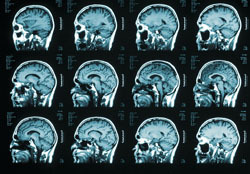
A boom in the use of magnetic resonance imaging (MRIs), accompanied by spiraling costs, is causing alarm among health insurers and pitting radiologists and hospitals – the traditional providers of such services – against doctors who’ve put imaging gear in their own offices.
A modernized health plan: Supporting cost management and the employee experience.
The Surest health plan came from a group of innovators wondering: What if health care…
Learn More
The issue is now before the House Corporations Committee, which is considering two competing bills: one to curb the proliferation of MRI machines in Rhode Island, another to make it easier for doctors to install smaller, cheaper types of MRI machines.
Depending on whom you ask, what’s at stake is either competition and patients’ freedom of choice, or the future of high-quality, affordable health care. Either way, it boils down to who should provide MRIs – and just how many providers Rhode Island needs.
MRIs are expensive, about $600 to $800 apiece. And as their use grows, along with CT scans and PET scans, the costs have spiraled nationwide. The Blue Cross & Blue Shield Association recently estimated that imaging now costs $100 billion, per year, up 40 percent since 2000.
Some of the growth, experts agree, is a good thing: The technologies are helping doctors make more precise diagnoses, and reducing the need for some invasive surgeries. But increasingly, health insurers and others are questioning whether money is at least as big a factor. The reason is that diagnostic imaging – especially MRIs – can be very profitable.
Dr. John J. Cronan, chair of the department of diagnostic imaging at Rhode Island Hospital, said his institution and many others depend on MRI revenues to offset losses not only from unprofitable services such as mammography, but from general operations.
“Hospitals depend upon imaging,” Cronan said in an interview. “It’s the number-one profit line for hospitals; it exceeds surgery.” Without that money, he said, “all the hospitals would be in the red.”
But doctors are also drawn to the potential for big MRI revenues, Cronan and Richard Beretta, a lobbyist for the Rhode Island Radiological Society, said. Beretta gave PBN a copy of an ad for one MRI machine, geared to orthopedists, that boasts of average reimbursements of $1,000 per patient, or $40,000 in monthly profits with just two patients per day.
Because radiologists only get patients by referral, Beretta said, they’re only going to get legitimate business – after all, a doctor has no reason to send a patient to them unnecessarily. When a doctor has his own MRI machine, however, there’s no control mechanism, Beretta said, so it’s easy for him to order tests that aren’t really needed.
National research shows MRI use at doctors’ offices is growing much faster than in radiology facilities, Cronan and Beretta said. And in Rhode Island, in just the last three years, the number of MRI magnets has increased from 20 to 51.
“There’s just too much of this equipment,” Beretta testified before the House Corporations Committee this month. With one machine per 20,000 residents, he noted, Rhode Island has twice the MRIs as the national average of one per 40,000. “And the more machines you have, the more they are used.”
The rapid increase in MRI machines, Cronan and Beretta said, is a direct result of the state Department of Health’s lifting a requirement for a “certificate of need” (CON) hearing before a new MRI machine can be installed. Now a CON only has to be sought for machines costing more than $1 million – less than half the cost of some of the machines Rhode Island Hospital buys, but well above the price of what an orthopedist would purchase.
The hospitals and radiologists are urging passage of a bill, sponsored by state Rep. Norman L. Landroche Jr. (D-West Warwick), that would reimpose the CON requirement. A group of orthopedists, on the other hand, is pushing for removal of the one control the state left in place upon abolishing the CON requirement: that any MRI machines be accredited by the American College of Radiologists, or else insurers aren’t allowed to pay for the images.
The latter rule hinders doctors from buying MRI machines in which patients insert only their limbs, rather than their whole bodies. Sheldon Whitehouse, a lobbyist for the orthopedists, told the House Corporations Committee that not only are those machines less expensive, but they’re less intimidating for patients.
Whitehouse called the radiologists’ bill an attempt to “close the market to new entrants,” and argued that patients would be harmed by reduced competition.
The Department of Health did not send anyone to testify on the measure, but in an interview, Don Williams, associate director for health facilities regulation, said he’s aware that there’s “an explosion” of MRIs, but “there needs to be another mechanism” to stop it other than CON.
“The idea that we’re going to do CON for every MRI is just ridiculous,” he said. “It’s not a good use of the Health Services Council or the department’s time. If there is a proliferation and if that’s having an impact on health insurers’ reimbursements, then they have means to control it in terms of quality and access.”
Health Insurance Commissioner Christopher F. Koller, for his part, didn’t take a position on the bills, but did agree with the radiologists’ claim that the number of MRI machines drives usage.
Like Williams, however, he said insurers are best-equipped to control MRI use by changing their payment systems to eliminate “perverse incentives” for overuse.
Neither Blue Cross & Blue Shield of Rhode Island nor UnitedHealthcare of New England offered testimony on the bills, but United spokeswoman Debora M. Spano said in an interview that her company supports the radiologists’ bill.
The Rhode Island Medical Society, for its part, is not taking sides, but a former president, Dr. Michael E. Migliori, is trying to mediate a compromise between the two groups.
“Health care is expensive as it is, and we want to make sure the resources are used appropriately, that things aren’t being done unnecessarily and frivolously,” Migliori said.
In general, the Society doesn’t favor the imposition of CON reviews, he said, which are “just going to drive up the cost of health care.” Koller’s suggestion that insurers change their payment practices “makes a lot of sense,” he said, and the Society also plans to step in by educating its members about imaging.
“We know that different specialty groups have different perspectives,” he said. “We want to make sure that whatever resolution is reached is in keeping with the ethical principles of medicine. We all have the same goal: to put patients first.”