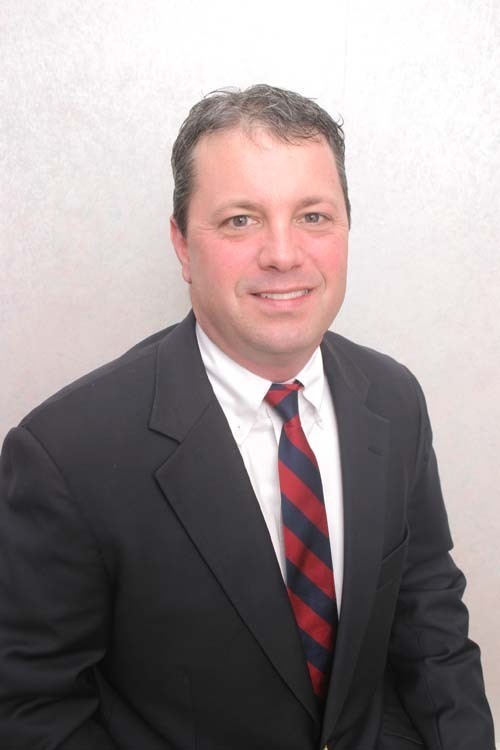
Pawtucket lawyer Robert J. Connelly Jr. is one of four Rhode Island lawyers to be certified by the National Elder Law Foundation. He’s one of 381 lawyers in the United States with the designation. Connelly recently spoke with Providence Business News about the certification he received last year and the growing need for elder-law attorneys.
PBN: First of all, could you tell me a little about the certification you’ve been awarded?
CONNELLY: It’s called a Certified Elder Law Attorney certification. … It’s the only certification in elder law that’s accredited by the American Bar Association. … It encompasses all areas of what attorneys deal with in the elder-law field, from veterans’ benefits to medical assistance to elderly exploitation and abuse and nursing home litigation, taxes, gifting issues, probate avoidance and estate planning. It’s a very all-encompassing test.
Building a Strong Data Foundation in the Age of AI
Artificial intelligence (AI) has become a key priority in the boardroom and across management —…
Learn More
PBN: Will this certification allow you to take on a new role or is it something that will give you added prestige?
CONNELLY: It’s not going to get me into any clubs that I haven’t been able to get into before [laughing]. … It’s something that I wanted to do because it’s an area that I love and am passionate about. When I found out about the accreditation, it sounded like a challenge. It’s certainly a way to distinguish yourself from other attorneys, but I did it more because it was a challenge. It has a very low pass rate, well below 50 percent. And there has been some controversy over that, too.
PBN: How did you get into elder law?
CONNELLY: My dad was an elder-law attorney also. He practiced in Central Falls and Lincoln. So I kind of knew that I was going to law school since I was about 4 years old, which was fine. My father was disabled, so when he got sick, I took over the practice. [That was] immediately upon getting out of law school. And from there, he had a pretty active estate-planning and probate practice in the Blackstone Valley area. I then got involved with some attorneys that were doing a lot of work helping out the R.I. Department of Elderly Affairs. They were doing guardianships for elderly people who were either exploited or were what they call self-neglect cases. And we would work with the Department of Elderly Affairs and social workers – either with or against the families, depending on the case.
I got into doing a lot of guardianships, acting as guardian, acting as fiduciary, making health care decisions for people who didn’t have anyone else. I made financial decisions and everything else that the guardianship role entails. I’ve filed more guardianships than just about anyone in … Rhode Island and I’ve never lost one either. Some are more satisfying than others, though.
PBN: With the aging baby boomer population, do you expect a boost in elder law in the next 10 to 15 years?
CONNELLY: I absolutely do. With the baby boomers aging, the largest transfer of wealth in our nation’s history is coming. Considering that, in conjunction with the fact that going into a nursing home could be the single most catastrophic event of an individual’s or family’s life, I certainly do see a lot of need coming. It’s certainly growing – there are a lot more elderly people out there and there’s a lot more money. And there are elderly people who don’t have a lot of money, especially with this economy.
PBN: You’re based in Pawtucket – do you practice statewide?
CONNELLY: Rhode Island has 39 difference probate courts and I’ve been to 36 of them. Block Island is one that I haven’t been to yet, but I am all over the place.
PBN: Is elder law a recession-proof business?
CONNELLY: It’s not a recession-proof business by any means. Although – not to sound crude – people do still pass away and do still get sick and become unable to make their own decisions. So there’s always a need for the basic estate-planning and probate issues. People are still going to nursing homes and needing to file Medicaid applications. But as far as sophisticated estate planning, that area is certainly down.
PBN: What are the biggest issues facing elder law right now?
CONNELLY: The global waiver that Rhode Island is looking at right now is a pretty hot topic. It deals a lot with Medicaid and the government taking a lump sum. There’s a lot of opposition to that proposal, too. From my understanding, our entire congressional delegation and the senators from Rhode Island are against it. I understand that there are also some areas in Florida that have attempted such a waiver and programs similar to this. From my understanding, it hasn’t been very successful.
There are a lot of issues right now, though. The Department of Elderly Affairs, in my opinion, while it’s a great organization, has seen a lot of cutbacks. That could be seen as a concern. … I work with them closely, I have for 10 years. With the cutbacks go the protection that the elderly had, the advocates that they had were the first line of defense for people subject to self-neglect, abuse or exploitation. •