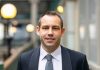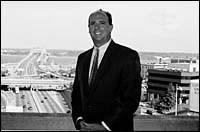
Name: Kenneth Fiola, Jr.
Age: 42
Position: Executive Vice President, Fall River Office of Economic Development
ISO 9001:2026: A Practical Opportunity to Build for What’s Next
For Rhode Island manufacturers, ISO 9001 has been much more than a certificate on the…
Learn More
Background: Fiola has worked at the economic development group since 1986. He had served as project director and director of waterfront development prior to being named executive director of the agency six years ago. Fiola also served as executive director of the Fall River Partnership, a group that helped develop the new economic development blueprint for the city.
Education: Bachelor’s degree from Boston University, and law degree from the Southern New England School of Law.
Residence: Fall River
PBN: The city has tried to move its work force away from manufacturing to diversity the economy. Tell me about that process.
FIOLA: One of the biggest things we wanted to do is move forward with an initiative aimed at diversifying the economy of Fall River. For years Fall River has had an over-dependence on the manufacturing sector, which was basically characterized by the apparel industry. In the past, the apparel industry had been very strong, but overseas competition, investments in production facilities offshore and NAFTA have had an impact on the apparel industry. As a result of that decline, more and more workers have been displaced. In 1996, Mayor Lambert directed this office to develop a policy that was going to be able to incorporate displaced workers from the apparel sector and incorporate them back in the work force. What we set out to do is get a greater balance between manufacturing and the service sector. In 2000, for the first time the amount of people employed in the service sector surpassed those employed in the manufacturing sector. That is what has leveled our unemployment.
Please name some of the larger service-related companies to set up shop here?
One service company is Travelers, which used to be Aetna. It has continuously increased its employment levels, and now has over 400 people. Starwood Resorts, Hotels and Casinos is another. The city won a national competition to get its East Coast inbound call reservation center. They employ over 100 people. We have A.J. Wright’s distribution center, which employs more than 300. That company plans to expand and have over 700 employees. We also have a lot of growth in the health care industry. Fall River is unique for a city of this size in having two hospitals. With Southcoast and St. Anne’s hospitals there has been a growth in the health care industry with regard to physicians moving into the city, or expanding their practices.
Is there much of a high-tech presence in Fall River?
The one challenging aspect I think Fall River needs to deal with is improving its educational attainment level. Obviously, in today’s marketplace your high-tech industries place a value on education and people have to be, at a minimum, high school graduates, preferably college graduates and when you get into research and development they want post-graduate degrees. In regard to high-tech industries, we have been trying to focus on the manufacturing end of high-tech. For instance, Genzyme has a location in the industrial park here and employs close to 500 people. We are also working with other high-tech companies that are now in the R & D phases right now that have begun limited production. We have also developed some affiliation with the Silicone Sandbar on the Cape, which consists of R & D companies that have chosen the Cape to develop products because they like the quality of life there. The problem they have is once they get out of the R & D phase they don’t have the work force to manufacture their products. We have actually been working with various members of the Silicon Sandbar to have Fall River positioned as their location for manufacturing.
Tell me about the role the Advanced Technology & Manufacturing Center through UMass Dartmouth will play in helping companies?
The Advanced Technology & Manufacturing Center now allows us to concentrate the necessary brainpower as well as having the graduate students in one location to help these emerging companies through the R & D process and post-R & D process.
Just to go back to education in the city…Do you think there has been any progress made in improving Fall River schools?
I think you’re starting to see some progress. I think Fall River has been proud of the fact that there has been a strong work ethic. Fall River has been characterized by various immigrant groups throughout the last century. Typically, when immigrants arrive in a new country the first thing they want to do is get people situated with jobs, work to build up a nest egg and then enjoy some of the benefits this country has to offer. In the past, there hasn’t been a primary emphasis on education. People were encouraged once they turned 16 to get out of school, get a job and help the family financially. I think now that you have seen some of the immigration slow down, and you have second and third generation children in this country, they understand that education is now a very important aspect of a person’s ability to rise upward in a society.
The city is building ten new schools, which I think is a very important symbolic and concrete form of action that is re-emphasizing the importance of education. I think also the Advanced Technology & Manufacturing Center will help create a large awareness of the importance of education. Also, this office recently bought the old Cherry & Webb building downtown that we will renovate to accommodate the UMass Dartmouth center for career and professional studies. We anticipate we will have 400 to 600 students downtown on a daily basis.
City officials see tourism as a key to bringing life and revenue to the city? How does the city accomplish that?
I think it was four years ago the city hired a director of tourism, which was an important first step. We do have cruise ship visitation to the city on a regular basis. They will come in as part of a New England-Canada itinerary. We also have a lot of day-trippers, especially since Sept. 11. I think tourism is continuing to grow. The battleship and Battleship Cove are the primary tourism spots, there are new bed and breakfasts and the Fall River Historical Society is undergoing renovations and making improvements. Ultimately, I would like to capitalize on some of the success that Providence has generated as part of its renaissance. In many ways I think Fall River is actually a suburb of Providence.
One problem the city might have when it comes to tourism is a lack of a center of activity. Do you agree?
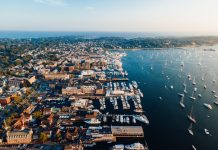
That is an issue that we have identified and that we are working on. We just completed a waterfront master plan, which will ultimately create a wider boulevard along the waterfront as well as accommodate hotel development, 200,000 square feet of office development, additional parks and additional restaurants. I think ultimately the waterfront will be the heart of the tourism initiative, but it will also accommodate business development and residential growth. In the fall, we will begin construction of a $1.1 million boardwalk that is going to tie Heritage State Park to Bicentennial Park, making it the second largest boardwalk in the Commonwealth.
The city has put a lot of faith in the success of the proposed Fall River Executive Park. What will it consist of and how did it come about?
Working in partnership with the state, the city wants to create a “bio-reserve,” a 14,000-acre parcel of land that will be open to the public for recreational uses, consisting of hunting, fishing, education and trails. As part of this project, we have been able to secure approximately 300 acres from the Commonwealth for the executive park, which would be located along Route 24. The park will be permitted to accommodate three million square feet of development and the intent of the park is to foster more high-tech or service-oriented services, similar to what they have done in Smithfield with Fidelity. I would say it would be ready within four to five years.
What does your agency offer in terms of small business loans?
Since 1978, when we were incorporated, we have lent out $55 million to Fall River companies. Last year, we loaned out $3.5 million to Fall River companies. As a result of this lending we have helped created more than 8,000 new jobs and have retained more than 10,000 jobs. We have made loans to more than 400 Fall River businesses. We offer low-interest financing in a gap fashion. For instance, if you are a company that needs $100,000 in financing and you can only come up with $60,000, we will fill in that $40,000 gap. We would also offer interest rates below the banks’ rates. The only thing that we require is job creation for our investment. The loans range from $500 to $1 million.
When you look at the landscape of Fall River you see mills, lots of mills. Are these buildings being utilized correctly?
Fall River has approximately 12 million square feet of mill space in the city – 10 million of it being occupied. That occupancy consists of everything from restaurant use, residential use, heavy and light manufacturing use, medical use…you name it. The mills have actually helped us because we can provide low-cost space. I think what we need to do is improve some of the appearance of the mills. Sometimes when people look at them they look like they are vacant, even though they are occupied.
Word came from the state recently that a commuter rail stop in Fall River would be delayed – again. How do you think this will play out?
This is one issue that I’ve been personally involved in for the last 12 years or so. Early on in my career here I often scratched my head and wondered why Fall River and New Bedford were the only cities not being serviced by commuter rail. If you look at the top 10 cities in Massachusetts, every other city has access to the commuter rail. I wondered if there was any correlation between lack of commuter rail and a closer affiliation with Boston. During the past 12 to 14 years, I’ve been working very closely with various administrations, various legislators and the chambers of commerce in Fall River and New Bedford to refocus the effort on reestablishing this commuter rail. I’m happy to report that we have at least brought the issue to the forefront to the extent that there is a final environmental impact statement being sought by the MBTA. I fully expect that the secretary of the executive office of environmental affairs will approve that certificate.