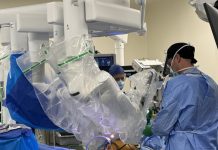
NEW BEDFORD – St. Luke’s Hospital now offers bronchial thermoplasty, the first nondrug treatment option for adults with severe asthma, proven to reduce severe asthma attacks and emergency-room visits, improving asthma-related quality of life for people living with the disease.
No other health care system south of Boston, in Rhode Island or on Cape Cod offers the treatment.
Your Business Has Gone Global. Has Your Insurance?
A decade ago, “doing business internationally” was mostly a large-company concern. Today, a manufacturer in…
Learn More
In the United States, asthma affects nearly 25 million Americans, of which 11.3 million experience an asthma attack each year, resulting in 439,000 hospitalizations and 3,630 deaths, according to information on the Centers for Disease Control and Prevention’s website. The Global Strategy for Asthma Management and Prevention reports that 10 percent of Americans affected by asthma have severe asthma. For those with severe asthma, high doses of standard medications may not be enough to alleviate frequent and life-threatening asthma attacks, which can have a significant impact on asthma-related quality of life.
“Bronchial thermoplasty is an exciting new intervention that we now offer for the treatment of some of the most severe cases of asthma,” said Dr. Michael Barretti, who performs the procedure at St. Luke’s. “The procedure itself is akin to a routine bronchoscopy with extremely low risk compared to other procedures done within the lungs.”
During the procedure, performed using the Alair System developed by Boston Scientific, a bronchoscope is inserted through the nose or mouth, and a carefully controlled device delivers mild heat to the smooth muscle of the airways in the lungs, reducing the amount of excessive smooth muscle. With less smooth muscle, the airways constrict less, reducing severe asthma attacks and making breathing easier. No incision is needed.
A 2010 study of 225 adults aged 18–65 diagnosed with asthma who required regular maintenance medications of inhaled corticosteroids showed 79 percent had an improvement of their asthma-related quality of life, with 3 percent showing a decrease in their quality of life.
“Bronchial thermoplasty is not a cure for asthma, but is an adjunct, one-time therapy, which allows people with the most severe asthma to be treated more effectively and maintain a much better quality of life,” said Barretti. “The patients I have treated have reported far fewer and less severe asthma exacerbations, emergency room visits and the ability to do things they were unable to prior to the procedure. In addition, these results are maintained after the procedure. I truly believe that this is a game-changer in quality of life for patients with severe persistent asthma.”
The BT procedure is not a substitute for daily maintenance medication prescribed by a doctor, but works along with medications to provide less risk of severe asthma attacks and its complications for those suffering from severe asthma. Prospective patients should speak with their pulmonologist, asthma specialist, allergist or primary care physician to determine if this procedure is the right option.
Rob Borkowski is a PBN staff writer. Email him at Borkowski@PBN.com.