With a report to be released this week, the Providence Preservation Society intends to add intrinsic historical value to the list of important factors used when deciding whether to renovate, disuse or demolish public school buildings in Providence.
The report comes in response to the Providence Public School Department’s 80-page Master Plan, compiled by DeJONG Inc. and finished in January, which recommended that six old schools be demolished, six others be taken out of service (though possibly used for other purposes) and three be renovated.
“From our perspective, the idea of tearing down these old neighborhood schools, just for what we were told would be to put a new face on public education, didn’t ring right,” Preservation Society Executive Director Jack Gold said of the $792 million plan.
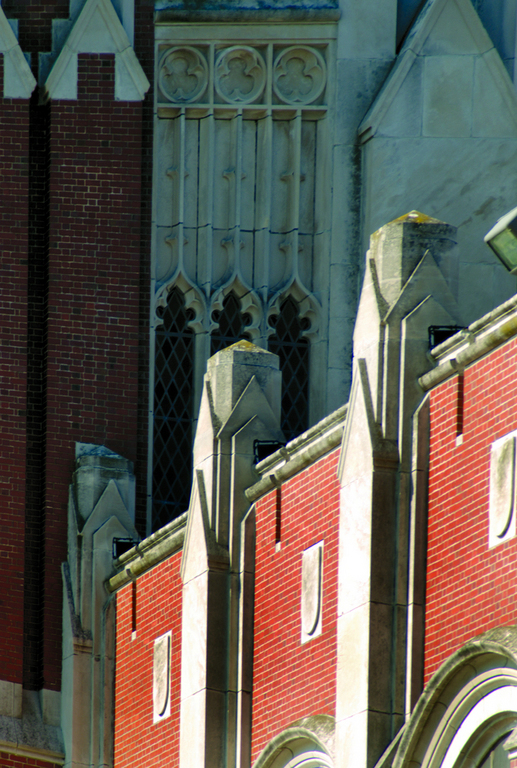
So the society hired a consultant, Design Partnership of Cambridge, to take an in-depth look at Mount Pleasant High School, set to be demolished, and West Broadway Elementary School, which has been closed.
“Their proposal, which I think was educationally very sound, made a recommendation in a lot of cases that older buildings should be replaced … rather than renovated,” said David Finney, president and principal architect of Design Partnership. His charge was to “add in as a value that – all other things being equal – keeping older buildings for their historic merit, their cultural merit and their status as icons in a community is socially and educationally beneficial.”
To do so, Finney studied whether the schools could reasonably be renovated to incorporate all the needs that a new building would satisfy.
For West Broadway Elementary, built in 1904, the study found that it “can be renovated at a cost less than or equal to the cost of comparable new construction.”
Since the early 1990s, safety has become a major issue in school design, and West Broadway Elementary was closed last year because the egress patterns didn’t allow for separate entrances and exits for younger and older students.
But Finney said a renovation would follow all new building codes, so “all safety codes would be met and up to date.”
For Mount Pleasant High School, built in 1926, the “economics weren’t quite as favorable,” Finney said. The costs would likely be the same for renovation and new construction. “But when we say that, those numbers don’t take into account the demolition of an old building – which can be a significant cost.”
One common argument against renovation and for new construction is the push toward sustainable and green buildings. But, Finney said, there are arguments – other than beauty – against demolition.
“The countervailing point is that green consciousness is not just about energy conservation, it’s also about conservation of resources,” he said.
The study doesn’t advise which schools to keep and which to disuse or demolish. “That’s wasn’t our charge,” said Finney. “The study was merely to address the economic and educational factors involved with renovations of to-be-demolished buildings.”
Finney said renovation and new construction get about equal play nationally, but “although there are plenty of each going on, I would say that if there’s been a shift either way, it would be toward renovation.”
The West Broadway Neighborhood Association, which has been pushing for renovation of the elementary school for years, says the historic value should be a factor in any decision.
“It’s just a wonderful building in our neighborhood, a wonderful piece of our community, and we’d love to see it remain a school,” Executive Director Kari Lang said. “When it closed, we were really disheartened. The community came out and cried, ‘Please don’t close our school.’ But we’re hoping they’ll rethink that.” •