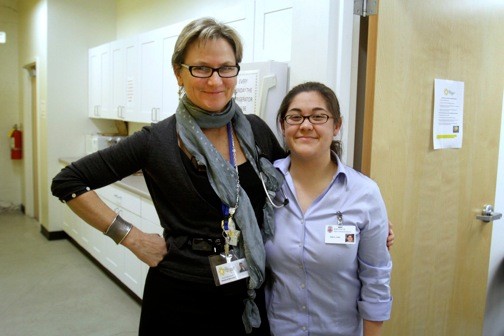
PROVIDENCE – Walk-in clinics staffed mostly by nurses and student volunteers are a cost-efficient alternative to emergency room care, according to a recent study conducted by the director of a institute, who founded a free health clinic in Providence last year.
URI Institute for Immunology and Informatics Director Dr. Anne S. DeGroot helped to establish the Clinica Esperanza/Hope Clinic (CHEER) in 2012 which treats patients for nonurgent health problems, such as colds, stomach illnesses and the flu. She conducted a study based on 256 patients seen in the clinic’s first five months of operation, scoring the services they received by how much they could be estimated to save in future care. The results of the study, recently published in the “Journal of Community Health,” found considerable savings in clinic-based treatment.
“When we incorporated the value of preventive services, we found an estimated savings of $1.28 million in future health care costs,” DeGroot, the clinic’s medical director and director of the Institute for Immunology and Informatics, said in a statement.
“From there, we calculated a return on the investment of $34 per $1,” she said.
According to DeGroot, about seven percent of the visits to hospital emergency rooms in the U.S. in 2010 were not urgent and patients without health insurance were more likely to use the emergency room for routine illnesses than people with insurance. That said, communities can “greatly benefit” from increased access to nonurgent care for the uninsured, she said.
“Following the CHEER model could result in improved health outcomes for those deeply affected by disparities in the system – and reduce health care spending,” DeGroot said.