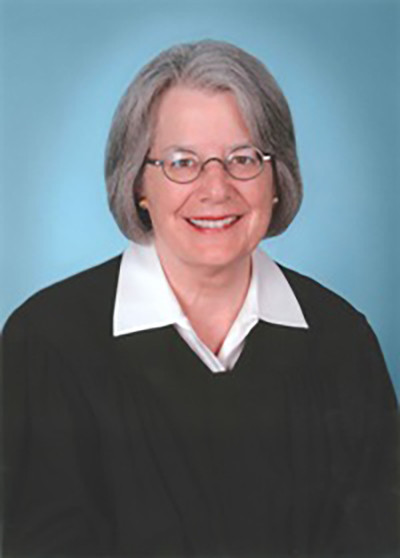
PROVIDENCE – After more than four decades on the bench, R.I. Superior Court Chief Justice Alice Gibney will be stepping down on Oct. 31, according to Gov. Daniel J. McKee's office.
In a Sept. 2 letter to McKee, Gibney wrote it had been an "honor and privilege of a lifetime to serve the citizens of Rhode Island and to have worked with scores of wonderful colleagues, staff and members of the bar. I have enjoyed every second."
On Wednesday, two other Superior Court judges submitted resignation letters to Gov. McKee.
Chair of the Judicial Nominating Commission Krystle Tadesse confirmed Wednesday that Superior Court associate justices Stephen P. Nugent and Melanie Wilk Thunberg are also stepping down, effective Sept. 30. Nugent was appointed by the late Gov. Lincoln Almond in 2000, while Thunberg received the nod from the late Gov. Edward DiPrete in 1987.
Beginning her career as a law clerk for the Superior Court, Gibney served a stint as assistant U.S. Attorney in Rhode Island from 1978 to 1979 before spending 10 years as a practicing attorney, working for law firms that included Boyer, Reynolds & DeMarco and Anderson, Henning, & Anderson.
She joined the bench in 1984 and was appointed by then-Gov. Donald Carcieri to serve as presiding judge in 2009.
An adjunct professor at the Roger Williams University School of Law, Gibney received a law degree in 1972 from Catholic University.
Under state law, the Judicial Nominating Commission conducts interviews and public hearings on prospective judges before sending a short list of candidates to the governor for each judicial vacancy. The governor then nominates a candidate to go before the Senate for confirmation.
Tadesse said there are now four vacancies on the Superior Court. Associate Justice Daniel A. Procaccini retired on May 31.
Unlike Connecticut and Massachusetts, Rhode Island judges are appointed for lifetime terms. Legislation filed in the last General Assembly session by Sen. Sam Zurier, D-Providence would have imposed a mandatory retirement age of 75 for all judges except Supreme Court justices, but the bill died in committee.
(UPDATES throughout with additional Superior Court vacancies.)
Christopher Allen is a PBN staff writer. You may contact him at Allen@PBN.com.