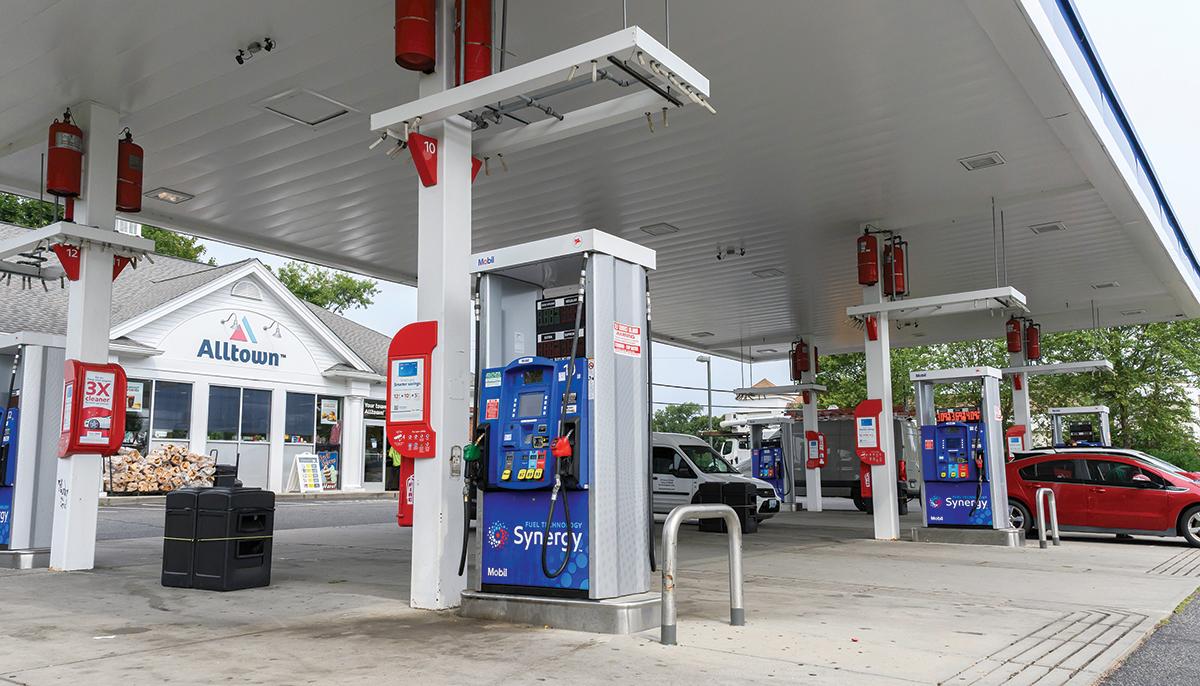
Rhode Island drivers can now use their car like a wallet and pay for gas with just their E-ZPass account and a quick text using cloud-based technology.
The service is still being rolled out across the Northeast. But if it’s a hit, E-ZPass account holders could eventually pay in drive-thrus, at curbside pickups, for parking and more, all without having to leave the car or open a wallet, according to Anand Raman, co-founder and president of Massachusetts-based
PayByCar Inc., the company providing the technology.
“We’re increasing the value of E-ZPass, giving it opportunities to be used and useful beyond the toll gantry,” Raman said. “Among other things, there are plenty of folks with transponders that don’t use toll roads often, if at all, so how do we make it worth their while?”
The program launched as a pilot in Massachusetts in 2022, backed by $6 million in early funding, and started at 27 gas stations. As of June, it has expanded to more than 130 locations across New England, including five stations in Rhode Island – Smithfield, South Kingstown, Warwick, Richmond and Foster – where an “Early Access” phase began on May 15 under energy company Global Partners LP’s gas station brands Alltown and Xtramart.
Raman says PayByCar plans to expand the service to a total of 336 stations by the end of the year.
The larger plan is to roll out the program at all 1,700 Global Partners stores throughout the country, except those in Texas, which is outside the E-ZPass network, according to Global Partners.
“We’re living at a time when contactless payments are increasingly important, and this technology allows drivers to use a familiar tool like E-ZPass in a new, convenient way,” said Mark Cosenza, Global Partners senior vice president. “It’s all about delivering faster, safer and simpler transactions that enhance the customer experience at the pump.”
PayByCar uses secure, cloud-based technology and E-ZPass transponders or stickers to enable drivers to pay for gas by text.
Gas payments made with PayByCar and E-ZPass are charged instantly to a linked card, not the toll account, with receipts sent right after fueling.
But Raman says the technology can allow for much more than just gasoline transactions.
“That’s just how it’s being applied at the moment,” Raman said. “It can literally make the car a universal wallet for drivers.”
Working with E-ZPass gives PayByCar access to a massive potential customer base, spanning 19 states with more than 64 million vehicles with transponders as of 2025, according to E-ZPass.
And there is plenty of projected money to be made by coupling PayByCar’s cloud-based technology with E-ZPass’ built-in infrastructure, according to a December 2024 Precedence Research study.
The U.S. in-vehicle payment market is currently valued at around $1.65 billion and is projected to grow to $7.6 billion by 2034, driven by the rise of connected cars and embedded payment technologies, the study shows.
For now, the technology remains limited to gas transactions as the program continues to roll out across the country. But Raman says that so far, the response to the service portends bigger things.
“Merchants are responding positively, and consumer experiences have been good,” he said. “We quickly saw repeat customers, and the New England rollout is only expanding from there. They’re helping create this drivable wallet with us, and they are the ones who can spread the word [about this service].”
However, as with nearly any form of online payment, the PayByCar and E-ZPass mobile gas payment system does raise potential security concerns around data privacy, text message verification and stored card info, especially if not properly encrypted.
John Savage, a professor of computer science at Brown University, says linking cars, phones and credit cards is sold on the premise of convenience, but it also introduces new risks if security measures fall short.
“There are more concerns than value when it comes to implementing technology like this,” Savage said. “What’s stopping scammers and hackers from accessing customer data and purchasing large amounts of gasoline without authorization? Convenience doesn’t mean safe. This is the kind of system that cybercriminals will find a way to take advantage of.”
E-ZPass has long been a target of phishing scams, with fake texts even being sent to people with E-ZPass accounts. As recently as January, R.I. Bridge and Turnpike Authority officials warned about fake texts claiming unpaid tolls. The agency urged recipients to avoid clicking on the links or replying.
Raman says high security measures have been taken. The data is tokenized, which boosts security by replacing card details with useless digital tokens, meaning no sensitive data is stored or exposed during PayByCar transactions.
“I would say that transponder-based transactions are perhaps the most secure,” Raman said. “There is no swiping, where card information can be potentially skimmed. A scammer would need to have access to the customer’s car, transponder and cellphone.”
What’s the future of the technology? PayByCar plans to launch a companion app for E-ZPass users to manage transactions, preferred stations, account history and potential loyalty features, according to the company’s website and 2025 roadmap.
In January, PayByCar reported raising $7.5 million and said it was seeking an additional $10 million to fund further expansion.
For now, though, PayByCar is betting that what started as a gas payment tool in New England could fuel a much broader shift in how people pay on the go.
“We’re trying to meet the customer where they are,” Raman said. “And we see different ways to use this technology and infrastructure in the near future.”