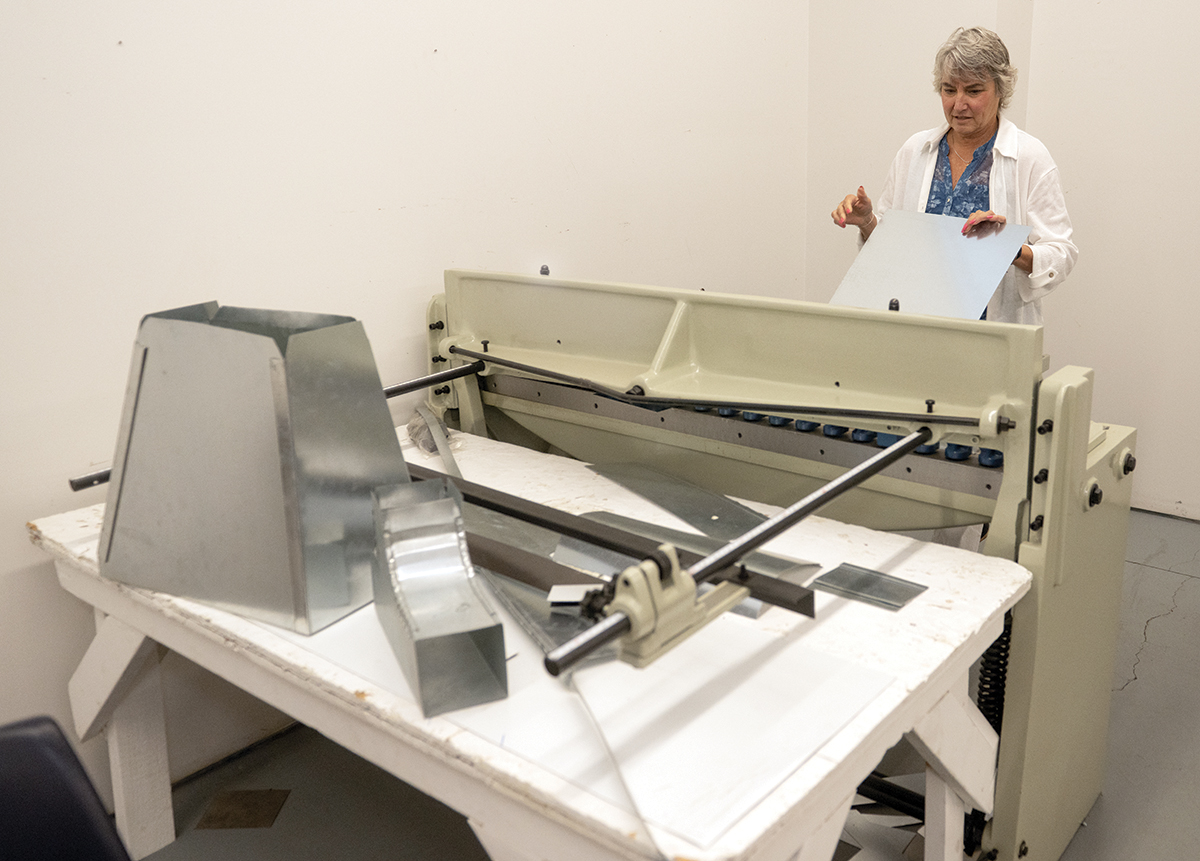
ALL CONSTRUCTION TRADES are “hurting” for skilled licensed workers, according to Kristen B. Brescia, the director of training at the Rhode Island Construction Training Academy. The Pawtucket academy is a training division of the Associated Builders and Contractors of Rhode Island chapter. Once a license is obtained, Brescia said, the door opens for “endless opportunities” to climb the proverbial job ladder within construction and trades.
How and when was the academy created and what is its primary purpose? In 1992, the Rhode Island Construction Training Academy began with the purpose of providing training-related instruction for apprentices in the areas of carpentry, electrical and HVAC [heating, ventilation and air conditioning]. Since that time [the academy] has added the licensed trades of plumbing, pipefitting, sheet metal and sprinkler fitting. We also offer apprenticeship training in a handful of nonlicensed trades to accommodate the state’s requirement of state-funded work, in the trades of craft laborer, painting and roofing. Our purpose is to give an apprentice the related training required to obtain a trade license that meets all the state requirements.
What areas of the local construction/trades sector have the greatest need for skilled, licensed workers and apprentices? Not sure I could point to just one trade more in need than another. They all seem to be in need of good workers. At the beginning of this year, the construction industry in this country had a shortage of 501,000 skilled, licensed workers. That number fluctuated during the year but has remained high throughout most of the year. Across the board all construction trades are hurting for skilled, licensed workers. RICTA does what it can to spread the word about how working in a construction trade can be a great career with endless opportunities, along with a good income. We do this by attending career fairs that take place at high school, throughout Rhode Island. Our HVACR [heating, ventilation, air conditioning and refrigeration] and sheet metal programs have had the largest enrollment over the past few years.
Is a weakening work ethic among new hires a complaint you’ve been hearing from employers? If so, what can the academy do to help? There is the occasional rumbling about laziness … but I don’t believe you can teach someone good work ethic. You can, however, teach the importance of punctuality, respect, how taking pride in their accomplishments will grow confidence in the work that they do. In the first year of the courses offered, our curriculum covers employability and communication skills that are very important to have when seeking a job or on the job site, whether it be a large building facility or a customer’s home. This helps a great deal when apprentices are out on the job.
How does the licensing you help workers achieve help both individual employers and the industry as a whole? Licensing in Rhode Island is required with most of the course trades we offer. If someone is on a job site that does not have a license or apprentice card, they are in violation of the law. The classes we have along with on-the-job training are required to obtain a trade license. Once an apprentice has completed the related training and on-the-job hours, they can sit for the state license test. Once that license is obtained, the tradesperson is valuable to an employer. It is valuable to the person for advancement in their career.
Why does the academy solely focus on training those who are nonunion and currently working in the industry? RICTA began its operation for the purpose of having an outlet to train apprentices for companies that did not become part of the union organization. People that belong to the union have a school dedicated for their use. Today in this country approximately 86% of the construction industry does not belong to a union. [The academy] is here for those apprentices, and anyone that would like to learn a trade we offer, to get their career started.
What benefits are there for the students to be taught and trained at the academy by professionals currently working in the construction/trades industry? RICTA’s training is in the classroom, not online. There is something to be said about sitting in a classroom in front of an instructor to learn rather than online, especially in the trades. There are also hands-on projects and training that is incorporated into the year. [The academy] uses the nationally recognized [National Center for Construction Education & Research] curriculum that is written by professionals and taught by professionals. For our electrical program, the Mike Holt Enterprise curriculum is used. Mike Holt is one of the most recognized names in the electrical industry. … The academy is always seeking instructors that are at the time in their career when they would like to give back and pass along what they have learned over the years.
How much do classes cost and do students or employers pay? Which courses attract the most students each year? Payment varies from one company to another. Some companies pay the tuition; some have the apprentice pay with an agreement to meet specific benchmarks and then they are reimbursed; and some leave tuition the responsibility of the apprentice. Our tuition ranges from $1,295 to $1,795 depending on the apprentice employer’s membership with our sister company, Associated Builders and Contractors of Rhode Island. We try to keep the tuition low to make it very affordable for those entering the trades. The past several years we have had full classrooms in the HVACR and sheet metal trade.
The academy also offers scholarships. How do students become eligible? RICTA has an annual event to raise money for our Jeff Ward Scholarship fund. Jeff was a fantastic instructor and mentor to his students that we lost too early in his life. We honor and remember him through this scholarship. Anyone is eligible to apply for a scholarship from RICTA. The application is available on our website at ricta.org.