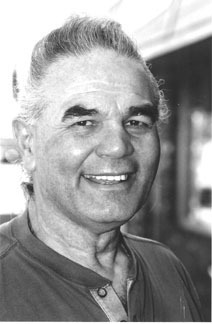
 looking to create economic opportunity."" title="Wilfred Eagle Heart Greene: "We'relooking to create economic opportunity.""/>
looking to create economic opportunity."
Name: Wilfred Eagle Heart Greene
Position: Chief Sachem of the Seaconke Wampanoag tribe
Background: Greene grew up in South Providence and was in the Army from 1954 to 1957. In the late 1950s and early 1960s, Greene held the New England middleweight boxing title on several occasions. Greene worked as a construction contractor for most of his career as the owner of Greene & Sons, an asphalt paving business. After retiring from contracting, Greene worked as a poker dealer at Foxwoods Casino from 1992 to 1998.
A modernized health plan: Supporting cost management and the employee experience.
The Surest health plan came from a group of innovators wondering: What if health care…
Learn More
Education: Associate’s degree from Johnson & Wales University (1976).
Age: 68
Residence: Coventry
On Feb. 28, Greene filed a lawsuit in U.S. District Court claiming that
the Wampanoag tribe is the legal owner of all land in the town of Cumberland
and most of the land in Woonsocket. Greene said he has found a 1661 deed that
reserves about 34 square miles along the Blackstone River in Cumberland and
the eastern half of Woonsocket as the legal property of the tribe, and the tribe
never legally surrendered it.
If upheld in court, the lawsuit could mean that no one who has sold land
within those boundaries since 1661 had the legal right to do so. The suit names
the state and the two towns as defendants.
The case is unusual for an Indian land claim case because this time the
tribe claims it has an actual deed to the land. In many cases, tribes have attempted
to prove their claim to land by documenting occupation of a location over a
period of time.
On March 13, a spokesman for Attorney General Patrick C. Lynch said in
a newspaper report that the state believes the suit is invalid.
PBN: Talk to me about your growing up in Rhode Island. I’m interested in
the dichotomy between identifying very strongly as a Native American, as a Wampanoag,
and at the same time not living on a reservation but as another neighbor on
the block.
GREENE: Yeah. Well, not only myself – there are many Rhode Islanders
who share the same genealogy and the same heritage as I do. A lot of Rhode Islanders
have Native American blood in them. Some of them may not even know it, because
of the persecution that my people suffered years ago, the hiding of documents,
burning documents that showed who was a Native American, because it was mainly
over land – exactly what we’re talking about now. And because of the land, they
would document people as anything other than Indian. The American Indian has
to fight for every bit of historical record or birth record he can find.
But what’s it like for you as a Wampanoag in Rhode Island? Do you feel
a sense of unfairness or discrimination?
Absolutely.
How does that manifest itself?
Oh, I always knew I was an Indian. Everyone else did too. There were a lot of hardships. I really don’t want to go into that right now.
When did you become chief of the Seaconke Wampanoags?
I was always a chief – I was born a chief – that’s the way it was, but we didn’t talk about it that way. Nobody went around saying, ‘I’m a chief.’ My father was a sachem, sort of a – people looked up to him in the family. Then after my father deceased, people kind of looked up to me for that leadership.
How many Wampanoags are there in the state?
There are probably 1,500 in East Providence alone.
Is it a very tight-knit community?
What I find is we have – just like any other group – pros and cons. But when it comes down to it they know who they are, and they will unite.
How did you chance upon the deed from 1661 – the piece of paper itself?
No comment. [Laughs]. No – extensive research.
Does the tribe have an office devoted to doing research – trying to dig
up documents that relate to the Wampanoag’s history in the state?
No, my wife and I have kind of been doing our own research and genealogies since 1958, and in the last 12 years we really got into it. And then in 1997 my friend and assistant Peter Boer and I met about it and he kind of got interested, and in the last few months he had a lot more time to give us, and he was very instrumental in discovering this document with me.
But where exactly did you find the deed? In a library? In a private archive?
Like I said, it was probably more of an oversight. I had been looking for it, I knew it existed. It had been handed down and I knew about it already and I had talked about it for years – that Cumberland and Woonsocket were ours. And there are another 400 some-odd square miles in Rhode Island and a portion of Massachusetts that is ours. But I don’t want to talk about it now, that land.
So far you haven’t showed the deed that you found to anyone in the media
or the government. Are you waiting to present it in court?
I don’t think this will go to court. I think they’ll probably settle with us. At least they should.
You’ve said that the Wampanoags are not interested in moving people off
of that land to create a reservation.
Oh, absolutely not. It would be totally ludicrous, because we know the feeling. I thought about it a lot, and my father would tell me stories about the hardships, and moving the people off of the homeland.
What are you asking for?
In monetary value I couldn’t even begin to tell you. I’m not an expert in that field.
Any money you received from a jury or a settlement – what would that money
be used for?
It would ultimately be an asset to the state of Rhode Island. We could use it to create jobs for all Rhode Islanders, not just Native Americans. But it would really help to pull my people out of poverty.
So there would be an attempt to disburse any money to every member of the
tribe?
Oh, absolutely.
What would be the threshold for determining who was eligible for receiving
a piece of the pie?
OK, it’s easy – genealogy – not a problem.
How much Wampanoag blood would they need?
We don’t go by blood quantum here. It would be ridiculous for me try to go by blood quantum. Out West a lot of tribes do, but that’s not a true animal here. I know most of the people from here to Maine who claim that they are Wampanoag, and I know their ancestors; but they will have to do their genealogies, and they have to do it themselves. But we will guide them along, and if I know they connect I’ll show them. I’ll be glad to. I know what it is to have trouble finding documentation.
Do you think there would be a rush to claim Wampanoag lineage?
I’m sure. But we want to be as fair as possible and we’re going to hire experts to help us.
What kind of response have you gotten so far from the defendants in the
case?
Nothing really, except from what I read in the newspaper, and you can’t believe everything you read in the newspaper. If they do have an argument with us, it doesn’t seem like much of an argument to me. If you have a deed for your property and you go home to your house and someone else is living there, you say, ‘hey, wait a minute, what are you doing here, I live here.’ And then you go to the town hall and you get your deed and then you call the proper authorities, they’ll say, ‘well, this is your house.’ But in our case, when people encroached on our land and we came home and found other people living on it … the proper authorities didn’t back you up. At that time we got no backing. And we got burned out. They burned 100 tepees right down here in Warwick, which is our territory.
When was this?
Right after the King Phillip’s War – 1680 – five years after the war. And they would do things like not let Native Americans work, so they couldn’t provide for their families. Well at least maybe I can eat if I hunt and fish. So they passed laws saying Indians couldn’t hunt and fish. Well, if you can’t work and you can’t hunt and fish, you can’t eat. It’s your reservation, your land, and you can’t hunt and fish?
You mentioned that you have documentation of the Wampanoags having title
to another 400 square miles of land in Rhode Island and Massachusetts. Is there
a possibility of filing a claim on that land in the future?
I’ve said it before – this is the tip of the iceberg. I think we probably could come to some type of an agreement for all of our lands.
Would you seek to set up a reservation in Rhode Island along the lines
of what you see in other states, where you would have your own police force
and your own schools?
Oh, definitely, sure. That would be great. You know, it would help my people to be self-confident and proud of who they are, who their ancestors are.
Do you know what land you’re interested in turning into a reservation?
Yeah, we’ve got an idea. It’s really not that much. Land that nobody else is living on. Diamond Hill in Cumberland is one possibility. Rocky Point is another – it has a lot of historical value to us. My ancestors lived in that area. In fact we lived all over Rhode Island, but obviously we can’t build a reservation in Providence. There are too many buildings there already.
Would you be interested in trying to establish a casino in Rhode Island?
Possibly. It’s one of the few things that they’ve given us preference in, is the gaming field. But there are a lot of things we can do. We’re looking to create economic opportunity.
For the complete current issue, visit our subscription Web site, or call (401) 273-2201, ext. 227 or 234.