Staff turnover, shortage slow projects to a crawl
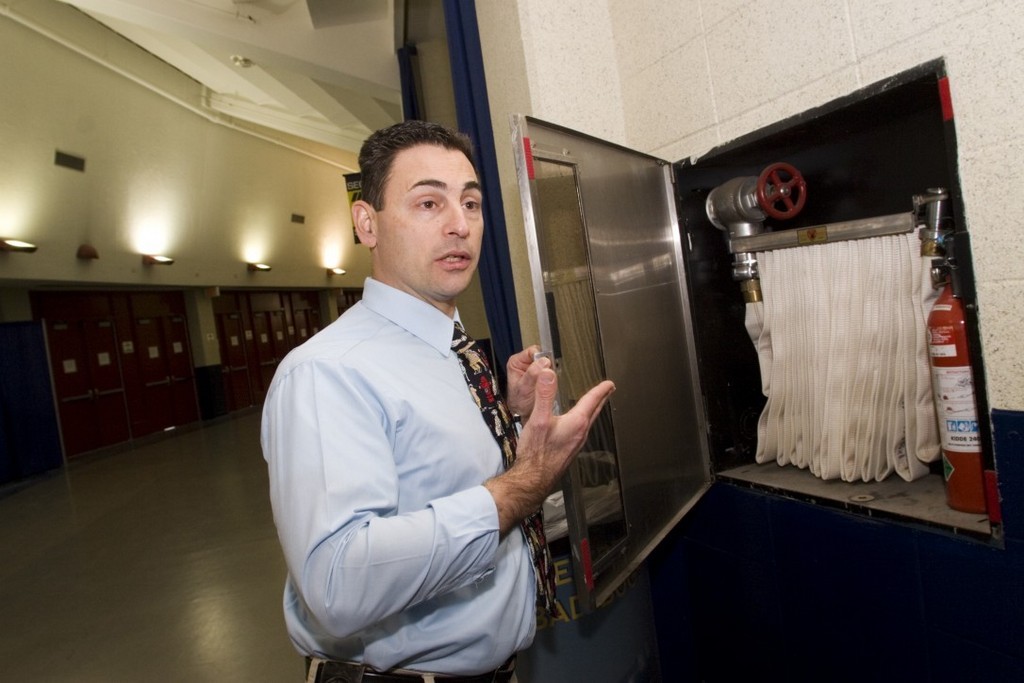
Vincent Quinterno is the sole state fire safety inspector assigned to the state-owned Dunkin’ Donuts Center.
Building a Strong Data Foundation in the Age of AI
Artificial intelligence (AI) has become a key priority in the boardroom and across management —…
Learn More
During the past two years, he’s spent about 200 hours reviewing plans, meeting with consultants, assisting staff and working on fire alarm issues for the $62 million renovation of the center scheduled to be completed by next year.
So far, the construction process has been generally smooth. But that doesn’t mean there couldn’t be delays in the future.
“Naturally, in any type of construction project, there are always changes that take place,” said Quinterno, senior fire safety inspector for the Office of the State Fire Marshal since 1999. Because the project is a renovation, he said, construction details are constantly changing, requiring him to review his work at the same time.
“I tell people I work in pencil. … I make mistakes. I’m a human being.”
And the Dunkin’ Donuts Center is actually in a better position than many businesses, because Quinterno has been there all along. Across Rhode Island, the process of reviewing plans and conducting fire code inspections has slowed in the four years since The Station nightclub fire.
Some delays have to do with the adoption of the new fire codes in 2004, some with staff turnover, and some with a building boom taking place at the same time.
But regardless of the reasons, contractors, developers and business owners in the state have gotten frustrated. They say time is money, and the delays in enforcement of the fire codes are hurting them and impeding economic development in the state.
State Fire Marshal George Farrell, who took the job six months ago, said he is aware of the problem and actively trying to solve it. But solutions take time.
“What I need to do in my office is to fill the positions that were budgeted for and will continue to be budgeted for, hopefully, in the fiscal year 2008,” he said. “I need to train those people, get them out in the field and then evaluate … do I need all of these people or do I need more?”
Throwing bodies at the problem is not necessarily the solution, said Farrell, who spent 25 years at the Providence Fire Department, including two as the city’s fire marshal.
“The answer is … getting the best possible people that you can and then providing them with a living wage so that they will stay,” Farrell said. “We have to provide them with that security so they can grow their family. … If we don’t do that, people will leave. That’s been a problem at the state fire marshal’s office.”
Fire safety inspectors’ salaries start at $26,000 and peak at a little more than $30,000, he said. The median wage in 2005 in Rhode Island was $30,742, while the starting wage for a fire fighter second class in Central Falls is $35,889.
Given the low salaries offered, Farrell said, it’s hard to attract qualified job candidates, and his office is short six fire safety inspectors (out of a total of 20 positions).
Farrell said Gov. Donald L. Carcieri and members of the General Assembly are aware of the problem, but given the large state budget deficit, it’s unclear whether anything can be done this year.
Staff turnover is a problem at the local level as well. Local fire departments have their own assistant deputy state fire marshals, who have jurisdiction only within their municipalities or fire districts and are paid locally. Some, in smaller fire districts, are volunteers.
The state fire marshal’s office trains those inspectors, and Farrell said an average of 50 people have been taking the classes each year. “That should tell you there’s a huge turnaround.”
The length of time it takes to fully train fire safety inspectors contributes to the problem. Applicants take 120 hours of training before taking the National Fire Protection Agency-certified test, said Michael DiMascolo, chief deputy state fire marshal. Once they pass the test, the on-the-job training begins.
“To develop people to where their skills are even at the basic level and you can send them out on their own takes a year and a half,” Farrell said.
That means even if the state hired six entry-level fire safety inspectors tomorrow, it would be a year and a half until they had learned enough about the fire codes and inspection process to go out and start doing inspections on their own.
Attracting, training and retaining fire safety inspectors are just a few ways to solve the delayed reviews and inspections of projects. But there is more to be done.
Farrell said he’s stolen a few methods for expediting the process from his work at the Providence Fire Department.
One is setting up specific dates and times when people can go to the state fire marshal’s office to drop off plans. “There will be a plan reviewer there to greet you, review your plan, make sure everything we need is contained within those plans and accept the document,” Farrell said.
Under the current system people drop off plans anytime, he said.
Sometimes the plans aren’t complete and it takes weeks to notify the applicant they need to provide more information.
Last month, Farrell’s office set up a system for tracking plans to determine how long it takes for a plan to go through the approval process. By law the office and local bureaus have 90 days to review a plan. But Farrell hopes the tracking system will expedite the process because “90 days is quite a long time.”
Farrell also plans to have all the forms related to fire code review plans and fire alarm review plans uploaded to the state fire marshal’s office Web site this month.
“If we tried to fix the entire plan and review inspection process in one fell swoop, it would not work,” he said.
Farrell said he hopes the methods he is implementing at the state fire marshal’s office will serve as a model for the local fire prevention bureaus.