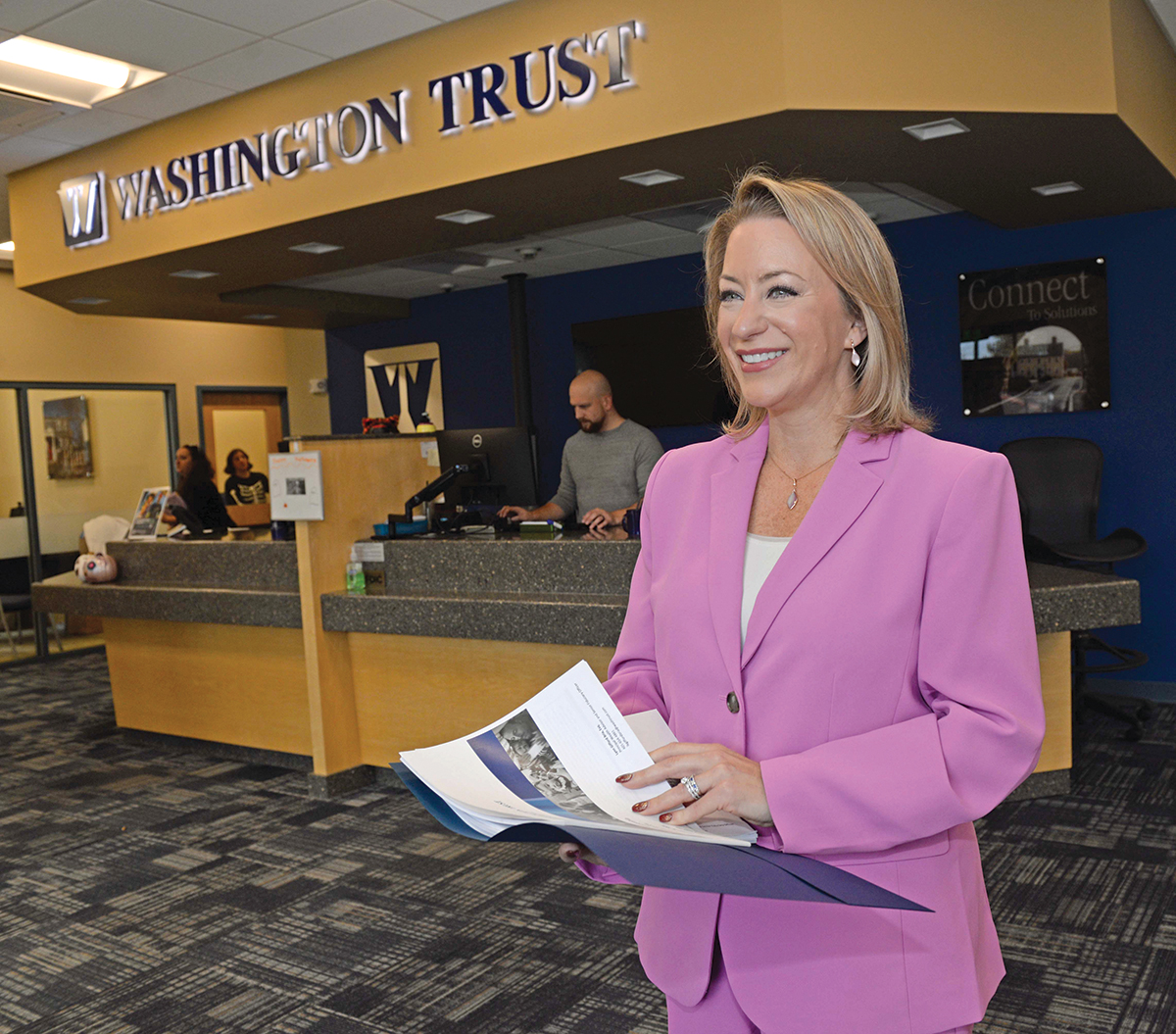
Bethany Lardaro, a certified financial planner with Washington Trust Wealth Management, is seeing more young people in her office, even if they’re not always clients.
Rather, she’s noticing that her clients are bringing their children or grandchildren to appointments, hoping to give them an early understanding of resources such as Roth IRAs and other retirement strategies.
Lardaro expects that even young people who aren’t directly sitting in on financial planning meetings have a better understanding of retirement savings than previous generations. And with that knowledge, they’re planning accordingly for what their lives will look like decades into the future.
“It’s really encouraging as a planning professional,” Lardaro said recently, highlighting “the amount of information they have access to” in the digital age, with the topic of retirement savings even gaining traction on popular social media platforms.
“You have financial influencers talking about the importance of Roth IRAs ... and the fact that young people know about those and are participating in those where they can is a good thing,” Lardaro said. “It’s going to benefit them in the long run.”
The phenomenon isn’t just anecdotal. Multiple nationwide studies have suggested that Gen Z workers, typically defined as those born in the late 1990s through the early 2010s, are outpacing previous generations when it comes to retirement savings.
A 2023 Vanguard study, for instance, found that Generation Z’s participation rates in 401(k) plans were more than double those of their peers in 2006.
Meanwhile, Fidelity Investments reported that total 401(k) savings hit a record high in the first quarter of 2025, with a 9.5% employee contribution rate and 4.8% employer contribution rate. The financial institution noted that this combined savings rate of 14.3% is the closest the figure has ever come to its suggested 15% savings rate.
Other local financial planners, including Donald Clarke, director and portfolio manager at Crestwood Advisors Group LLC’s Providence office, likewise note that an increase in educational resources, including social media and influencers, play a large role in this trend.
“It’s not so much of a secret as it once was,” Clarke said. “The platform is at their fingertips.”
Additionally, Gen Z professionals have witnessed multiple economic downturns in their young lives and may have felt the effects through their working family members.
“They’ve seen a lot of what’s come before them with their parents,” Clarke said. “And they may have older siblings who have come out of the financial repression [of 2008] or COVID-19, or more recently, inflation.
“They understand how much debt is out there,” he said. “They’re taking it into their own hands and starting early” in hopes of expediting their retirements.
Jeffrey Massey, a financial adviser and owner of Massey & Associates Inc. in Warwick, also said that younger workers seem to be taking a proactive approach amid economic difficulties. Many, for instance, are bracing for Social Security cuts, Massey says.
It’s “sad on one hand,” Massey said, “but good because they’re preparing for it.”
But not all Gen Z workers are accumulating these savings in a secure manner, he said, noting that some are only saving in bank accounts, rather than proper retirement funds such as Roth IRAs, a retirement savings plan in which participants contribute after-tax dollars but qualified withdrawals in retirement are tax-free.
“If you play by the rules, the growth comes out tax-free,” Massey said of these plans.
But many do face challenges participating in these plans, Massey notes. About 40% of Rhode Islanders don’t have access to a retirement plan through their employers, according to AARP data.
It’s an area where employers need to improve, Massey said, stressing the impact of starting to invest early.
Other financial advisers also emphasized the benefits of investing in retirement as soon as possible. “It makes a huge difference,” Clarke said. “The [potential returns] almost don’t make sense to some people.”
Clarke gives an example of someone who starts investing $10,000 annually just after college at age 22 versus waiting until age 35. If the 22-year-old stops investing 10 years later, that money alone will grow to the point that when they’re 65, they’ll have essentially the same amount of money in their retirement fund as someone who consistently contributes $10,000 per year from age 35 to 65.
“It’s the last few years of compounding, when the balance of the account has gotten much bigger, that it pays off,” Clarke said. “But starting early is really the most significant factor.”
While Lardaro also acknowledges the benefits of starting early, she said that those who didn’t start so early shouldn’t feel discouraged.
“It’s never too late to save, so we never want to let the perfect scenario hinder us from doing good,” Lardaro said. “But the earlier you start, the better it will be. ... Time is your best friend when investing.”
“That said,” she said, “if you don’t start investing when you’re 21, you can start when you’re 28.”