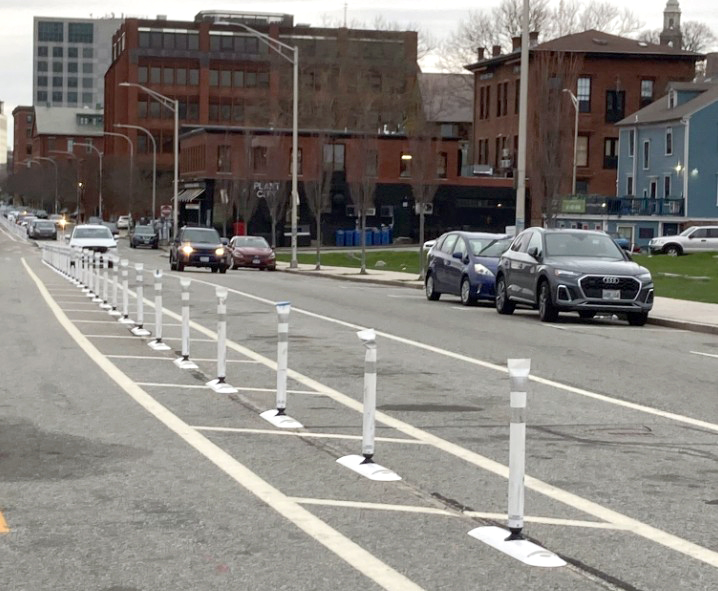
Providence is preparing to move forward this summer on a long-promised plan to relocate the controversial bike lanes on South Water Street, and urbanist advocates say the project underscores broader worries about Mayor Brett P. Smiley’s stance on alternative transportation options in the city.
The redesign, first announced in June 2024, will remove the existing two-way bike lane – which caused an uproar when installed in 2021 – and replace it with an “urban trail” on the adjacent sidewalk.
Smiley has said that removing the bike lanes, installed under former Mayor Jorge O. Elorza’s administration, will allow South Water to return to two lanes of one-way motor traffic. The added space for cars will help ease traffic backups caused by the closure of the westbound side of the Washington Bridge.
Providence Streets Coalition organizer Liza Burkin and others aren’t convinced.
In fact, she finds the $4.4 million relocation plan disappointing.
The project is using 2023 Safe Streets for All federal funding intended to reduce traffic deaths and serious injuries. Yet, while the existing bike lanes provide separate space for cyclists and walkers, the redesign forces people on bikes and on foot to share lanes while motor vehicles are given more space to speed through the area, Burkin says.
“The city is going to be spending a whole lot of money on redesigning a street that is already safe,” she said.
But the project also highlights mobility issues well beyond South Water Street, Burkin says.
Other areas covered under the Safe Streets for All initiative have seen pedestrian and cyclist fatalities and injuries, Burkin says, and are in dire need of improvements.
Still, Burkin says, when it comes to bike lanes overall, Smiley has been a “night and day” difference from Elorza, who championed many miles of bike-lane construction in the city.
Smiley’s office disputes this characterization.
Josh Estrella, the mayor’s spokesperson, says the administration held a “robust community outreach and engagement process” for the South Water Street project, which involved gathering and incorporating feedback from residents, business owners and transit advocates.
The redesign “addresses the flaws in the existing design, provides better safety for pedestrians and cyclists, and provides an additional road lane for vehicular traffic, alleviating congestion on this important thoroughfare,” he said.
Initially, the bike lanes divided nearby business owners, some of whom say the lanes reduce available parking. Vegan eatery Plant City Providence LLC, a bike lane critic, recently announced its closure on South Water.
Other businesses, such as The Wild Colonial Corp. tavern on South Water Street, have advocated for bike infrastructure, which they say has improved foot traffic and safety.
Estrella says that improvements to other streets, such as Broadway and Fountain Street, remain in motion. He also cites the Safe Streets Plan that Smiley released last year, and the Vision Zero traffic accident prevention resolution that the mayor signed.
Also, work on a mile-long protected bike lane along the Woonasquatucket River Greenway started in 2024.
“Improving pedestrian safety in all neighborhoods is a priority for Mayor Smiley,” Estrella said. “Mayor Smiley knows that it is critical that we come together to improve our infrastructure and redesign our city streets to ensure Providence is safe for the many pedestrians, cyclists and motorists who live, work and visit our city.”
But Burkin says Smiley’s explanation for the South Water Street redesign clashes with this claim, with the administration prioritizing people driving out of the city over those who live there.