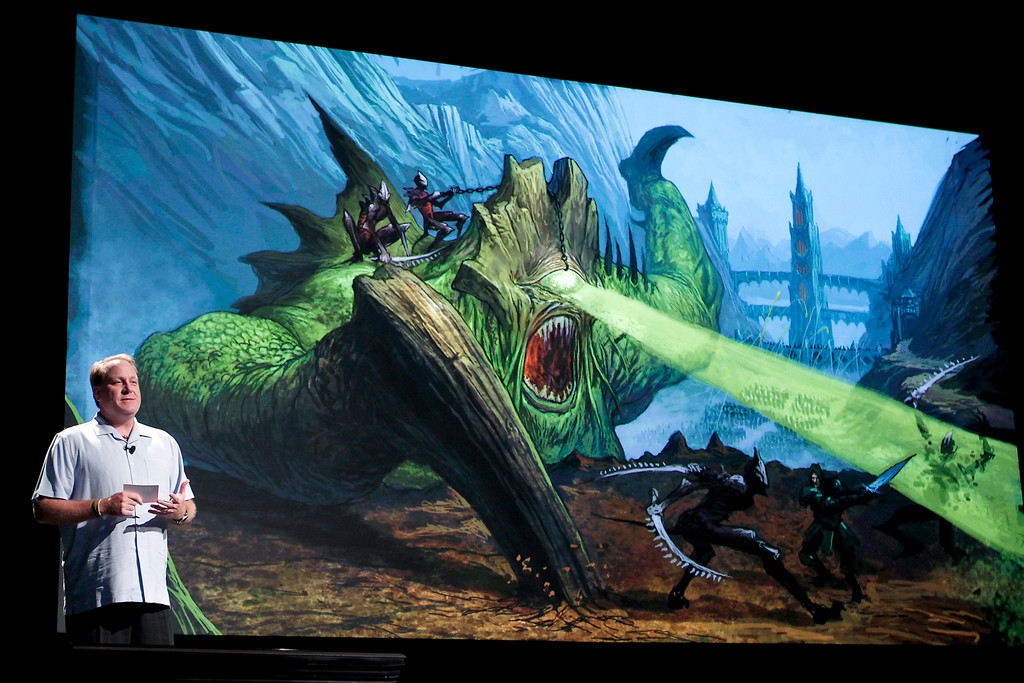
Swipely CEO Angus Davis was one of many skeptics of Rhode Island’s $75 million loan guarantee to former Red Sox pitcher Curt Schilling’s 38 Studios LLC video game startup two years ago. Now he has even more company in the business community urging state leaders not to sink any more money into the embattled Providence firm since it defaulted on part of its public-financing deal.
“Why Rhode Island is being held hostage is beyond me,” Davis said last week after Gov. Lincoln D. Chafee confirmed that 38 Studios had failed to make a $1.125 million payment and asked for additional state assistance. “The state does not need to be making $100 million venture-capital bets on companies in an industry it knows nothing about and has no one on the board of directors.”
On May 17, Chafee said 38 Studios had asked for instructions on wiring its missed payment to the state, but by late afternoon on that day no payment had been received, said Chafee spokeswoman Christine Hunsinger.
Exactly what kind of additional state help 38 Studios asked for has not been disclosed, but Davis, who urged rating-agency Moody’s to consider 38 Studios’ bonds below junk status in 2010, said whatever the company is looking for should come from private investors.
Now that 38 Studios’ default has helped claim the job of the loan guarantee’s chief architect – the now-former R.I. Economic Development Corp. Executive Director Keith W. Stokes – many are asking what it will mean for the state’s business climate going forward.
“This is tantamount to someone who robbed a bank and discovered there was money still left at the bank coming back for it,” said Edward M. Mazze, professor of business administration at the University of Rhode Island. “I think it is going to tell the outside world that in Rhode Island we are a bunch of amateurs.”
After opening 38 Studios’ books to Chafee and EDC officials last week, a stone-faced Schilling rushed by reporters and avoided questions about why his company needed more government help or why it was unable to pay the loan-guarantee fee agreed to less than two years ago.
“The difficulty we face is protecting the taxpayers and looking ahead to the future of whether there is viability that is worth any further investment,” Chafee said.
Chafee and EDC board members decided to put off a decision on what to do about 38 Studios until at least May 21 in order to get advice from experts in the video game industry on how well the company is positioned.
What they are likely to hear is that 38 Studios is competing in a very high-risk market space experiencing significant consolidation and transition caused by the advent of sprawling multiplayer online games such as World of Warcraft.
The $49.5 million in cash 38 Studios received from the loan guarantee – the remainder went to reserve funds and the costs of floating the bonds– was designed to pay for development of the company’s signature project – a game world called Copernicus – and entry into the Massively Multiplayer Online game market.
While sales of the one traditional single-player action game 38 Studios has released, Kingdoms of Amalur: Reckoning, have done moderately well, the company’s long-term success will likely ride on Copernicus, which does not have a release date yet.
Todd Mitchell, an analyst with Brean Murray, Carret & Co. in New York, said current trends have made it more difficult for studios to make money with traditional games and the massive online games have proven extremely high risk and difficult.
“Frankly, you have a lot of excess capacity and I don’t think many [studios] are surviving without tax assistance or loan guarantees,” Mitchell said.
In relation to other larger video game makers, Mitchell said 38 Studios was “probably not well-positioned” to succeed in making money with a new massive multiplayer online game, something that has proven difficult with other high-profile efforts such as a recent Star Wars game.
“Everyone is looking to repeat World of Warcraft, but no one has come close,” Mitchell said.
Pachter said even if the company doesn’t ultimately dominate the massive multiplayer online game market, there is no reason the company should be running out of cash so early in its development.
“I find it unfathomable that they don’t have any cash,” Pachter said. “For Kingdoms of Amalur alone they should have $30 million in revenue coming in. … I can’t believe they can’t raise enough money for a $1 million loan payment.”
The relatively small size of the missed guarantee fee payment compared with the size of the loan and anticipated revenue have raised the question of why 38 Studios could not get private investment to cover any cash flow issues and whether their $1.125 million default was tactical.
One of the many unusual things about the 38 Studios deal was that, unlike traditional venture-capital financing, Rhode Island took no equity in Schilling’s company in exchange for guaranteeing the loan, but instead loaded the firm with debt and fees.
In an interview the morning after he resigned last week, Stokes declined to look back at how the loan guarantee was put together and whether he would do it differently if he had it to do over.
“That’s an interesting question,” Stokes said about whether the 38 Studios deal could have been different, perhaps with more of an equity approach. “A number of transactions come before you and it is really the board that begins to deliberate and review and we make decisions with the information we have at the time, with the context we have.”
Looking ahead at 38 Studios’ future, Davis said the company should be able to raise capital and continue on in some form but it may require Schilling to give up equity or sell completely down the road.
Davis said his biggest concern is the economic implications for Rhode Island down the road.
“The fear is this fool’s errand of risking taxpayer money on a single bet would undermine the public’s perception of the tech sector in general,” he said. •