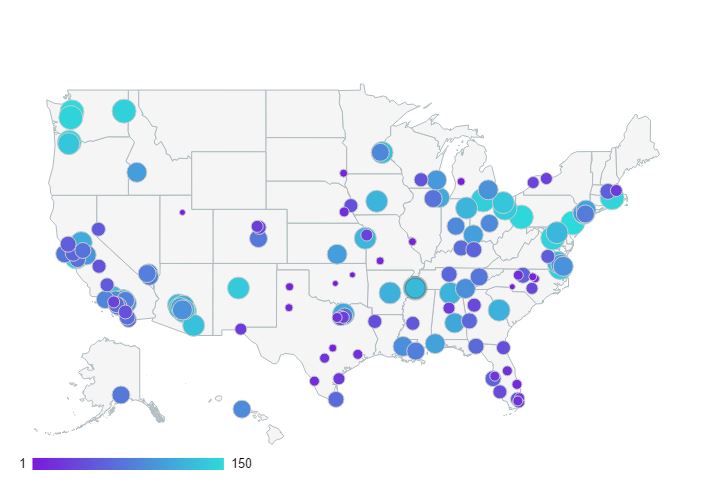
PROVIDENCE – Providence ranks fifth worst in a study to determine the best large cities in which to start a business in 2017, according to a WalletHub report on Monday.
The ranking, which considered 150 of the most populated cities in the U.S., placed Providence the 146th least hospitable to start a business, beating only last-place Seattle, Philadelphia (149th), Vancouver, Wash., (148th) and Pittsburgh (147th).
Beyond Cash Donations: How New Forms of Giving Are Transforming Not-for-Profit Accounting
Evolving Funding Landscape for Not-for-Profits Not-for-profit organizations are being asked to do more with less,…
Learn More
What was Providence’s greatest shortcoming in the study? Having the second shortest work week in the country, second only to Tallahassee, Fla. Other sectors that dragged the city down include its declining average business revenue growth, which decreased -2.72 percent from the years 2007-2012, and the city’s growth in number of small businesses, a decrease of -.02 from 2009-2015.
However, it’s not all bad news for Providence. While its ranking was doomed by a heavily weighted business environment ranking, it ranked 24th in the nation for access to business resources and ranked a middling 78th for business cost. The city also ranked 10th highest for higher education assets, which weighs area college rankings, ranked 23rd in labor costs, which measures median annual income, at $37,501, and ranked 39th in prevalence of investors per capita, about 29.1 per 100,000 residents.
In the study, Boston ranked second in the ‘access to business resources,’ category and ranked 27th nationally.
Oklahoma City, Okla., topped the list, followed by Salt Lake City; Charlotte, N.C.; and Grand Rapids, Mich.
The study by the financial services website analyzed and weighted ‘business environment’, with data points such as the average length of a work week, small business growth and startups per capita; ‘access to resources’ that combined financing availability, prevalence of investors, college educated populations and working age popularity growth; as well as ‘business cost,’ which measures office affordability, labor costs, corporate taxes and costs of living. The study used numbers from the U.S. Census, Bureau of Labor Statistics, Ewing Marion Kauffman Foundation, National Venture Capital Association, Yelp, Indeed.com, U.S. News & World Report, Tax Foundation, AreaVibes, Council for Community and Economic Research, LoopNet and Federal Deposit Insurance Corporation.
Chris Bergenheim is a PBN staff writer.