Nursing homes in Rhode Island have been struggling financially for some time, and in the last year alone, their struggles were made worse by a $25 million cut to state Medicaid funding.
Now, as Congress contemplates major health care reforms that could affect Medicare and Medicaid, industry leaders across the country are fighting to prevent cuts to nursing home funds. The House health reform bill, for example, would cut Medicare funds by $44 billion over 10 years, the American Health Care Association has estimated. For Rhode Island, that would mean $166 million in lost funds.
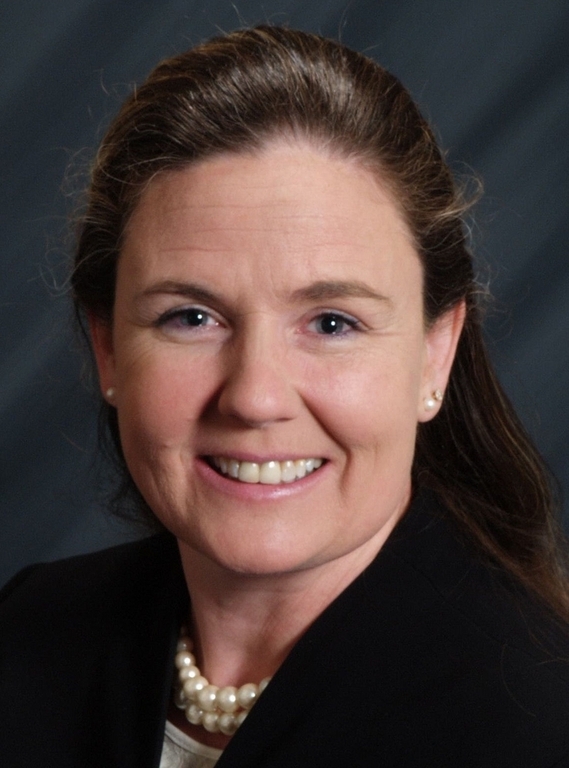
Joan M. Woods, administrator of the Grand Islander Center in Middletown and vice chair of the Rhode Island Health Care Association, answered questions about nursing homes’ concerns.
PBN: Medicare covers nursing and rehabilitative care after surgeries and serious illnesses – shorter-term stays, generally, than those covered by Medicaid. How important is Medicare as a payer for you?
WOODS: As a payer, Medicare accounts for 16 percent of the patient population in a nursing center and 30 percent of revenue, on average. Medicaid, by comparison, accounts for 60 percent of patients and 45 percent of revenue. This illustrates Medicare’s role as a crucial means of subsidizing Medicaid’s well-known funding shortfalls. In this regard, it’s the “safety net” beneath Medicaid’s torn and tattered safety net.
Our ability to meet patient needs is dependent on adequate, sustainable funding and predictable costs. Cuts at the proposed level in H.R. 3200 would negatively impact staffing, undermine quality of care and put the most frail and vulnerable at risk.
Seifert Systems Invests in Energy Efficiency to Strengthen Operations
For manufacturers, energy is more than just another operating expense. It plays a critical role…
Learn More
PBN: Do you have a sense of how much Rhode Island nursing homes would lose under different proposals, and how much Grand Islander would lose?
WOODS: The impact to Rhode Island nursing facilities would amount to approximately $7.8 million per year under the House bill [and] compound the devastation caused by the $25 million cut imposed by our state’s financially strapped Medicaid program. The effect to Grand Islander Center will amount to more than $250,000 per year – or about five full-time registered nurses or nine certified nursing assistants. The Senate bill proposed by Senate Finance Committee Chairman Max Baucus makes most of the same funding cuts.
PBN: How much have Medicaid cuts affected you in the last year?
WOODS: The Medicaid funding cuts included a 5 percent rate cut for almost three months, a reduction in our reimbursement for labor costs, and a six-month loss of operational adjustments for costs incurred in previous years. Seventy percent of our income is spent on staffing – payroll, recruitment, benefits, etc. Any uncertainty in our ability to ensure sustainable funding results in a hesitation to make hiring decisions and [leads to] a leaner work force to support care.
PBN: Has the Medicaid overhaul under the global waiver begun to make an impact on you, too, and do you expect it to have a substantial impact in the near future?
WOODS: The pieces of the global waiver that affect nursing homes were just implemented in July. So far we have not seen widespread effect, but of course it has only been two months. Probably the most frustrating issue is that patients need to satisfy a new “clinical necessity” test in order to qualify for nursing home coverage. The procedures put in place by the R.I. Department of Human Services to administer this test are confusing and disjointed, since the department had to implement them by the July 1 deadline, before they had worked out all the details. This has been tough on nursing homes and their patients.
It’s hard to say what the long-term impact will be. Other states that have attempted drastic efforts to initiate home- and community-based service programs in place of nursing center care have experienced burgeoning costs to taxpayers. Vermont attempted a similar restructuring of its Medicaid long-term care system several years ago. According to an AARP report, Vermont nursing facility expenditures increased 20 percent from 2002 to 2007, compared with a national average of 7 percent. Clearly this is a difficult process, and our state will need to be skillful in its implementation to avoid inflating costs in Rhode Island.
PBN: What are you doing to try to prevent the Medicare cuts?
WOODS: Nursing facilities across Rhode Island are taking an active role in a grassroots effort to get their concerns out to legislators at all levels. The Rhode Island Health Care Association as well as the American Health Care Association have provided tools and resources for centers to educate families, residents and staff.
At Grand Islander Center, we have been educating residents, families, staff and the community through a “Protect Our Seniors” campaign. We have had an advocacy day, sent letters to our congressional delegation, and sent letters to our local newspapers to help educate the community about these dire funding cuts. Our staff has also met with U.S. Sen. Jack Reed’s and U.S. Sen. Sheldon Whitehouse’s staff, and U.S. Rep. Patrick J. Kennedy’s staff attended our advocacy day at Grand Islander. These are the wrong cuts, at the wrong time, to the wrong population.