The momentum in Washington is building. President Barack Obama has made health care a top priority, lobbyists are working at a frenzied pace, and legislators are beginning to define their goals as they take on this massive task.
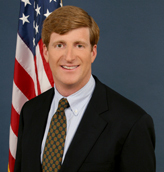
U.S. Rep. Patrick J. Kennedy, D-R.I., who has been a leader in Congress for several years on health care issues – and his father, U.S. Sen. Edward M. Kennedy, D-Mass., even more so – was part of the White House Health Reform Summit in March, and last week, at a House Ways and Means Committee hearing, he heard new Health and Human Services Secretary Kathleen Sebelius outline the President’s principles on health care reform.
Kennedy answered questions about the President’s agenda and his own priorities.
PBN: What do you see as the key pieces of President Obama’s health care agenda?
KENNEDY: This debate is not just about expanding access to coverage, although that is a huge part of it. It’s about creating a system that incentivizes high-quality, coordinated, whole body care, rather than the current “sick-care” system which lacks a focus on prevention. Guaranteeing everyone access to this system as it exists now is not a solution in itself. I know the president understands that. Moving to a sustainable model that eliminates the waste in the current system, and emphasizes patient-centered, evidence-based, outcome-measured, quality improvements, is critical. Secretary Sebelius highlighted two new reports on health care quality at the hearing, showing that 40 percent of recommended care is not received by patients. When these patients ultimately need care, they are typically much sicker and more expensive to treat.
Seifert Systems Invests in Energy Efficiency to Strengthen Operations
For manufacturers, energy is more than just another operating expense. It plays a critical role…
Learn More
PBN: The President has deliberately kept the options open and invited members of Congress to help shape his legislation. How valuable has that been, and do you think it could make the difference between success and the Clintons’ early-’90s failure?
KENNEDY: It was an honor to be invited by the president to the White House Health Care Reform Summit, and to have the opportunity to represent the views which I know are not only critical to Rhode Islanders, but to our nation as a whole. I think the president has been deliberately open about this because of the lessons learned the last time. There has been substantial effort from both Congress and the Administration to invite key stakeholders to the table and begin discussions early. I am hopeful that this transparency and openness will continue so that all options are adequately accessed and considered. I am optimistic about this Administration’s ability to work with Congress and bridge divergent interests.
PBN: One of your top priorities is reshaping the payment system. How do you want to do that, and why?
KENNEDY: We need to make changes to the delivery system so that all Americans have access to the best quality health care our nation has to offer. That means reshaping the payment system so that we are paying for coordinated, patient-centered, evidenced-based, and preventive care. In our current system, we are spending substantially more money and get less for our dollars in terms of outcome indicators than many other industrialized nations. Another key piece of this is work force development. We simply need more primary care doctors and are projected to experience increasingly difficult nursing shortages. Payment reform is one way to address this, but we also need to look at ways to restructure the primary care system more generally, so that people are getting the patient-centered care they need.
PBN: Can you explain what you mean by taking a “whole body” approach, and why you think it should be part of President Obama’s reform legislation?
KENNEDY: The World Health Organization defines health as “a state of complete physical, mental and social well-being, and not merely the absence of disease or infirmity,” but the U.S. health care system doesn’t operate according to that definition. … Health care reform must be a whole body initiative, recognizing that mental health is integral to overall health, and that optimal overall health cannot be achieved without this.
Identifying behavioral health needs, and treating them in multi-disciplinary collaborative care settings, leads to lowered overall medical costs and more cost-effective treatment when properly designed. The aforementioned health care quality reports found that seven out of 10 adults with mood, anxiety, or impulse disorders received inadequate treatment or no treatment at all. A review of 91 studies found that patients with diagnosed mental health disorders who received treatment in collaborative care settings reduced their overall medical costs by 17 percent, while controls who did not get behavioral health care increased costs an average of 12.3 percent.
Almost 11 percent of the global burden of disease stems from mental health and substance abuse conditions, and five of the 10 leading causes of disability (in years of life lived with disability) are psychiatric conditions – depression, bipolar disorder, schizophrenia, obsessive-compulsive disorder and alcohol abuse. Tragically, individuals with serious mental illness have a life expectancy of 25 years less than general population. How can we continue to deny the connection between mind and body when this is true?
PBN: Efforts to defeat any kind of administration-led health care changes have already begun. How big a fight do you think you’re in for, and how broad do you expect the opposition to be?
KENNEDY: There is a general consensus that a change is needed, and that to waste this opportunity would have severe, perhaps irreversible, economic and social consequences. An estimated 4 million people have become uninsured due to the recent economic downturn, adding to the already nearly 46 million, and that doesn’t include the millions of Americans who are underinsured. In 2007, 68 percent of those without insurance went without needed care due to costs, and 51 percent of the uninsured went have a medical bill problem or outstanding debt. These facts and the economic challenges we all face only make the demand for action more poignant.
I have every confidence that Congress will work with the President and a wide array of advocates, providers, insurers and consumers to ensure that a 21st century system of quality care is accessible and sustainable for this and future generations.
To learn more about President Obama’s health care reform efforts, go to www.healthreform.gov.