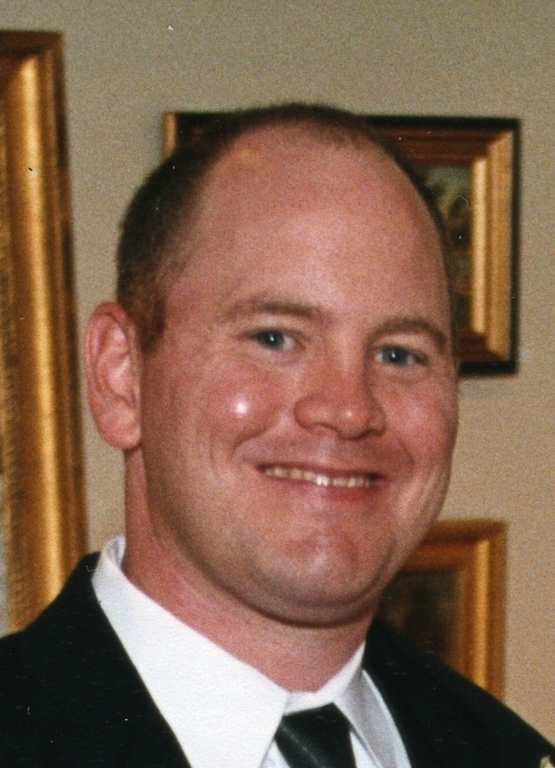
Tom Wooters is the investment manager for SEED Venture Finance LLC, a private investment firm that specializes in making subordinated debt and has been licensed as a Small Business Investment Company by the U.S. Small Business Administration.
Taunton, Mass.-based SEED Venture was recently involved in a $1 million refinancing for Mearthane Products Corp. in Cranston. Wooters answered a few questions about SEED and what he’s seeing out in the field.
PBN: Can you give an overview of how SEED Venture Finance operates?
WOOTERS: SEED VF provides growth and acquisition capital to businesses in Massachusetts and Rhode Island. We can provide businesses with capital over and above what a senior lender can provide. SEED VF funding does not replace a company’s senior debt but complements or augments a company’s senior facilities, allowing it access additional capital. This capital can be used for growth, acquisitions (with no limitation on financing goodwill) and recapitalizations/refinancing.
Often, our capital provides the final piece of capital required to close a transaction.
The evaluation process at SEED VF is relatively streamlined. Companies will only have one contact at the firm, and that individual will remain the company’s contact for the life of the relationship. Our evaluation process requires … same information that a senior lender would require, and we will coordinate with other lenders to reduce the burden on management during the evaluation process. During the evaluation process, we will spend considerable time with management to understand how they have generated their projections and get a firm understanding of the variables affecting a company’s cash flow. Given the subordinated nature of SEED VF’s financing, we are primarily dependent upon future cash flows and management’s ability to adjust to the inevitable challenges for repayment of our debt and have a limited ability to fall back on collateral. After the completion of our analysis the opportunity is presented to our Investment Committee for approval. If approved, we can close and fund as soon as legal documentation is completed. This process can be completed in approximately 60 days.
Seifert Systems Invests in Energy Efficiency to Strengthen Operations
For manufacturers, energy is more than just another operating expense. It plays a critical role…
Learn More
PBN: How do you get involved in a deal? Do you hear directly from prospective borrowers or from senior lenders?
WOOTERS: SEED finds its opportunities through a number of sources, including senior lenders, other subordinated lenders, professional service organizations, business brokers and investment bankers and direct contact. Typically the leads from senior lenders and other subordinated lenders are more likely to fit SEED VF’s investment criteria and result in a transaction because these organizations analyze opportunities in a similar manner. It is not unusual for SEED to pass on an investment opportunity but stay in touch with company management if there is potential for the resolution of the issues that prevented our investment at the time of initial contact.
PBN: Does this economic climate provide more opportunities for you, or fewer?
WOOTERS: Recently, we have seen an increase in the number of companies looking for capital as a result of tightening of underwriting standards at the senior lenders. The current economic environment has driven a painful, but required, examination of lending criteria. Company managements are still adjusting to increased cost and reduced access to capital. More conservative underwriting standards at senior lenders have created a need for junior/subordinated capital in many transactions. Transactions that in the past would have been funded completely by senior lenders now require junior capital. In addition, senior lenders are reviewing their existing portfolio and exceptions that may have been acceptable in the past now require a solution. This has generated opportunities for SEED VF to participate in recapitalization/refinance transactions that allow companies to meet their banks requirements and provide long-term capital for growth.
However, the deteriorating economic environment has also had negative impacts on our deal flow. Most of the transactions in which SEED VF is involved are driven by aggressive decisions at the companies we finance. These include the decision to make an acquisition, pursue a growth opportunity or buy out a partner’s ownership. The uncertainty driven by the precipitous economic downturn in the second half of 2008 resulted in a freeze on these types of decision as companies adopted a bunker mentality. Recently we have seen slight thawing of this freeze as companies consider growth opportunities partially resulting from the availability of favorably priced acquisitions or the opportunity to capitalize on the weakness of a competitor.
The mix of the use of proceeds for the opportunities we are seeing has definitely trended towards refinance/recapitalization as companies look to strengthen their balance sheets and gain flexibility. We continue to see acquisition and growth opportunities, but these must meet considerably higher return hurdles as company management remains risk averse and capital to fund these transactions is more expensive and tougher to access.
PBN: What is the range of size of the transactions?
WOOTERS: SEED Venture Finance typically invests between $250,000 and $1.25 million, although larger transactions can be accommodated through a co-investment partnership with another financial institution. Each transaction will be uniquely structured to meet the specific situation. We have participated in transactions involving as much at $8.5 million in subordinated debt and as little at $250,000. A majority of our portfolio companies also have relationships with senior lenders. Often the SEED VF debt is closed concurrently with the senior debt facility.
PBN: Do borrowers pay more because SEED VF is taking a subordinate position in these transactions – and is willing to on that risk?
WOOTERS: SEED VF’s subordinated debt sits between the senior debt and equity in a company’s capital structure. Senior lenders often consider SEED VF’s funds as capital when calculating company covenants. A funding by SEED VF can significantly strengthen a company’s balance sheet. This flexibility comes at a greater cost than senior debt reflecting the greater risk SEED VF assumes. Each SEED VF transaction is unique, but a typical transaction would be structured as a five-year-term note paying a 12 to 14 percent coupon and warrants representing a nominal portion of the company’s equity. We will consider interest-only periods in order to meet a company’s cash needs. Additionally, we will consider other structures to meet a company’s needs.