PROVIDENCE – In two separate projects, scientists at Brown University are using innovative technologies to explore deep into the earth and far off in space.
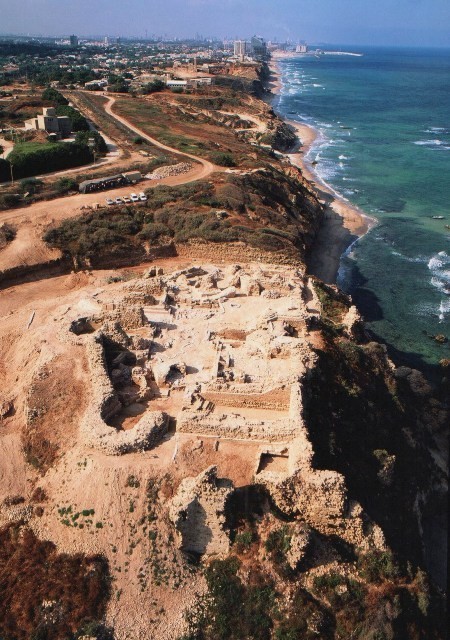
The National Science Foundation has awarded $2.6 million to Katharina Galor, an archeologist who is an adjunct assistant professor at Brown, and a team of engineers to use computer vision and pattern recognition to revolutionize the process of carrying out an archeological dig.
Seifert Systems Invests in Energy Efficiency to Strengthen Operations
For manufacturers, energy is more than just another operating expense. It plays a critical role…
Learn More
“The team is setting out to change the way archaeologists conduct fieldwork by developing innovative techniques for excavation, reconstruction, and interpretation during the next four years,” the university explained in a news release about the program.
The Brown team is carrying out its work at Apollonia-Arsuf, a site located on the Mediterranean coast in Israel, which archeologists have been exploring since the 1950s and which has been named an endangered site by the World Monuments Fund.
Video cameras and digital scanning devices will be installed around the site in order to develop a visual archaeological database (VAD), which the team hopes will streamline the process of sorting through the materials uncovered by the dig.
We use written words to describe our findings when we should be using images and video to make the documentation process more efficient, accurate, and accessible to others,” said Galor. “The more precisely we can physically reproduce what is left, and the more accurately we can piece together broken and dispersed pieces, the greater our chances of reconstructing and understanding the past truthfully.”
Separately, an imaging spectrometer created for NASA by a team including Brown scientists to explore the lunar surface recently began returning data for the first time since it was launched on Oct. 22 as part of Chandrayaan-1, India’s first Moon mission. It is one of two instruments NASA contributed to the Indian mission.
The device is called the Moon Mineralogy Mapper, and its principal investigator is Carle Pieters, a professor of geological sciences at Brown who focuses on planetary research. The instrument was listed as one of NASA’s Top Science, Exploration and Discovery Stories of 2008.
The 3-D imaging device, known as the M3, “will assess the mineralogy of the entire lunar surface at high spatial and spectral resolution, mapping the Moon’s composition and revealing processes active on its surface through time,” according to the team that developed it.
The hope is that it will help scientists better understand the Moon’s origin and development, and also discover resources there, perhaps including water. The new data sent back by the M3 from its first look at the Moon related to the Orientale Basin.
For more information about the excavation site in Israel, visit www.brown.edu/apollonia. For more on the Moon Mineralogy Mapper, visit m3.cofc.edu.