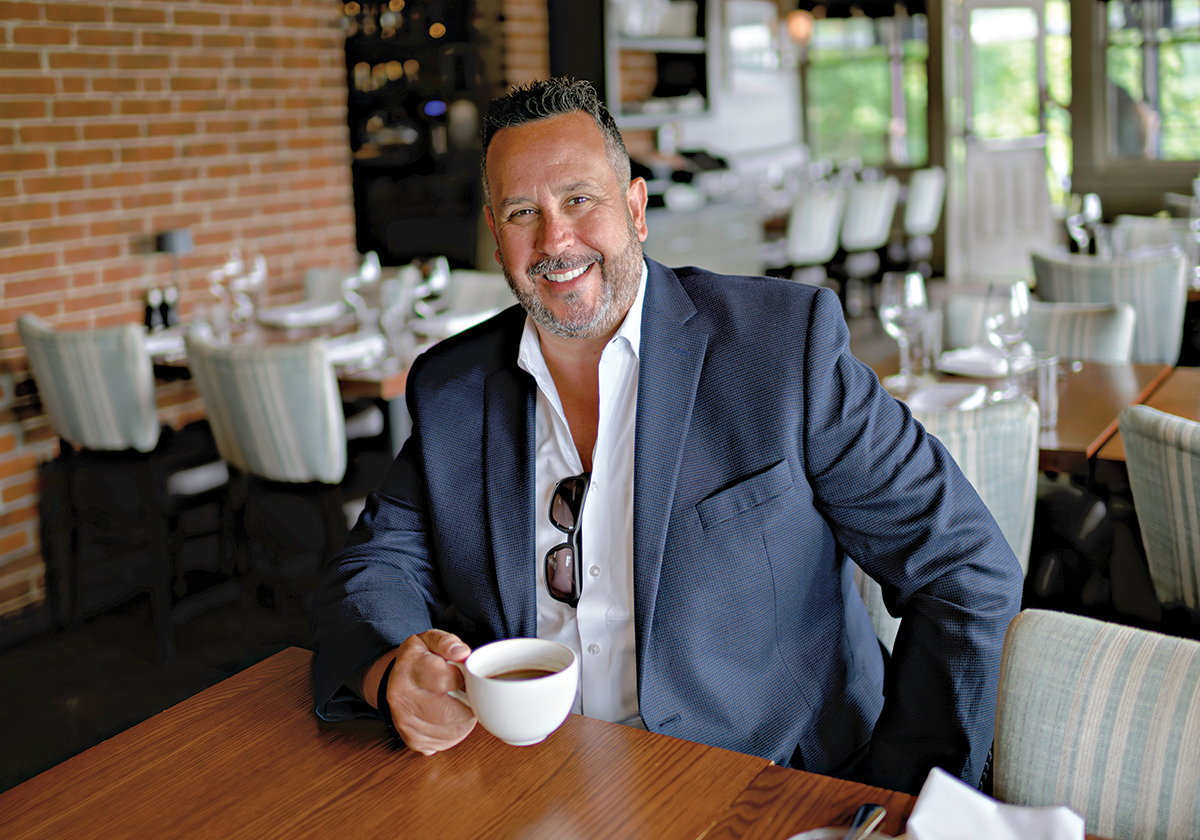
For Corey Barreira, this summer has been a test of resilience. The director of operations at the Newport Restaurant Group has seen a number of challenges – from a spate of rainy weekends early in the season to a decline in international visitors coming to the region – all against the backdrop of ever-escalating costs of operating its 17 regional restaurants.
And yet, Barreira says the high season has been profitable, with several venues on track for record revenue. He points to a bustling downtown Newport as one of the reasons why.
That resilience mirrors the state’s tourism sector as a whole. Despite challenges, the peak season has delivered, officials say.
But the success also comes at a potentially crucial time for Rhode Island’s marketing efforts.
The office of the state’s chief marketing officer – the person responsible for coordinating statewide tourism promotion – has been vacant since April, leaving questions about how well the state will be positioned to compete for visitors in the months and years ahead.
Anika Kimble-Huntley, the state’s former chief marketing officer, left for a private-sector job just before the annual ramp-up for the summer tourism season. And state officials insist she left the state’s marketing efforts in good shape.
But statewide tourism strategy is also pivotal to Rhode Island’s economic development.
According to the R.I. Commerce Corp., the state’s tourism industry gave an $8.3 billion boost to the local economy in 2023, drawing 28.4 million visitors, supporting more than 86,000 jobs and generating $935 million in state and local tax revenue.
The U.S. will mark its 250th anniversary next year, an event expected to spur major travel around historic sites, but there are concerns in some circles that the state hasn’t done enough planning yet to capitalize on the tourism potential.
And there are the FIFA World Cup matches scheduled to take place at Gillette Stadium in Foxborough, Mass., next June, which could attract as many as 2 million people to the region.
Indeed, there is no shortage of tasks to tackle.
In February, before Kimble-Huntley’s departure, R.I. Commerce released a five-year strategic plan for the agency’s marketing arm and the state’s six tourism regions. Key imperatives identified in the plan included building year-round tourism; linking attractions with cultural, historical and culinary experiences; improving the visitor “ecosystem,” such as transportation; and holding quarterly meetings with regional tourism officials to coordinate efforts.
So far, R.I. Commerce hasn’t had much to say publicly about the chief marketing officer vacancy.
At its August meeting, the R.I. Commerce board awarded two tourism-related contracts: $91,500 to assess the effectiveness of a tourism grant program and up to $145,000 for a new “destination stewardship plan.” But there was no mention of the search for a new chief marketing officer.
Meanwhile, the agency is undergoing leadership turnover. Elizabeth M. Tanner stepped down as commerce secretary in July, and Gov. Daniel J. McKee nominated Stefan Pryor to take over the role on Aug. 7.
R.I. Commerce spokesperson Matthew Touchette says the marketing office is holding steady under interim leadership, pointing to experienced staff members who have kept campaigns running through the summer.
And the search for a chief marketing officer continues, according to Touchette.
“We are committed to finding the right candidate to lead our state’s strategic marketing efforts,” he said.
[caption id="attachment_503829" align="aligncenter" width="1024"]

TROLL SIGHTING: Louise Bishop, South County Tourism Council CEO and president, visits one of the two trolls living in the woods of Ninigret Park in Charlestown. Bishop says the trolls, made of recycled materials, have drawn 100,000 visitors this year alone. Three more trolls have been installed recently in Rhode Island.
PBN PHOTO/
ELIZABETH GRAHAM[/caption]
LIVING HISTORY
Those efforts include the “All That” tourism campaign, launched in February 2024 under Kimble-Huntley, which showcased Rhode Island’s food, coastline, history and culture through videos, print, billboards, and a partnership with “The Jennifer Hudson Show” on TV.
Touchette says the agency has deemed “All That” a success, thought it is unclear how active the campaign remains. Its videos cost $483,600 to produce and generated 182 media placements and more than 5.2 million impressions – the equivalent, officials say, of nearly $49 million in advertising value.
Now the agency has shifted its focus to another major initiative: spending nearly $1 million to promote Rhode Island on the History Channel through July 2026. The “More to History” campaign will feature custom-produced segments designed to highlight Rhode Island’s role in the American Revolution.
Heritage tourism was singled out as a growth opportunity by both Kimble-Huntley and the agency’s five-year “road map,” and it’s a direction that James Donahue, CEO and president of Old Sturbridge Village, agrees with.
The Massachusetts living history museum recently completed its merger with Coggeshall Farm Museum, an 18th-century salt marsh farm in Bristol. Donahue sees heritage tourism as driving the next wave of visitation to Rhode Island, which is still playing catch-up with Massachusetts, where capitalizing on the Bay State’s historic pedigree “is in our DNA,” he said.
With a $300,000 marketing budget, Old Sturbridge Village draws more than 200,000 visitors annually to its 200-acre site in Sturbridge, Mass. Since its founding nearly 80 years ago, the surrounding area has grown from a rural suburb into a dining and retail hub. Donahue hopes to see a similar transformation in Bristol, where about 10,000 people visit Coggeshall Farm each year.
“We aim to be a community economic engine,” he said.
But as the 250th anniversary approaches, Donahue worries that Rhode Island might be starting late.
While local organizations and councils are gearing up, there has not been much in the way of a statewide direction, some have noted. The Rhode Island 250 Commission – a 30-member panel with one full-time staffer – is managing a $1 million budget to prepare for the semiquincentennial.
The commission has created a website with a listing of local events and social media accounts. And it recently decided to proceed with plans for a signature $500,000 WaterFire event in downtown Providence, featuring the Rhode Island Philharmonic Orchestra.
“Rhode Island has a rich cultural history. It has its own provenance concerning the founding of the country,” Donahue said. “Now is the time to capitalize on that. This is when people are making their plans.”
[caption id="attachment_503830" align="aligncenter" width="1024"]

GAME ON: Kristen Adamo, CEO and president of the Providence Warwick Convention & Visitor Bureau, stands in front of the Amica Mutual Pavilion in Providence, a key part of the city’s ability to attract sporting events and conventions.
PBN PHOTO/MICHAEL SALERNO[/caption]
GOOD AND BAD
R.I. Commerce has some work to do when it comes to tourism messaging, according to Bryan Lavin, an associate professor at Johnson & Wales University’s College of Hospitality Management.
Lavin says he has identified several shortcomings in the state’s recent strategies, which he said often contradict contemporary tourism marketing principles.
For instance, there is a growing recognition of the importance of connecting with local residents – those whom the campaigns aim to represent – rather than solely focusing on attracting potential tourists, a strategy Kimble-Huntley often championed.
“Fifteen or 20 years ago, the focus was on attracting people,” he said. “Now, there’s a greater emphasis on fostering connections between residents and visitors.”
He also questions the effectiveness of the “Jennifer Hudson Show” partnership. Flashy campaigns lose their impact if they fail to resonate with grassroots audiences, he says.
“Rhode Island is particularly challenging; we tend to be skeptical,” he said. “You don’t hear anyone exclaiming, ‘Rhode Island is All That.’ It’s become fodder for social media. To me, they are not engaging the internal audiences in these campaigns.”
Crafting marketing slogans – such as the ill-fated “Cooler and Warmer” – can create lasting impressions, but may also backfire if not executed properly.
Despite the challenges, Lavin acknowledges the positive strides made by Kimble-Huntley, particularly in data collection to better identify potential travelers for targeted digital advertising, a tool that is central to the casino hotel sector from which Kimble-Huntley arrived.
As the marketing landscape continues to evolve, Lavin believes the future will continue to favor user-generated content, which is perceived as more trustworthy than traditional advertisements, such as those Rhode Island is deploying on the History Channel.
“[User-generated material] is not coming from a government or business trying to sell you something,” he said.
Instead of commercial spots featuring people dining or strolling along the beach, Lavin suggests that today’s travel motivations stem from a desire for customized and unique experiences.
“The industry is moving away from ‘personas’ – the notion that people fit into neat categories,” he said. “Because that approach can become rather bland.”
[caption id="attachment_503831" align="aligncenter" width="1024"]

POINT OF DEPARTURE: American Cruise Lines has been using India Point Park in Providence as the start and end to its multiday cruises to southern New England islands this summer. There are nearly 35 cruises scheduled and passengers can spend a night in Providence before departing. The state is moving to develop permanent docking in Providence.
PBN PHOTO/WILLIAM HAMILTON[/caption]
KEEPING TRACK
For now, those running the regional tourism bureaus don’t seem concerned about the lack of a chief marketing officer.
The South County Tourism Council recently secured a $107,500 Place Making Initiative grant from R.I. Commerce to expand the “troll trail” installations created by renowned Danish artist Thomas Dambo.
The two wooden giants in the wooded area of Ninigret Park in Charlestown have proved popular, drawing an estimated 100,000 visitors this year alone, according to Louise Bishop, South County Tourism Council CEO and president.
The council is collaborating with officials in East Providence and at the Blackstone Valley Tourism Council on the initiative, Bishop says. Three new trolls have been installed in North Kingstown, Richmond and East Providence by the end of the summer.
Bishop says she was a strong supporter of Kimble-Huntley, appreciating the changes she instituted at R.I. Commerce, such as using data collection and digital tracking technology popular in the casino marketing industry. Bishop now applies them to her work in South County.
One of those technological tools is hiring a geolocation company to track visitors to Ninigret Park and then analyze how long they stayed and where else they visited. The data is typically aggregated and anonymized.
“We can see where they are from. I can see someone from Philadelphia came and stayed three days, and one day went to Newport,” she said.
Another useful tool has been the data collected by AirDNA tracking short-term rental stays in the region.
Bishop says the trolls, as well as the International Sand Sculpture Competition, have buoyed local hotels and eateries.
“We’ve got people from Kalamazoo and Fort Wayne, Ind.,” she said. “What was once a long third-tier market [South County] is now a second-tier market.”
Bishop says she believes the state is well-positioned to capitalize on the industry, at least for now.
With hotel tax revenue increasing and new events on the calendar, there are more resources for local tourism councils, she says.
“Commerce recognizes this is how we are going to grow Rhode Island,” Bishop said. “I think we’re good for six months, but if we don’t get someone of that caliber [of Kimble-Huntley] in that position, it is going to become a challenge.”
On Block Island, Jessica Willi, executive director of the Block Island Tourism Council, is not worried about the vacancy, in part because the state’s marketing plan has less of an effect on the premier tourist destination. Local officials are more focused on their own efforts to extend the shoulder season and attract visitors in the fall, rather than boosting visitation during the peak season.
“We don’t really rely on the state for anything to run our initiatives,” Willi said.
“We prefer to maintain a steady [flow of visitors],” she said, adding that overcrowding on the tiny island can sometimes tarnish public perception. “Visitation spending might spike, but if they don’t return, that’s a concern.”
SOLID NUMBERS
In Providence, Kristen Adamo, CEO and president of the Providence Warwick Convention & Visitors Bureau, acknowledges that there was a “blip” in momentum coming into the summer, citing the uncertainty about the Trump administration’s economic policy.
“People are wondering what is coming next,” she said.
But the hospitality and tourism data got a boost from the Amica Mutual Pavilion in downtown Providence, serving as a regional site in the first two rounds of the NCAA Men’s Basketball Tournament in March.
According to the R.I. Convention Center, the AMP generated more than $2.3 million in March, which was the largest amount of revenue in a single month.
Also helping matters: In April, American Cruise Lines announced Providence would be the starting and ending point for nine-day New England island cruises this summer – nearly 35 cruises in all with a total of 3,500 passengers. Officials said in April that more than 1,100 hotel nights in the city already had been booked for cruise guests.
While the ships are using temporary docks this year, the state is moving to develop permanent docking at India Point on the Providence River.
The convention calendar for the remainder of the year is also busy, Adamo says, building on recent events in Providence, including a cheerleading convention that attracted thousands.
Adamo says hotel occupancy rates in Providence reached historic highs this year, rising to 82.3% in June, with an average daily rate of $221. In Warwick, occupancy hovered around 81%, with average room rates of approximately $149.
Looking ahead, the fiscal 2026 tradeshow calendar has 20 shows planned throughout the year, and event bookings for the next few years look promising, too.
“We not only met but exceeded our sales goals,” Adamo said. “We are well-positioned for the next three to four years.”
As for Corey Barreira at Newport Restaurant Group, he hasn’t spent much time thinking about the state’s marketing initiatives or its chief marketing officer. He only vaguely recalls the pilloried “Cooler and Warmer” campaign from 2016.
Right now, he is bullish on the statewide hospitality industry. The employee-owned company’s restaurants in tourist hotbeds such as Newport and Providence are doing well, but so are other locations such as Iron Works Tavern Inc. on Jefferson Boulevard in Warwick, which Barreira says has exceeded expectations.
If anything, Barreira says, the state needs to come up with plans to develop year-round attractions, something also noted in the five-year tourism road map unveiled by R.I. Commerce in February.
Areas such as coastal Narragansett, which is busy in the summer, experience a significant drop in visitation come fall and winter, Barreira says.
“In many towns, once October hits, it’s mostly lights out,” he said.