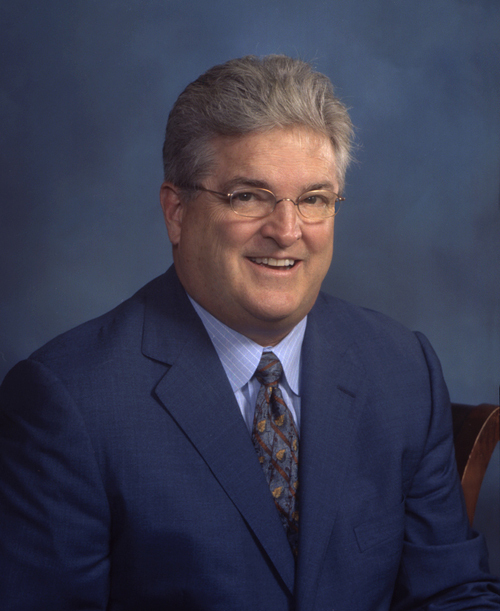
Pat Holmes took over in April as the chief operating officer of Autocrat Inc., the family-owned, local company that has been selling coffee and coffee extracts since 1895.
Lincoln-based Autocrat long ago expanded its business beyond the plastic bottles of coffee syrup beloved by generations of Rhode Islanders. Today, the firm is a leading supplier of ingredients to the fast-expanding, cold-coffee-products market, and also continues to increase sales of roasted coffee to restaurants and consumers under its Newport Coffee Traders brand.
PBN: How are rising commodity prices impacting Autocrat?
HOLMES: First of all, our base product – coffee – is traded on the commodities market and it’s up dramatically in the last year. But it’s not due to fundamental demand. It’s really due to money moving out of equities and into the commodities market. The fundamental demand for our base product is flat at best.
Sweetener is another area that’s up. Corn prices are driven up by the ethanol market, as well as demand for animal feed, and that sort of thing is having an effect on us. … We use a lot of plastic packaging, and of course that’s driven up by the petroleum market.
And, of course, energy itself. … Roasting is a pretty energy-intensive operation, so the fuel prices are killing us – on delivery also, since we run delivery trucks.
Seifert Systems Invests in Energy Efficiency to Strengthen Operations
For manufacturers, energy is more than just another operating expense. It plays a critical role…
Learn More
PBN: What strategies is Autocrat using to deal with the downturn?
HOLMES: We have several strategies for dealing with the commodities inflation we’re faced with. Price increases are always one of the ways to handle it, and buyers of coffee do understand that we deal in a commodities market and that pricing moves up and down in this industry. But for the other issues, the other packaging and the energy and the sweeteners and other things, pricing is a little more difficult for us.
We need to cut costs, and we’re looking at various approaches for cost containment. For instance, we’ve changed all the lighting in the plant to use bulbs that use less energy. We’re using recycled paper in our cases. These kinds of things are kind of “green” efforts, but those green efforts actually save us money. We’re also managing our inventories tighter.
We’re looking at going to a four-day week by extending shifts in the factory. We’re still going to take care of our customers five days a week, so our customer service and shipping department will all continue to work, but our factory should see some energy savings. Plus, it saves a day’s commute for our employees. We don’t know if we’ll be able to execute it, but it’s one of the approaches we’re taking a look at.
PBN: Companies like Starbucks say they see their customers cutting back on gourmet coffee. Do you see evidence of that?
HOLMES: A very large part of our business is the restaurant business, and my restaurant customers are all down, almost across the board, 10 percent or more. That’s one issue that our business is feeling the effects of, just as Starbucks is.
We’re dealing with that – we’re aggressively approaching the market and approaching more customers. When the economy turns around, that’s going to bode well for our business – we’re going to have more customers. We’re going to pay attention in tough times, and when you pay attention to your customers in tough times, they remember that. We’re willing to spend on service and sales and being high-touch with our customers, in order to both survive in the short run here, but really to grow when the economy turns around.
Another part of our business is food ingredients. That’s a big, important part of our business. The existing food-ingredient guys are suffering from the same kinds of ills in the economy. We’re lucky in that we have several projects that are in test markets with big customers – we’re aggressively out there trying to develop the business.
PBN: Where do you see the potential for future growth at Autocrat?
HOLMES: The food-ingredient market has been up until this year, growing at an 18 -20 percent clip. You can look and see – go to McDonald’s, they’re selling all those coffee products – you just see it everywhere in the marketplace. We’re aggressively chasing that business. We have proprietary technology, in terms of making extracts for food ingredients, and we have a pretty strong and growing customer base, and it’s a geographically diverse base. We’re throughout the United States, and we actually have some customers in Asia. That’s where our growth is going to be, we believe.
The corollary in the business to that is the coffee-on-demand market. That’s a liquid coffee concentrate that’s used in high volume applications – things like stadiums, banquet facilities, casinos, health care areas. There’s a big labor savings for the operations out there, and waste savings, too. We make concentrate that is a 30 to 1 ratio, so 1 ounce of concentrate makes 30 ounces of coffee. It’s not a gourmet flavor, but it’s perfectly acceptable for a banquet kind of coffee that’s served at the end of the night. And it’s another green product, because there’s none of the grounds to throw away and the packaging waste is tiny. I think it’s the right product for the times.
PBN: Which one do you prefer: coffee milk, coffee ice cream or a coffee cabinet?
HOLMES: You know, coffee milk is the big drink, so I guess I have to go for that. When I arrived, I had to ask people around here what a cabinet was, and that kind of combines the coffee milk and coffee ice cream, so that’s good. They’re all great. •
interview
F. Patrick Holmes Jr.
POSITION: Chief operating officer of Autocrat Inc.
BACKGROUND: Holmes took over as Autocrat’s COO after more than a decade consulting for major food companies. Prior to that, he spent 16 years at the Campbell Soup Company, where he worked in management and also developed the Campbell’s Kids line of condensed soups.
EDUCATION: A.B. in politics in 1973 from Princeton University.
FIRST JOB: Industrial engineer with Lavino Shipping Co., at the Port of Philadelphia.
RESIDENCE: Providence and New Hope, Pa.
AGE: 57