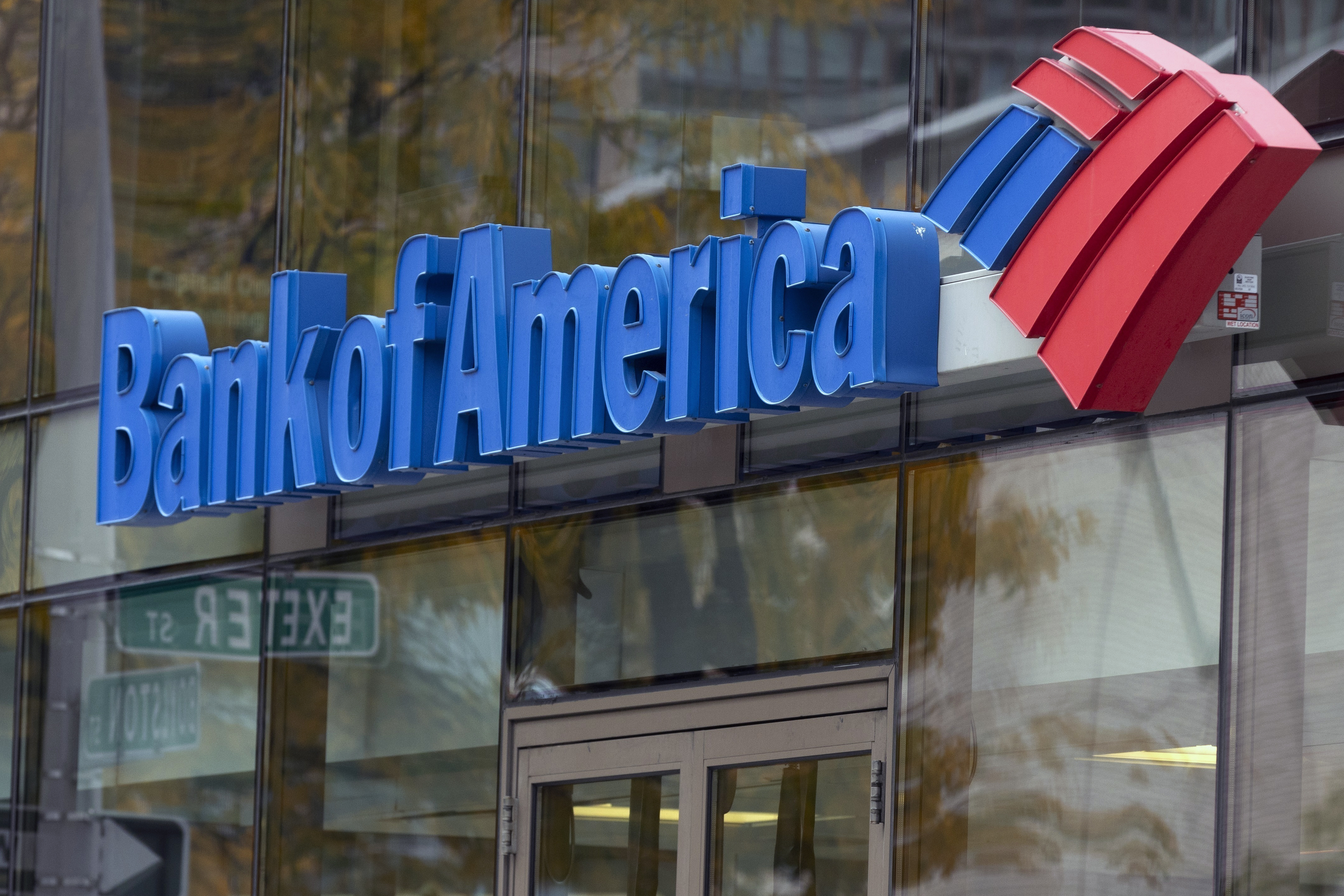
NEW YORK (AP) – Bank of America Corp. saw its fourth-quarter profit fall more than 50% from a year earlier as the banking industry dealt with the lingering effects of higher interest rates and the industry costs of last year's banking crisis that caused the collapse of Silicon Valley Bank and Signature Bank.
The Charlotte, N.C.-based bank reported a fourth-quarter profit of $3.14 billion, or 35 cents per diluted share, down from $7.13 billion, or 85 cents a year ago.
The nation's second-largest bank said it was hurt by a $1.6 billion pretax charge during the quarter related to the transition away from the London Interbank Offered Rate. Bank of America also took a one-time $2.1 billion charge to cover its portion of the FDIC's special assessment.
For the full year of 2023, the bank's net income was $26.5 billion, down 3.6% from a year earlier.
“We reported solid fourth-quarter and full-year results as all our businesses achieved strong organic growth, with record client activity and digital engagement,” CEO Brian Moynihan said in a statement. “Our expense discipline allowed us to continue investing in growth initiatives. Strong capital and liquidity levels position us well to continue to deliver responsible growth in 2024.”
The nation's second-largest bank posted interest and noninterest income of $21.96 billion, falling short of Wall Street forecasts. Nine analysts surveyed by Zacks Investment Research expected $24.07 billion.
Before the earnings release, Bank of America's share price has decreased 1.5% since the beginning of the year, while the S&P's 500 index has stayed nearly flat. The stock has fallen nearly 4% in the last 12 months.
Annual noninterest income dropped from $42.5 billion in 2022 to $41.7 billion in 2023, with the bank posting declines in investment banking fees, service charges and card income.
Noninterest expenses rose 7.1% year-over-year to $65.8 billion. Income tax expenses fell 47% to $1.8 billion.
Total year-end assets stood at $3.18 trillion, up 3.7% over the prior year.
Total deposits fell 0.3% year over year to $1.92 trillion at the end of 2023, but that represented a 2% increase over the deposits at the end of the third quarter of 2023.
JPMorgan Chase said Friday that its profits dropped 15% in the fourth quarter, despite the bank reporting record quarterly revenue. JPMorgan's profits fell because it was required to pay $2.9 billion to the Federal Deposit Insurance Corp. as part of an industry-wide, one-time special assessment by the regulator to cover the government's costs for covering uninsured depositors caught up in the collapse of Silicon Valley Bank.
With that aside, JPMorgan brought in $50 billion in profits last year, up from $37.6 billion in profits in 2022. Revenue at the largest bank in the country was nearly $160 billion.
The U.S. economy continues to be resilient, with consumers still spending, and markets currently expect a soft landing," Jamie Dimon, JPMorgan's CEO and chairman, said in a statement. A soft landing refers to the Fed's plan to slow the U.S. economy from inflation without putting the economy into recession.
Citigroup had to report a loss as well due to the FDIC's assessment and other charges. The New York-based bank posted a fourth-quarter loss of $1.8 billion.
Meanwhile, San Francisco-based Wells Fargo earned $3.45 billion, or 86 cents per share, on $20.5 billion in revenue. Profits met Wall Street analysts' targets while sales came in just ahead of forecasts. Analysts were looking for a profit of 86 cents per share on $20.3 billion in revenue.
For the full year, Wells' revenue increased by 11% over 2022, jumping to $82.6 billion. It was boosted by a 16% increase in net interest income. Earnings per share for 2023 came in at $4.83, up by almost 48% over the previous year's $3.27.
PBN staff contributed to this report.