To cover a $10 million deficit, the R.I. Public Transit Authority on Thursday laid out a wide-ranging plan for service cuts.
And just how deep are they? Well, it might be easier to say what’s not on the chopping block.
Building a Strong Data Foundation in the Age of AI
Artificial intelligence (AI) has become a key priority in the boardroom and across management —…
Learn More
That’s because the agency is proposing to cut or reduce 58 of its 67 routes – around 86% – ranging from connections to the Block Island Ferry, weekend service to Roger Williams Park Zoo, and the trolleys connecting Newport’s North End to the city’s beaches.
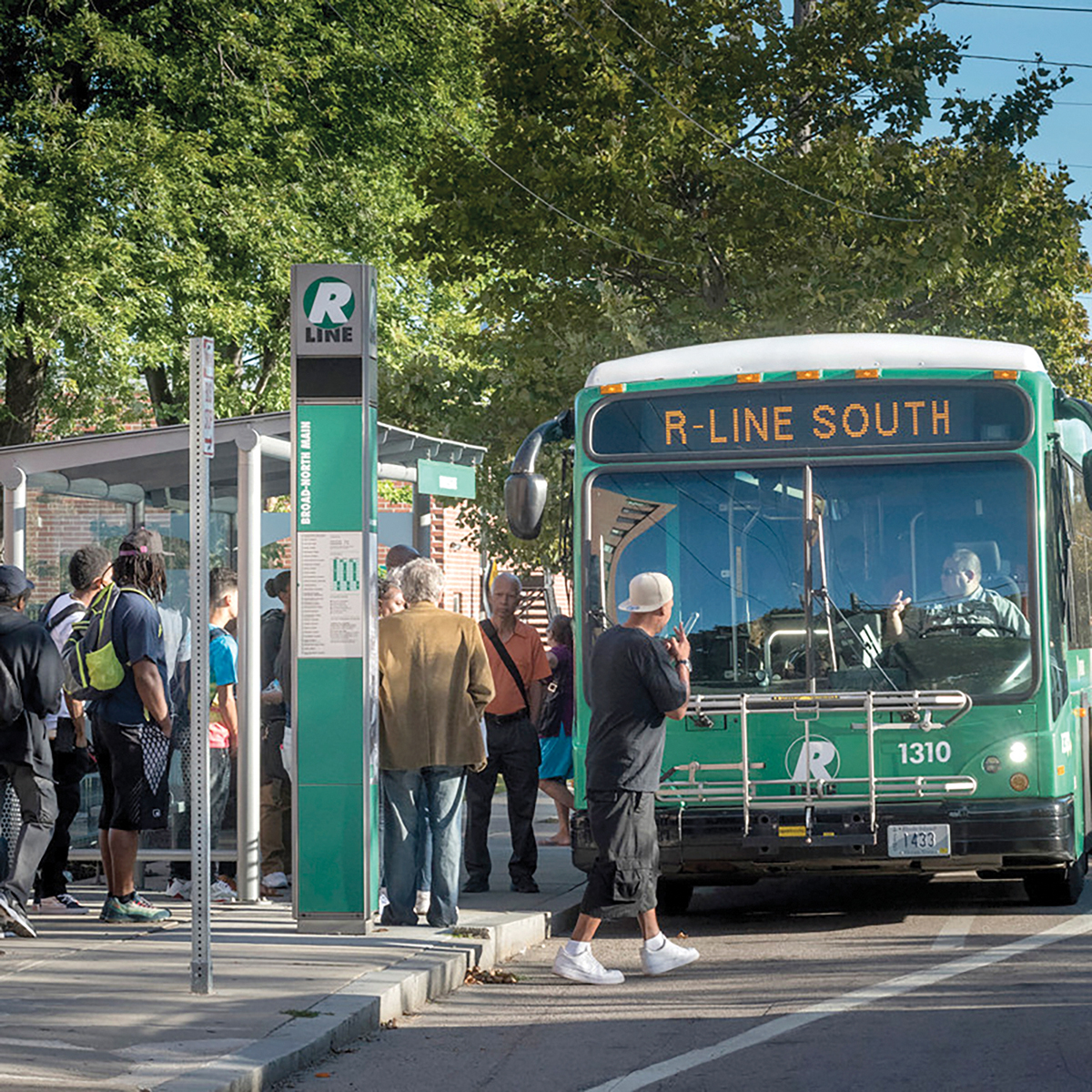
Even the agency’s top performing route won’t be spared reductions, according to the plans released as RIPTA’s board of directors held its monthly meeting early Thursday afternoon. The R-Line – which connects Cranston, Providence and Pawtucket – would run every 20 minutes on weekends instead of every 15 minutes during the day and every 30 minutes at night.
A combination of 11 routes and zones where riders book trips in advance will be totally eliminated. Thirty routes would see reductions in trip frequency or number of trips. A half dozen routes serving park and rides would be eliminated or have round trips reduced.
There would be no weekend service anymore for nine routes – 4 [Pawtuxet Village/Warwick Neck]; 6 [Prairie/Roger Williams Park Zoo]; 13 [Coventry/Arctic/CCRI]; 14 [West Bay]; 29 [CCRI Warwick/Conimicut]; 55 [Admiral/Providence College]; 71 [Broad St./Pawtucket Ave]; Flex 203 [URI/Narragansett/S. Kingstown]; and Flex 231 [South Aquidneck.
Three routes – 18 [Providence’s Union Avenue]; 58 [Mineral Spring/North Providence]; and 64 [Newport/URI Kingston] – would no longer have Saturday service.
Five routes – 3 [Warwick Avenue/Oakland Beach]; 6 [Prairie/Roger Williams Park Zoo]; 16 [Bald Hill/NEIT/Quonset]; 35 [Rumford/Newport Ave]; and 63 [Newport’s Broadway/Middletown Shops] – would lose Sunday service.
“Obviously we don’t want to do these reductions, but frankly we don’t have a choice,” RIPTA CEO Christopher Durand told the board. “At this point, we’re finalizing exactly what this all will look like – these changes are substantial.”
But just how many jobs are on the line remains unclear. Durand had previously told reporters that between 90 to 100 employees could be let go, but walked back his projections Thursday.
“I don’t have a number at this point,” he said.
“We don’t want to lose anybody,” Durand added. “We’ve done a lot of work to bring people in over the past year.”
Proposed service changes arrive four days before a series of public hearings are scheduled to begin across the state. The first will be held Monday, July 28 at the Community College of Rhode Island’s Knight Campus in Warwick from noon to 1:30 p.m.
After those hearings, Durand said the board will consider approving the final plan when it holds a special meeting Aug. 7.
Should the panel move forward with the recommendations, the cuts would take effect Sept.13.
Durand told reporters after the meeting that the agency relied on a still-to-be-completed independent efficiency study to guide what service cuts would need to be made.
A June 16 draft memo from the study suggested reallocating resources away from providing bus service in rural communities with low ridership to more populated low-income areas, along with more service for Providence residents who commute to jobs outside of the city. It also recommended the agency increase its $2-per-ride fare, which has been in place since 2010.
But Durand told the board a fare increase will remain off the table – at least for now.
“That is something we’re going to take a little more time to understand to make sure whatever we do is thoughtful and effective,” Durand said.
The agency plans to conduct a study to analyze impacts of a potential fare increase on “ridership, revenue, and equity,” according to its announcement of the proposed service cuts.
RIPTA’s board spent only eight minutes discussing the proposed cuts when it reconvened after over an hour behind closed doors. Chairman Peter Alviti Jr., the director of the Rhode Island Department of Transportation , acknowledged “challenges ahead” in his remarks upon the return to open session.
Those challenges stem from a $17.6 million deficit in the state budget taking effect July 1 approved by the General Assembly. Lawmakers pared down an initial $32.6 million hole in Gov. Daniel J. McKee’s proposed fiscal 2026 budget released in January. The General Assembly eventually propped up RIPTA with nearly $15 million in annual revenue from an additional 2-cent increase in the state’s gas tax and upping the agency’s share of the state’s Highway Maintenance Account.
RIPTA administrators managed to reduce the shortfall to $10 million thanks to what Durand called a “favorable price lock” in diesel fuel, along with a positive market performance for the agency’s pension plan.
“Gov. McKee is stranding bus riders,” Liza Burkin, board president of the Providence Streets Coalition, told reporters after the meeting. “This will literally strand folks by the side of the road, strand them at home, make [them] unable to get groceries, to go to medical appointments, to get to work.”
Alviti said the state’s budget provides RIPTA with “a mission to accomplish.”
“We as an agency need to adapt,” he said.
Durand told reporters the agency is still eyeing other ways to claw out of the deficit. One idea, he said, is picking back up paratransit trips that had been outsourced to taxi companies – a move Durand projects could save RIPTA about $2.4 million.
Burkin and other transit advocates urged RIPTA leaders to avoid service cuts by exploring all alternatives – including asking RIDOT to redirect some of its federally funded State Transportation Improvement Program, a $9.5 billion, 10-year plan focused on roads, bridges, and pedestrian infrastructure.
“We need to triage,” she said.
Durand told reporters he would look into the idea, but was unsure of its feasibility.
“At the end of the day, federal funds can’t be used for operations,” he said.
So what routes escaped untouched?
Routes not affected: Qx, 40, 67, 10x, 24L. Flex service – trips that can be booked in advance – in Westerly, Pascaog/Slatersville, and West Warwick/Coventry are also untouched.
The South County Express Beach Bus [routes 45, 46, and 47], which ends the season on Aug. 24, was also spared. The route connects Central Falls, Pawtucket and Providence, Woonsocket, North Providence and Cranston to the Scarborough, Wheeler, and Salty Brine state beaches during summer weekends and holidays.
Christopher Shea is a staff writer for the Rhode Island Current.