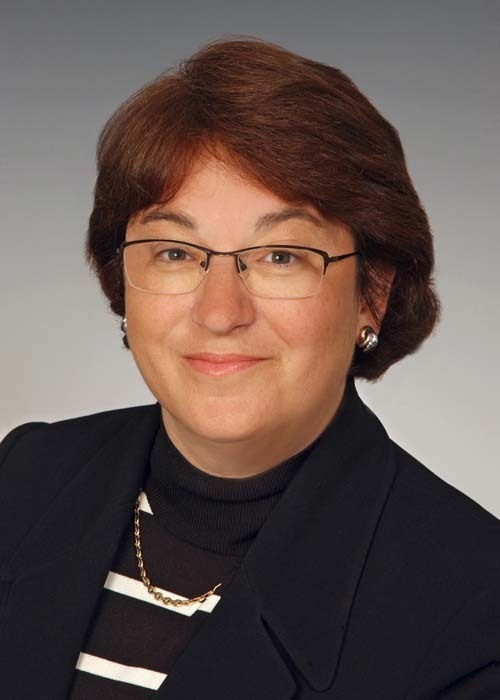
Linda H. Simmons first joined Bank Rhode Island as executive vice president of finance and treasurer in September 2004. She’s been the bank’s chief financial officer since June 2005, working for CEO Merrill Sherman. Both women played key roles in successfully turning back an activist shareholder’s second attempt at taking seats on the board of directors last month.
PBN: How unusual is it for two female bankers to be on the same executive team?
SIMMONS: On the same executive team, it’s a little more frequent. But to be a CEO-CFO women combination I think is still very unusual in today’s environment. You know, I was really lucky to have this opportunity. Merrill puts together a work force here that is based on merit, and it comes from the top. When I was asked to be the CFO, basically Merrill took a risk. And she was willing to do that because she believed that I had the right expertise and the right background for this position.
Rhode Island's Market Has Changed. Developers, Builders, Investors and Sellers Must Change With It.
By Emilio DiSpirito IV License Partner | Engel & Völkers Oceanside Leader | The DiSpirito…
Learn More
PBN: Are there any advantages to having two females in top executive roles?
SIMMONS: It never crossed my mind that there would be an advantage.
PBN: What about disadvantages? Maybe a gender stereotype that you might not be up to the task?
SIMMONS: I really hope not. I can’t control what other people think, but I think both of us [Simmons and Sherman] stand on our merits and I think we’ve done wonderful.
PBN: Do you feel a special obligation to serve as role model to other women?
SIMMONS: Absolutely. I think each and every one of us has that obligation, whether it’s for a young man or young woman, actually. I think it’s important to mentor people and bring them along.
PBN: Before joining BankRI, you worked at BankBoston and FleetBoston. How did your career path lead to a community bank?
SIMMONS: I was able to work really hard and take advantage of opportunities that were given to me. In the last six or eight years before coming to Bank Rhode Island, I had spent a lot of time in Latin America in the international divisions of Bank Boston and Fleet. And that was a unique opportunity that really helped propel my career. So when this opportunity came up to do this domestically, it was a great opportunity.
I would go to Latin America six or eight times a year, spending two to three weeks in each country. I worked with the international treasury units. I was in essence in smaller banks like Bank Rhode Island, but in different cultures and different currencies. It was quite interesting.
It started with Bank Boston, which owned quite a large number of banks internationally, and that became my niche. I developed risk modeling. First one I did was in Argentina. I did Brazil, Uruguay [and] Chile. I was in Asia.
PBN: And these were all smaller banks that BankBoston owned?
SIMMONS: Yes, 100 percent. BankBoston, then Fleet when they bought them.
PBN: So what was that like, moving from a large bank such as FleetBoston, to a small one?
SIMMONS: In some ways, it was very natural. I had been in these smaller banks [in Latin America] for the last six to eight years. And I started in a small bank in Maine – that was my first bank. So to me it was quite natural.
PBN: But I assume in that small bank in Maine, you weren’t a top executive?
SIMMONS: That is correct. But being in treasury, you’re allowed to see all aspects of banking. And building these models that I’ve built over the years, I had to interview and learn about every aspect of banking. So it really gave me the background that I needed.
PBN: What are the challenges of a CFO in a slowing economy?
SIMMONS: The economy is not just affecting banks, it’s affecting everybody. It’s affecting our customers as well. To say it’s not a challenge would be dishonest. It is a challenge but we will ride through it because we are a quality institution. And we are there to help our customers and support our customers as well.
PBN: Can you specify the challenges banks are facing right now?
SIMMONS: We always worry about the [interest] margin. And a lot of that is dictated by the external environmental and what interest rates are on Wall Street. As you know, the Fed had risen for quite some time, and it’s in the posture now where it has been lowering rates. And that becomes hard. That becomes a real challenge to manage through. You’re also worried about the economy and how it affects foreclosures on housing or the commercial aspects. We’re very lucky here – we’ve not had the type of deterioration of assets that other institutions have had.
PBN: Everything is cyclical. When do you foresee things improving, or have they already?
SIMMONS: I’ve seen very little improvement. But you know the numbers bounce around. Every day you can have a new opinion, but we’re hoping that we start to see some improvement by the end of the year and maybe into 2009.
PBN: BankRI leadership last month defeated a second attempt by dissent shareholder PL Capital to take seats on the board of directors, how does that affect the job you’re doing to have someone looking over your shoulder trying to find something to criticize?
SIMMONS: It affects you in a number of ways. First of all, Merrill and I have always gone out and met with our shareholders before we had a dissent shareholder and after we had a dissent shareholder. So us going out and meeting our shareholders is not anything new. So that’s not an added burden to what I do on a day to day basis.
PBN: Had you had dissent shareholders before?
SIMMONS: No. So this was new and there was a little bit of a learning curve … . We had weekly meetings to discuss strategies and how we dealt with these things. … At the end of the day, we work for our shareholders. We know we made great improvement in 2007 and in the beginning of 2008 on some of [the key performance ratios]. And we all continue to work hard on our strategic plan. That was our plan, that plan didn’t come about because PL Capital came into the picture. We never changed what we were doing. •