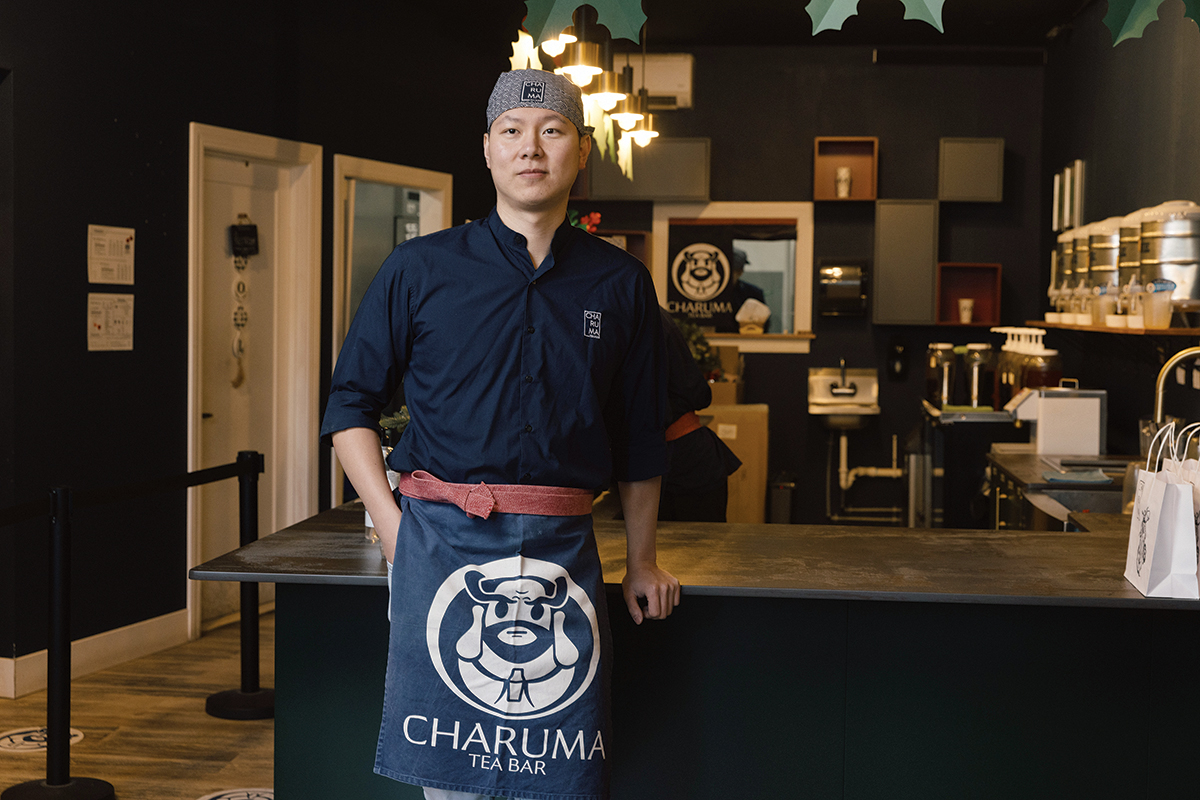
(Editor’s note: This is the 41st installment in a monthly series speaking with minority business owners and leaders. Each will be asked their views on minority-business conditions in the state and for ways to improve those businesses’ chances for success. See previous installments here.)
While attending university in Providence, Jenny Lu and Tom Chang found that there were limited connections to their home country, Taiwan.
It was difficult, for instance, to find popular Taiwanese cuisine such as bubble tea – also known as boba, after the tapioca pearls that give the beverage its name – and the chicken cutlet often served alongside it.
In fact, though both had been drawn to Providence for its higher education scene, Lu and Chang didn’t study at the same college – Lu went to the Rhode Island School of Design, while Chang attended Johnson & Wales University. But with few Taiwanese students attending either of the two schools at the time, they recalled, students came together across the universities to form a club around their shared background.
There, Lu met Chang and another founding business partner, RISD student Tony Chen. All three students noted the same absence in the city, and in 2019 decided it was time to create what they were looking for in Providence.
“We were craving bubble tea and chicken cutlet,” Chang recalled, but they had to drive to Chinatown in Boston for the authentic cuisine. “I thought, maybe I could just do it myself over here.”
The friends merged their different studies and skills in opening the business: Chang, whose family ran a food business in Taiwan, and who had studied food and beverage management at JWU, took the lead in the food and management side of the business. Meanwhile, Lu and Chen drew from their studies at RISD to oversee the restaurant’s interior design and branding.
Due to the COVID-19 pandemic, they ended up delaying their business plans by a couple of years. But in 2021, their vision for a taste of Taiwan in Providence became a reality when they opened a downtown storefront at 45 Weybosset St.
“We really wanted to bring something from home here,” Lu said. In naming the business, they fused “chai,” the Mandarin word for tea, with Daruma, the name of a popular character embodying Zen.
Bubble tea served at Charuma Inc., doing business as Charuma Tea Bar, looks slightly different than what some customers may be used to – the store-made tapioca pearls are translucent, rather than the more locally common black variety.
And Charuma’s chicken cutlet is also different from the dish people may find under the same name elsewhere in Providence. The chicken cutlet that Lu, Chang and Chen had previously found in the city was never seasoned in a way that tasted similar to the dish they had grown up with, Lu noted, which the trio also sought to remedy.
In addition to bubble tea and chicken cutlets, Charuma offers a selection of Taiwanese pastries called wheel cakes, and other snacks such as popcorn chicken and fries.
Opening Charuma in 2021, when the business community was still in the early stages of recovering from the COVID-19 pandemic, came with its own challenges, Lu and Chang recalled. But particularly as more students returned to the local colleges, business began to look up. And as Charuma continues to increase in popularity, they hope to eventually open more locations.
(Editor’s note: Questions were answered by Tom Chang and Jenny Lu.)
1. Do you believe racism is keeping minorities from starting businesses in the Ocean State or succeeding when they do? We personally did not experience any challenges regarding our business due to racism.
2. How dependent is your business on the support of other minority groups? Is that a sustainable business model? Instead of categorizing Charuma as dependent on the support of other minority groups, Charuma has a big group of student customers from the colleges around the area. However, as a store that sells Taiwanese drinks and food, we are popular among Asian students.
3. What one thing could Rhode Island do to boost the odds for minority-owned business success? We think it would be very helpful if the information and guidance of the business part of the secretary of state is more widely known among the minority-owned businesses.
4. Have you had to turn somewhere other than a bank for a loan? Do you believe the state’s lending institutions generally treat minorities fairly? We did not personally turn somewhere else for a loan, so we don’t have too much knowledge in this area. We went to family for some financial support.
5. If another minority entrepreneur asked you where they could turn to for support for their business, where would you direct them? As mentioned above, we would highly recommend going to the secretary of state’s business sector for help. We had some very helpful one-on-one sessions with the office. We were trying to figure out some information when we were setting up the company, and one of the employees in the [R.I. secretary of state’s] office told us about the one-on-one sessions. ... Basically, you could ask any question regarding starting or running a business, and they would try their best to help you. For us personally, we worked on our three-year business and financial plan.